Repression of Palestine Solidarity on Campus Enabled Anti-Migrant Escalation

Photos of Palestine solidarity encampments have disappeared from the news, replaced by pictures of immigration agents kidnapping university students and community members, but the campus-based battle to force universities to divest from Israel and weapons manufacturing is still underway.

This a long-term, smoldering battle. “The campuses are definitely as active as they were a year ago from my purview,” says Akin Olla, communications director for the anti-militarist youth organization Dissenters. But, he adds, “The actions look different and are generally less media-friendly.”

While this struggle continues, its shape has shifted, as students who were initially on the front lines of pro-Palestine activism experience additional vulnerability due to the Trump administration’s attacks. Many of these students are Muslim immigrants or from immigrant families, while others are queer or trans and confronting a different series of attacks. As a result of these changes, the shape of the work has changed. For one thing, faculty who spoke to Truthout said that campus student groups are working more in coalition to provide some shielding to targeted students, like Students for Justice in Palestine or Muslim student associations.

Faculty across the United States continue to organize: They’re supporting students and their movements; organizing their own events; building aboveground and underground safety networks in response to the presence of immigration police on campus; and pushing their own unions and scholarly associations to take political positions.


I found it so healing to talk to folks on campuses all over who are creating new networks of solidarity and who see the clear connection between Palestine and other attacks on campus. I am not alone, you are not alone. There are many of us.

Read the full story at Truthout: https://truthout.org/articles/repression-of-palestine-solidarity-on-campus-enabled-anti-migrant-escalation/

And consider signing up as part of the Sanctuary Campus Network: https://www.sanctuarycampus.org/

Harvard Dominates Headlines, But Other Schools Are Quietly Battling Trump

Closed-door committees are forming to investigate whether public universities in North Carolina have fully eliminated diversity practices. Campuses in Utah are being held to neutrality pledges. Accreditation is changing across the Southeast as university systems join a new state-run scheme spearheaded by Florida Governor Ron DeSantis. A major political struggle is being waged on university campuses, and faculty are struggling to keep up.

Higher education has been in the news regularly since the emergence of mass pro-Palestine protests on campuses after October 7, 2023, but much of the coverage has been dominated by the likes of elite private schools such as Harvard and Columbia. Right-wing attacks, however, have rocked campuses across the country, escalating with the Trump administration’s executive orders banning diversity, equity, and inclusion (DEI) practices. These orders have been followed by Department of Justice or Department of Education investigations into whether there are any lingering practices of inclusivity. The playbook has been used at institution after institution as a form of pressure to withhold funds and secure concessions.


In the midst of everything going on right now, universities are facing attacks coming fast and furious. It was an honor to talk to colleagues organizing in many cases under really inhospitable conditions and finding a way to fight for a better future, and I’ve got another article coming out in a few weeks that focuses more on faculty and staff movements to support immigrant and international students and a free Palestine.

Read the full article at Truthout here: https://truthout.org/articles/harvard-dominates-headlines-but-other-schools-are-quietly-battling-trump/

Amid Right-Wing War on Higher Ed, Montana State Students Fear for Their Lives

On February 16, the Queer Straight Alliance (QSA) at Montana State University (MSU), a student club dedicated providing community to LGBTQ+ students and community members, received an email from an anonymous email account. The email said, “Sinners of the QSA you must repent and turn to … the white god of Christianity,” and threatened to kill everyone at an off-campus dance party that same evening.

The students flew into action when they received the email, despite their fear. They spread the word far and wide so it could reach anyone they thought might be attending the event, they contacted multiple campus and police agencies, began arranging alternative housing for students who were afraid to return to their homes, and even set up a clothing resource for students who thought they might be targeted due to an overt LGBTQIA+ presentation. Coming in the wake of the mass shooting at Club Q in Colorado Springs as well as other recent attacks at trans and queer events, they took the threat seriously and worked to protect each other and their community.

My most recent piece of writing, for Truthout. Read more: https://truthout.org/articles/amid-right-wing-war-on-higher-ed-montana-state-students-fear-for-their-lives/

Moving in to Year Two

This week, I celebrated an important milestone: it has been one year since I launched my freelance public sociology business. It has been a strange year, to be sure, and an uncertain one in which to be working on a freelance basis without institutional support. But I am happy to say that this first year has been a huge success, and I want to take a moment to thank everyone, because I could not have done it without all of you, clients, readers, and friends!

I have been extremely lucky–a concept that always comes with a heaping side dish of privilege–in the ways I’ve been able to weather the pandemic economy so far despite the cancellation of several speaking events in the spring. I especially want to thank everyone who invited me to give talks (special shout out to the folks at Macalester for making the Minneapolis trip possible!), hired me to do editing or research work, shared my work with their friends, or helped me design this website. I have learned an incredible amount this past year, from self-employment tax deductions to writing white papers, but the most exciting is that I have been able to connect almost so much of my work to movements for social justice. Out here, I have created the academic home for myself that did not exist in the academy, doing work that I believe matters to the struggle for a better world.

In the coming year, I plan to focus on growing my diversity, equity, and inclusion work on improving workplaces for trans and gender nonconforming people–especially now that we have civil rights in all 50 states! And let me clarify: I believe my program is different, because I’m not just offering one-day trainings for employees. I’m offering a comprehensive consultation that uses research, evidence-based workplace change, and management-level trainings to create a gender-friendly workplace. As always, let me know if you want work together.

This is a critical time to do transformative work with the insights and skills of social science in the broader world. Last year I decided to take a leap of faith in order to pursue my belief in the importance of doing just that; I stopped looking for other jobs and decided to create my own. I was not certain whether I could turn that leap into something sustainable, but I was willing to try. This year, that work–the work of public sociology–is my everyday reality.

cite Black theorists

cite-black-women_3_orig

Cite Black Women t-shirt from the Cite Black Women Collective

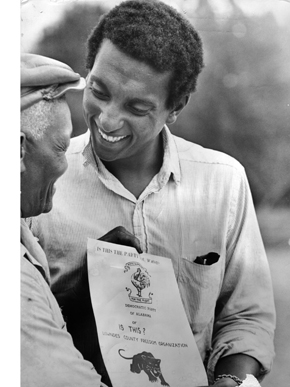
On page 8 of Keeanga-Yamahta Taylor’s book From #BlackLivesMatter to Black Liberation she says something that stopped me in my tracks: “Black revolutionary Stokely Carmichael and social scientist Charles Hamilton coined the phrase ‘institutional racism’ in their book Black Power.”

Although I understand the phrase institutional racism so well that I have actually taught its definition and usage regularly, this is the first time that I have ever heard its origin, and specifically that its origin is attributed to Stokely Carmichael. I am dumbfounded.  Of course, there can be no question that I am to blame for this. But there is also a much larger question here about sociology. I use and teach “institutional racism” in the ways

Stokely_Carmichael_in_Alabama_1966

Stokely Carmichael in Alabama in 1966

that sociologists around me use it, and the ways that I learned it. I have never before heard it attributed it to anyone specific, much less to Carmichael and Hamilton or the Black Power movement. We seem to have simply claimed it as something we do, as part of our larger systemic way of looking at the world. In fact it’s often used interchangeably with “systemic racism.” And that may well be a good and important thing. But it should not come at the cost of erasing the contribution of Black scholars, Black people, and Black movements to our theorizing and scholarship. While we can and do debate the ownership of any one person to a word, no one hesitates to cite Judith Butler when they use the phrase “gender trouble” though these words surely had other connotations and meanings before and after this scholar. We cite Marx when we simply refer to “capital” or the “means of production” and sometimes Foucault gets all of “power.”

This is a question of our citational practices and how they reify existing power structures. This is about how we continue to actively create a white academy. Sara Ahmed discusses this (and provides one alternative possibility) in her nourishing book Living a Feminist Life, which does not cite any white men:

Citations can be feminist bricks: they are the materials through which, from which, we create our dwellings. My citation policy has affected the kind of house I have built. I realized this is not simply through writing the book, through what I found about what came up, but also through giving presentations. As I have already noted, in previous work I have built a philosophical edifice by my engagement with the history of ideas. We cannot conflate the history of ideas with white men, though if doing one leads to the other then we are being taught where ideas are assumed to originate.

It is for this reason, among others, that the Cite Black Women campaign was created. As the Cite Black Women’s Collective says, “It’s simple. Cite Black Women.” But also: put in the work. Find the citations and place Black women in the center of your syllabus and your sociological research and even your informal political thinking. The collective has a praxis:

  1. Read Black women’s work
  2. Integrate Black women into the CORE of your syllabus (in life & in the classroom).
  3. Acknowledge Black women’s intellectual production.
  4. Make space for Black women to speak.
  5. ​Give Black women the space and time to breathe.

And a rad t-shirt (pictured above), which supports the Winnie Mandela School in a working class, Black neighborhood of Salvador de Bahia, Brazil. I’ve already briefly discussed how amazing Winnie Mandela was on this blog. The collective has also organized conference events (including ASA)  and #CiteBlackWomenSunday.

Look, this is not just about “you.” I certainly need to do better at this too. The fact is, unless a person has been making a conscious effort to do this for several years now, it’s likely that many of us need to be putting some work in to do better at this. The point is that we all need to do the work because it isn’t going to happen without it – no one is going to start getting the credit they deserve for their contributions to our discipline and to our thinking without all of us practicing the racial justice that we preach. Here is a short list of Black scholars who influenced sociology to get you started.

Happy Holidays—would you please put your pain on hold so I can enjoy my perfect life?

The Rebel Prof is honored to present a guest post written by an anonymous academic of color.

“I have almost reached the regrettable conclusion that the Negro’s great stumbling block in his stride toward freedom is not the White Citizen’s Counciler or the Ku Klux Klanner, but the white moderate, who is more devoted to ‘order’ than to justice; who prefers a negative peace which is the absence of tension to a positive peace which is the presence of justice…”—Dr. Martin Luther King, Jr.

“Your silence will not protect you.” –Audre Lorde

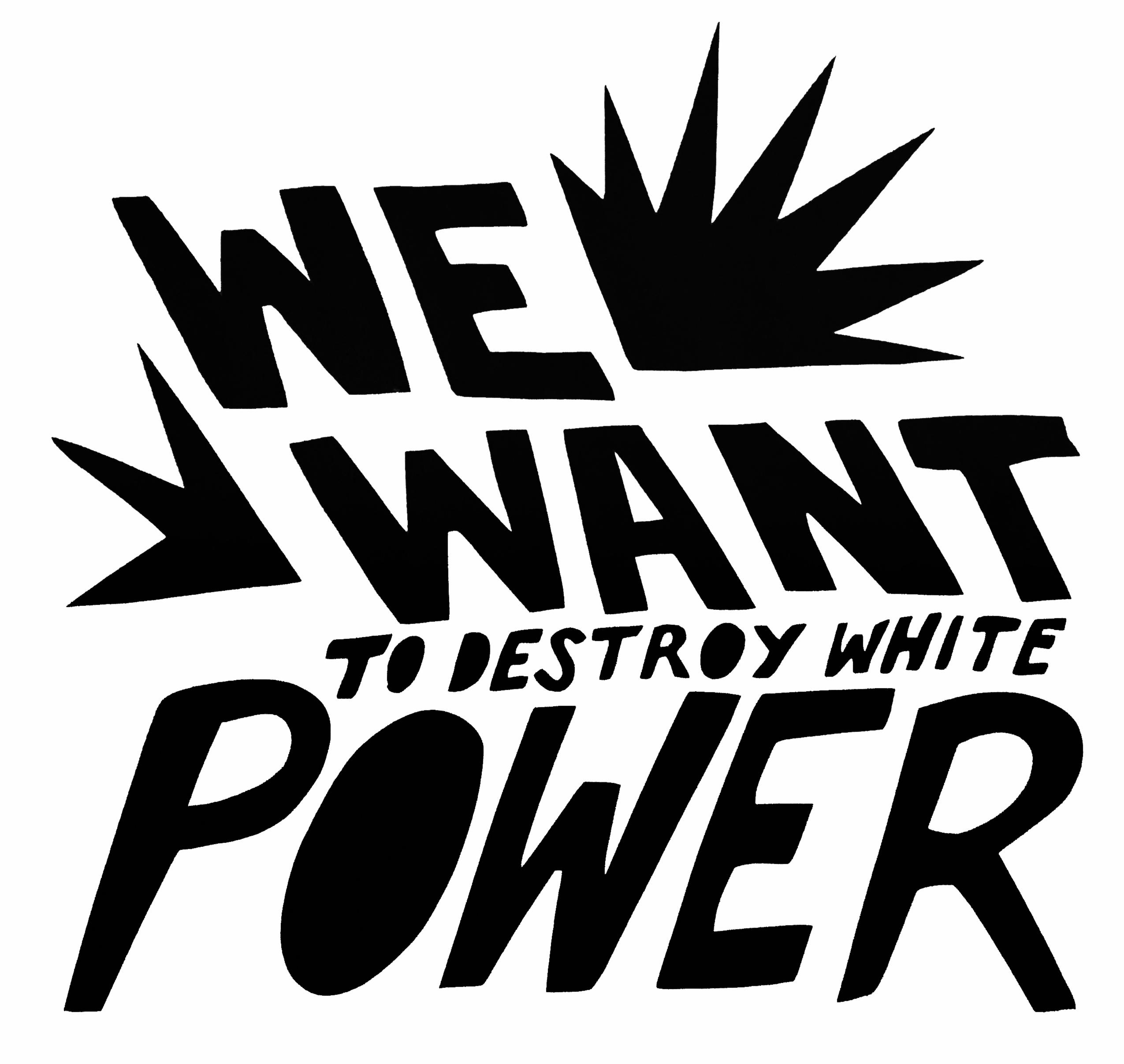
Black and white text that reads We Want to Destroy White Power

Image by Roger Peet

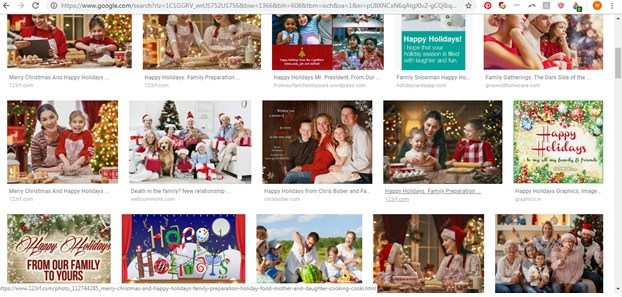
The host of this blog, who kindly invited me to write a guest post and helped me edit the post, suggested a picture like the one on the left.  While the image definitely screams my deepest desire, it is not quite what I had in mind while writing this piece. Thus in an attempt to better articulate what I wanted to capture, I went on Google image search and typed in “happy holidays family” (not “white family” or “Merry Christmas,” just to be clear).  Tada~


"Happy Holidays" screen shot

I have noticed that the images we constantly get from Google (or anywhere) often invoke a mix of feelings in me—anger, pain, sense of absurdity, shame, to name a few. What these images share is their relentless salespersonship of white comfort.

I have been thinking about white people’s comfort for a while. You see, growing up, I didn’t get to read “Letter from a Birmingham Jail” or “The Uses of Anger” so I wasn’t taught about the danger of white comfort beyond white hatred. For so long, the nice white people around me have been pointing at the angry white dudes with torches marching down the streets of Charlottesville as the true enemy, the only enemy, as if their comfortable place in this oppressive reality were just an unfortunate coincidence , as if they had no control. I have seen nice white people giving up fights with the system because the system was “nice” to THEM. Then, I hear them requesting appreciation for THEIR suffering and silence, because their mere lack of enthusiastic participation in white supremacy makes them heroic and yet vulnerable, as if the torches in Charlottesville are burning down THEIR lives and those of THEIR children. I have felt the guilt planted in my heart for wanting to fight, for wanting them to fight with me, as if I were rude for having dared to disrupt THEIR comfort.

Then I think of those who are uncomfortably white but also do not want to make other whites uncomfortable. I think of how they would rather spend time apologizing for white silence than break it. I remember being told not to judge a person by their occasional participation in oppression and to embrace forgiveness, as if I were vicious for failing to heal wounds that are only “occasionally” cut open. I think of being constantly reminded of the perfect survivor, resilient, quiet, forbearing and extraordinarily successful against all odds, as if suffering is not worthy should the sufferer fall short of perfection, as if there were such a thing as perfection outside of what whiteness desires.

I write this piece, 55 years after MLK pled with the “white moderates” to acknowledge the urgency of Black suffering and 37 years after Audre Lorde invited white women to get over their fragility and guilt and embrace the anger of women of color. Yet here I find myself, struggling to prove my worth to white people by white standards and being told my frustration is due to my personal lacking. Unlike Lorde, my anger is not sharp and focused, it is confused and disorienting. So I write. This writing did not start with the intention to inspire but to clarify so I save the last part for myself.

Why can’t I tell the nice white people in their face that their silence is toxic and their excuses are utter bullshit? Is it my job to tell them so?  Should I like or even love those who have treated me with respect and love as an individual but remained unmoved by my shared destiny with other dispossessed and intimidated by our rage? Is it my survival instinct or cowardice that made me decide to publish these words anonymously? Have I made myself too comfortable?


List: Things that Outlasted My Prestigious “Job for Life” as a Professor in the State of Wisconsin

Things that outlasted my “job for life”:

  • Electronic drip coffee maker on sale at Sears purchased the night before beginning my exciting new dream job
  • Expensive brand name satchel selected to differentiate me from students and celebrate the completion of my PhD
  • $4 cactus purchased from Home Depot to beautify my office, variety “Peruvian Old Lady”
  • 300 unused business cards
  • Moist towlette left in the drawer from a first week take out meal, still moist!
  • Cheap ball-point university branded pen given to me during orientation, still full of ink!
  • Tide to-go instant stain remover stick, still functional and ready for use at whatever exciting new employment adventure awaits me! (Probably retail.)

Things that did not outlast my tenure track job:

coffee-maker-clipart-1

Lessons from the UW-Superior “Halloween Axe” One Year Later

Just over one year ago, everything changed for me and many others in the community of Superior, Wisconsin. Without faculty, student, or staff input, three administrators were able to eliminate and threaten a full one-third of the academic programming at the University of Wisconsin-Superior, including most of the liberal arts in which it offered majors and most of the critical disciplines on campus. A few months later, an eerily similar list of program eliminations was announced at UW-Stevens Point. A newer, more final version of these cuts was announced yesterday. The Stevens Point proposal will be the first direct implementation of UW administrators’ new power to fire tenured faculty without declaring financial exigency.

Perhaps at the end of one year of mourning UWS, it’s time to move on to the next i see human but no humanitytragedy. After all, we were not the first victims of austerity measures in higher ed, and unfortunately we won’t be the last. Plus it’s over. The drastic cuts at UWS, along with the clumsy and deeply damaging restructuring of the entire 2-year college system in Wisconsin, have already happened. And Wisconsin has even finally ousted Governor Scott Walker in favor Tony Evers who was the lone voice of opposition while on the UW Board of Regents. But on this one year anniversary, it also seems useful to ask what can learn? How do we pick up the pieces and survive, both as local communities and within the more decentralized community of academia? A few things are for certain: the devastation of higher ed is not confined to Wisconsin, and the election of Tony Evers won’t be enough to roll back the damage done to the once great system of public higher education in the land of milk and honey.

In personal terms, the last year has been one of massive upheaval on both a private and professional level. I was driven out of my tenure track job in my fourth year which in turn meant geographic relocation. I sold my first house shortly after buying it, and started over in a new city, yet again. I was not alone in this. As I began to speak out publicly against the unethical and unconscionable decisions and public statements made by the university’s top administrators, I did not anticipate the level of absurd and petty harassment that I faced throughout the year for which there was no formal remedy.

The more that I was harassed, along with a few others who were also singled out, the more that a climate of fear seemed to prevail around me. Much of what happened to me was risky to speak about in writing or online. Let this be lesson #1 for others: open the lines of communication often and early between departments and among faculty, staff, and students, so that it is harder to single people out. Make time and spaces for in person meetings. Check in with people regularly who are on the forefront. Be aware that distancing yourself from people makes it easier for them (or you) to become targets for administration. Pay for personal memberships to the AAUP and/or a labor union (regardless of the status of legal bargaining rights) because their experience and assistance is invaluable in this situation.

My situation culminated at the end of the year when I should have been able to focus on supporting anxious seniors with their thesis presentations and nervous first year students with finishing classes. I was actually accused of committing “fraud” against the university. For what? I don’t know. How was the case resolved? I don’t know. I can only assume I was cleared because I was never reprimanded in any way. I was summoned to a meeting (at a time I was unavailable), I was not allowed to bring a witness, I was told I could not be given any information about the accusation in advance, and then I was informed that I had failed to comply. When I requested a copy of the report I was told it did not exist because it was submitted online. With some anxiety, I packed up the most important things in my office and took them home in case the university continued to ignore any semblance of due process and made a decision to suddenly terminate my employment. I tried to thread the fine line of my legal obligations to a workplace that clearly did not feel the need to observe basic legal obligations to its employees. Lesson #2: the university will not do the right thing (but you will survive somehow anyway). 

This story probably sounds extreme as you read it, and you may be thinking “that could never happen at my university.” But people never seem to think it’s going to happen to them, against all the evidence. Let that be lesson #3 from the Halloween Axe: it can happen to you, and you should already be organized to stop it. A great example of this problem is UWS’ own Dean Yohnk, the Dean of Academic Affairs at UWS who sold himself to UWS as a liberal arts champion less than 2 years earlier and then participated in these cuts. Yohnk managed to somehow parachute out of UWS and into UW-River Falls still as an advocate of the liberal arts. This is major head in the sand thinking on both sides. According to Yohnk, he had no part in the cuts and wanted to get away from that environment. So you go to another school in the UW system, still headed by Ray Cross and the Board of Regents? Good luck with that. And what is the hiring committee at River Falls thinking to accept someone who just lit a match and ran from the next door neighbor’s house? Lesson #4: be informed about the news in higher ed so you know what campus environment someone is coming from and you are prepared to understand their role in it when they arrive on your campus. And lesson #5: wishful thinking is dangerous. Don’t do it. Dramatic neoliberal austerity measures can happen at your university and they will, unless you organize against them. Let’s throw in lesson #6 here: elites network across campuses so we should too.

Actually, another thing to learn from what happened at UWS is lesson #7: these cuts have probably already started at your university or in your state. They don’t just fall out of the sky. They are ideological and they are part of a much longer game plan that takes many years to come to fruition. Look at all the planks in the plan to kill the Wisconsin Idea that needed to be laid before the final blow could be dealt to UW-Superior:


  • Act 10 eliminating collective bargaining rights for public workers;
  • weakening and effectively eliminating tenure protections throughout the state so that faculty throughout the university can be fired regardless of tenure without formally declaring financial exigency (not to mention the chilling effect);
  • changes to the hiring of chancellors and hiring committees (these have the effect of chilling efforts to call for resignation of current chancellor(s) because faculty are afraid that whoever is hired next will be worse, as they are assured of having no voice in the process);
  • dramatic changes to Chapter 36 and essentially eliminating the role of faculty in governance of the university;
  • free speech rules implemented via the legislature severely limiting the possibility of student protest on campus;
  • implementation of faculty post tenure review.

The cuts at UWS were only possible after all of this had been implemented in addition to devastating system wide budget cuts over a period of six years. There are many lessons to be drawn from this fact, but one important one for me is lesson #8: we have to somehow fight every austerity measure, even if it’s a losing battle. Don’t hand over an inch, because we are really always fighting the next battle. If we accept one measure without comment or struggle (as we did with many of these, knowing the Regents, legislators, administrators and often public were aligned against us), the right wing ideologues hell-bent on eliminating higher education will know that we aren’t organized to fight the next austerity measure. During my time in Wisconsin, I watched the implementation of several of these rules go on without comment or struggle from faculty who little imagined how they would be impacted later. And the result was that when the Halloween Axe fell, most of the faculty didn’t really understand what had happened to their tenure in Wisconsin, or what had happened to shared governance, or how would it actually affect them and not just their least favorite colleague. They knew enough to be scared but not enough to know what their rights still were or on what grounds we could fight. There was just too much catching up to do. Learn from our mistakes and find out what the reality is on your campus before there is a crisis. And inform and organize your colleagues now.

There are so many more things I learned in the last year as an academic, as an organizer, and as a community member of Superior than I can share in a single essay. I’m still mourning UWS and I’m honestly pessimistic about the long-term future for the community of Superior and northern Wisconsin more generally because something beautiful has in fact been lost. But I also know that marginalized communities can and do find innovative ways to survive and even, within pockets, thrive. Long term stability and permanence are myths that should never be counted on, especially within the dual realities of capitalism and climate change. While I mourn UWS, and while I mourn the broader closure of access to the public university to so many, I also look toward free schools, community run schools, and other models of more liberatory education. The public university has never been the only model of education so I choose to finish here with lesson #9: our dreams should always be too big for their institutions.
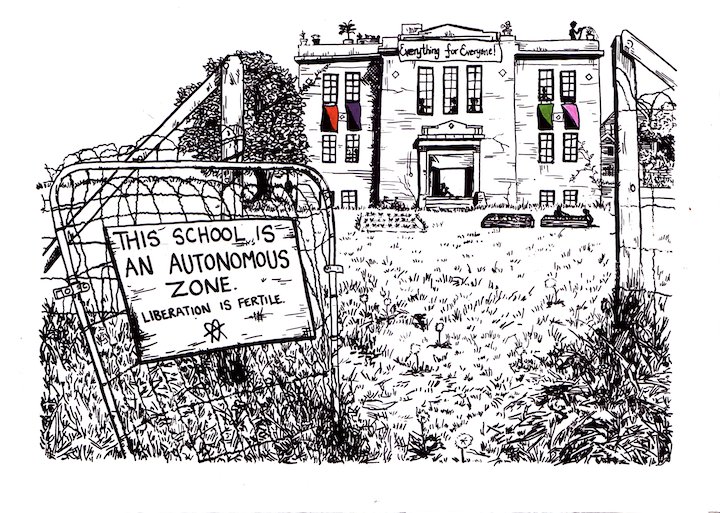
Everything for Everyone!

Art by Ali Cat. Leeds at Entangled Roots Press licensed Under Creative Commons License “CC BY-NC-SA 4.0.”

policing campus diversity: Somali Night

Yesterday I read the stomach turning account of how my alma mater, the University of Minnesota, treated the Somali Student Association at the end of its cultural week, last Friday. I’m presenting the Somali Student Association’s account here in its entirety, because the whole thing is worth the read. It is one of the most thorough, clear, and comprehensive accounts of a police riot I have ever read. It is an alarming picture of how subtle, purportedly nonviolent, and even micro-level forms of racism combine and become explicit, violent, and massive.

Somali Night Press Release Pg 1Somali Night Press Release Pg 2Somali Night Press Release Pg 3


Many things about this statement jump out immediately. One of them is the claim made by employees on a university campus that it would be impossible to use markers on Black skin. This indignity, which must have occurred in the context of so many others during the planning for this event, encapsulates clearly that the University of Minnesota is still unprepared in 2018 for the presence of Black people.

Something else I notice immediately is the calm, composed, and measured tone of this press release, written by a student organization.  So much can be learned just by reading what these students have to say about their experiences. I expect we will learn even more from them by watching how they challenge the university in its reaction.

Students on the University of Minnesota campus have already been reporting on their negative experiences with the cosmetic diversity initiatives embraced by their campus (which is similar to so many others). The Whose Diversity? campaign that began in Spring 2014 created a powerful set of testimonies of experiences of students of color on campus.

Perhaps most telling is that a quick Google search conducted 24 hours after the Somali Student Association’s press release and 3 days after the Somali Night incident itself reveals very little reporting on the event and its heavy policing. I suppose it comes as little surprise that the most cogent and knowledgeable source of information about these events comes from the affected students themselves.

Reading on the Chaos in the UW system

Today I’m presenting a master list of high quality commentary and analysis on what has been going on in the University of Wisconsin system over the last several months, particularly around the merger of the UW Colleges and the extensive program cuts at UW-Superior and UW-Stevens Point.

I am a sociologist, and we are fond of saying that our discipline does not give us the tools to read the future. That being said, if I was the kind of person who made bets, I would be willing to place money on the fact that we will soon see another announcement of deep program cuts to another UW campus, made in the absence of faculty, student, and community input. Too much groundwork has already been laid for this to be the end of it. I think it will be important to be informed about what the situation is in Superior, at Stevens Point, at the Colleges, and throughout the UW system, as these cuts continue to roll forward.

Clenched blue fist in the shape of the state of Wisconsin with the text Stand with Wisconsin at bottom.