Afew months ago, I logged into my online Securus account to send an electronic message to a friend in a Washington State prison. To my shock, I found the word “blocked” on my account and I was not able to send any messages. The block came just a few weeks after I had published an article with Truthout on censorship inside of prisons and had sent the finished article to some of my sources over the e-messaging system. It’s hard to know for sure, but the block is either the result of my journalism, or it is a result of facilitating a book club that connects people inside with those on the outside. Since my Truthout article was about how difficult prisons make it to access information, especially for LGBTQ+ people, the block seems ironic, to say the least.
People in prison do not have direct access to the internet or to any standard email services, nor can they generally receive phone calls. Instead, any communication other than paper mail (which isincreasingly rare) takes place over services managed by for-profit companies like Aventiv, ViaPath and IC Solutions. If one of these services chooses to implement a block on an account, as in my case, an outside user cannot send e-messages, put money on a loved one’s books or pay for phone calls — for anyone who lives in a prison, anywhere in the United States, that uses the service that has implemented the block.
The only remedy for this is apparently to appeal to the state Department of Corrections (DOC), but unsurprisingly, there is no obvious method for such an appeal available to an outside family member or friend. Figuring out how to appeal required several calls and emails, and in the end, did not yield any change to my situation. This block is inhibiting my ability to do my work, and more than that, it’s isolating my friends in prison from contact with the outside world.
The rampant banning of texts about queer and transgender people has been in the news a lot recently, but nowhere is book banning more of an issue than in prison. Trans people, in particular, suffer from prisons’ arbitrary restrictions. Sophia Alexsandra Brett Laferriere, a trans woman living in a Washington state prison, told Truthout via the prison’s online messaging system, “Most of the information we ask for doesn’t get to us, or staff steal it or write over it. They block it from us.”
Although data is not easily available, there are clues that indicate the severity of these impacts. For example, Trans Bodies, Trans Selves, a textbook-like educational resource for trans people, is banned in Arizona, California, Connecticut, Missouri, North Carolina, Texas, Virginia and Wisconsin for “obscene material,” and being “sexually explicit,” among other related reasons. In Washington State, prisons keep a copy stocked in the library after legal intervention from the American Civil Liberties Union, but individuals are still not allowed to have a copy, says Dillon.
Recently I heard Dean Spade on the podcast Death Panel talking about an article he wrote for In These Times. The article was about two recent pieces of “cli fi” (climate fiction), and in part inspired by his essay, I went looking for more literature representing more realistic views of the climate crisis we are facing (and already experiencing). (I’m also looking for helpful representations of pandemics or specifically the coronavirus pandemic in literature, so if anyone has recommendations, please do point me to them.)
Spade argues, in part, that even among the left we retain some liberal fantasies when it comes to climate, believing that climate is somehow too big for our actions to impact and that ultimately only state intervention will be meaningful, or worse, that we hope that state intervention or actions of some kind will save us. Spade writes, “avoidance and denial perpetuate and stem from people’s hope for state-based solutions and the belief that states or corporations are the only actors that can ultimately implement solutions to these problems. The (often suppressed) awareness that the very entities that got us into this mess are not going to get us out of it — much less contribute to building a society where people have what we need — can, of course, cause our overwhelm and immobilization if we believe they are the only answer.” Spade continues, writing about Peter Gelderloos’ book The Solutions Are Already Here, “It is so helpful to remember that no matter what fictions are used to justify domination, we did not design or consent to these arrangements of extraction, and people lived for tens of thousands of years without them. To resist and survive the current crisis to whatever limited extent is still possible, we have to work against states, not inside them.”
What I ended up finding in my own search for fiction to help me think about this was The Light Pirate, written by Lily Brooks-Dalton, a book I liked a surprising amount given that it is a book about the climate that is also part of Oprah’s book club. In fact, I really liked the book and found that it really helped me tackle some of the things that Spade mentioned in his interview and article, specifically my own denial and avoidance.
[mild spoiler alert] In the Light Pirate, people in Florida are abandoned by the state. This happens in sudden, but realistic feeling ways. Our already frustrating, impersonal, uncaring local, state, and federal government systems – one where elected representatives never even bother to answer their phone lines – are tipped over the edge by the collapse of their tax base as people flee.
I liked too, Brooks-Dalton’s portrayal of how everyday people react, and especially her portrayal of the failure to notice the crisis until it is already too late to do much, perhaps even too late to survive. People in the book engage in acts of trying not to recognize what some part of them knows in a way that makes it easier to understand the total avoidance that most people in the U.S. engage in when it comes to climate crisis.
Listening to Spade talk about our difficulty facing the grief, anguish, and hopelessness we feel, and how that relates to our inability to really face the reality of the situation, really made me reflect on the silences in my own thinking. Up to now, I thought that I was facing this in a pretty clear-eyed way. I talk about climate crisis and the future I expect from it much more than the average person and more than almost anyone else I know, and preparing myself for this crisis is a specific part of the way I think about arranging my life. A lot of my thinking about COVID, and the ways that I have made permanent shifts in my life in response to COVID, are driven by the knowledge that COVID is very likely only the first such illness and pandemic I will face as the Earth warms. I do not expect to find a house or a career or a life that I can stay put in for decades because I do not expect that to be a real possibility for me among the varying levels of collapse. Even so, as I listened to Spade, I realized that there are a lot of aspects of the climate crisis that I have not thought about in specific detail.
By taking a hyperlocal perspective rather than a global one, The Light Pirate encouraged me to think in specific concrete terms about what the next few decades are likely to bring exactly where I live. For me, this is obviously not to disregard what will happen elsewhere; it is critical to expand our nets of solidarity as wide as we can so that more people can survive. But if I’m honest with myself, I have allowed myself to consider this a global phenomenon and thus more abstract or harder to conceive of, and to leave the concrete realities of what will likely happen to me, right where I live, out of my thinking. It’s as if a wall goes up when I try to think more about that and my mind just switches topics. Reading this book helped me see how essential developing that understanding (and facing it) is to any kind of preparation, whether mutual or individual. There are knowable things that I can learn, like understanding the ecosystem that I’m in and how it is most likely to change, that will increase my chances of adapting and, crucially, of supporting others.
One of the Light Pirate’s main messages is one of adaptation, an evolutionary message of adapt or die. The book also really helped me understand why this kind of adaptation is so difficult for us. Through the character’s eyes, I have a better sense of why so many refuse to see what is happening to our environment and our living conditions right in front us. I found the portrayal of a world where people in Chicago are still taking vacations to Europe and attending graduate school while people in Florida are literally being swept away by hurricanes and a rising water table to be realistic. After all, we are already in that world where we go about our daily lives in ways that reflect that the problems suffered by people in other parts of the world do not have urgency and are not our own. Why would it be dramatically different as the zone of “not here” gets larger and the zone of “stability” gets ever smaller? Recently I had a really good conversation with an old friend about COVID. We were talking about the feeling and meaning of being “early adopters” when it comes to making permanent shifts to our lives as a result of COVID, and in preparation for the other pandemics that are likely coming. Being an early adopter is a lonely thing, and by definition it means doing something or conforming to an idea that is not widely held. Personally, it can be hard for me not to question my actions or understanding when it seems so contrary to everyone around me. I think the Light Pirate really helped me grapple a bit more with that. After reading it, I feel affirmed in my early adoption preparing for the next pandemic, and in refusing to go back to a normal that has now vanished and instead working as hard as I can to prepare for what’s to come.
Last fall, I made my first digital zine. I have made a few minizines before (the kind you make from folding a single piece of paper) and have found it a fantastic exercise (plus they’re cool). I like how the process of collage, of looking for images and fonts and other little bits, can unlock my mind. There’s a kind of relaxation in thinking about what you want to say without thinking so directly and insistently about what you’re going to say. And, it’s kind of like a blog in the sense that it can be a less polished version of writing. These intermediary steps of daring to get my ideas out and see what people think of them, before putting in the work to polish the writing, have been so critical for me in developing a much more regular writing practice.
click to open and read the zine
For this reason, a zine was the perfect medium for getting a project started that I’ve really been thinking about for several years now: a book on why social movements matter. But more specifically than that, a book on why it matters when we get together to fight for our collective liberation, even if we don’t win. My hope is that this is a book that can inspire people to take the risk and do something. I know so many people who are clear on the problems they see around them but for whatever reason, are not actively engaged to change the situation. My hunch is that many of us think that it is hopeless to fight against big structures like racism, or the prison industrial complex, or environmental devastation. This is a book about why it should never be hopeless.
The zine I’m sharing here is a first draft of the ideas for the book. The book itself – which I’m putting together now! – is an anthology. In the end, it didn’t make sense for me to write a book about collective struggle by myself. I wanted to include multiple viewpoints and more collective wisdom. So this book, tentatively titled The Struggle Is Always Worth It, includes the writing of a dozen badass organizers and folks engaged in thinking about why we on the left do what we do.
As always, I’d love to hear any reactions and I hope you’ll keep a look out for the forthcoming book.
I am not sure if I read less fiction than usual this year or if I made some bad picks and as a consequence I have fewer books to recommend. I certainly read more books than usual that I don’t want to recommend, and even a few that I actively want to dissuade anyone from reading (seriously, don’t read the Overstory). But despite the few bad experiences, I continue to find joy, rest, and thrilling new ideas in fiction.
Reading the same books as other people also creates a connection and a shared experience that I have loved since childhood. I love discussing the plot, the reactions, the details of how it feels to be enveloped in the author’s world and that motivates me to share my faves with my network every year too, hoping to share those connections.
Black Sun – Rebecca Roanhorse – I’ve raved about Roanhorse’s work before, so I was of course excited to read this as soon as it came out. It did not disappoint, and the powerful ways that Roanhorse draws on the ideas of earlier Indigenous peoples in the Americas has stayed with me all year.
Testimony – Peter Lazare and Sarah Lazare – this political thriller is a must read for folks in social movements who will instantly recognize the dilemmas and scenarios here. It also brought the early 2000s back to life for me, and showed so clearly how they continue to shape the current political landscape.
Lying Life of Adults – Elena Ferrante – I love Ferrante’s work so I loved this: beautiful prose, powerful insight into gender politics, and psychic drama from the perspective of an adolescent.
Two nonfiction books this year I have been reading in groups with friends and giving as gifts:
Beyond Survival – edited by Ejeris Dixon and Leah Lakshmi Piepzna-Samarasinha – This is the book I have been needing in my hands since I was a young adult in community spaces and house parties. Full of concrete tips and discussions in short essays about how to create justice outside of and beyond the harmful and violent police industrial complex (and the dilemmas and pitfalls).
We Do This Till We Free Us – Mariame Kaba – A series of essays about the work of abolition in its many forms, and why it is important, and the many issues to consider. Kaba has been part of numerous abolitionist and transformative justice projects over the last 20 years in the US, especially those focused around gender-based violence and youth, and is one of the key abolitionist thinkers of our time.
essential all-the-time listening:
I always leave these podcasts feeling wiser and, most importantly, more hopeful.
I believe that fiction, and art more generally, is never frivolous. Abolition, to give one potent example, relies heavily on the power of imagination because we must be able to imagine a world beyond cages, beyond borders, beyond policing of all kinds as we begin to build that new world. This work requires us to strengthen our imaginations, and part of the work of abolition is also recuperating imagination from capitalism, which is relentlessly working to kill and co-opt our ability to imagine things for ourselves. Capital (and capitalists) wants to show us things as it sees them, as it wants things to be; it wants to shape the world and sell it back to us. It does not thrive when we are able to imagine, shape, and reshape the world for ourselves. Human beings have powerful imaginations, but only when we cultivate them.
Fiction is critical just when things seem to be at their most serious, and, in that spirit, I share some food for your imagination.
***
I strongly encourage anyone purchasing books to avoid Amazon in particular and other large chains in general (the library is also always an option). If you don’t have a particular independent bookstore or even if you do, you can order any of these books easily online at Bookshop and support independent bookstores.
***
The Plague – Albert Camus – Very cliché read, and yet I cannot say enough how many passages leapt off the page as if they had come out of the Washington Post. I thought this would be depressing and yet it was validating (and infuriating). The excitement in the air about the vaccine feels so much like the end of the book.
Loop – Brenda Lozano – A very apt book for right now. A book about waiting, and about nothing and everything.
The Deep – Rivers Solomon – Aching, haunting, powerful but not devastating. Perhaps one of the most beautiful books I’ve ever read.
The Shadow King – Maaza Mengiste – An intersectional tour de force on colonialism, class, gender, caste, and race, and maybe one of the most difficult books I’ve read for me personally, possibly because of the combination of the subject matter, format, and unfamiliarity with the history and region. A difficult read that was worth it.
Mildred Taylor’s Logan Family series – This is highly recommended YA by the woman who wrote Roll of Thunder, Hear My Cry. It turns out Taylor wrote a whole series of books around multiple generations of the family in that book, beginning with The Land. In August I disconnected from all electronic communication and hung out in my house to detox. During that period, I read five books, and in the end, The Land was the one I ended up recommending to everyone.
American Marriage – Tayari Jones – A really compelling and engrossing book about the effect of large social forces on one family.
The Distance between Us – Renato Cisneros – Part family memoir and part reflection on individual roles and responsibility? ignorance? innocence? in the midst of governmental terror, this is the true/fictional account of the son of a Peruvian general in the 1970s and 1980s, given to me by a close friend who lived through the same period and recently translated into English by the wonderful Charco Press.
The City We Became – NK Jemisin — If you are not yet reading everything by NK Jemisin, you may want to start. I am, so I will continue to recommend it.
Who Killed Berta Cáceres? – Nina Lakhani – A powerful investigative account of how the murder of Berta Cáceres was arranged and how the crime is embedded in larger forces of extractivism, corruption, and especially counterinsurgency tactics linked directly to the US. Some of the clearest writing I’ve read describing how counterinsurgency actually works inside communities.
Indigenous People’s History of the United States – Roxanne Dunbar-Ortiz – Should be required reading for every white and/or settler person in the United States. I had picked and chose chapters to read previously, but Dunbar-Ortiz’s thesis grows slowly over the course of the book and I appreciated the ideas much more deeply when I read the whole thing straight through.
Dead Girls – Selva Almada – Imaginative, powerful, and intimate book about femicide and machismo exploring the unresolved murders of 3 girls in the interior of Argentina in the 1980s and their ghosts. Just short enough and just the right tone to be read without quite breaking my heart completely.
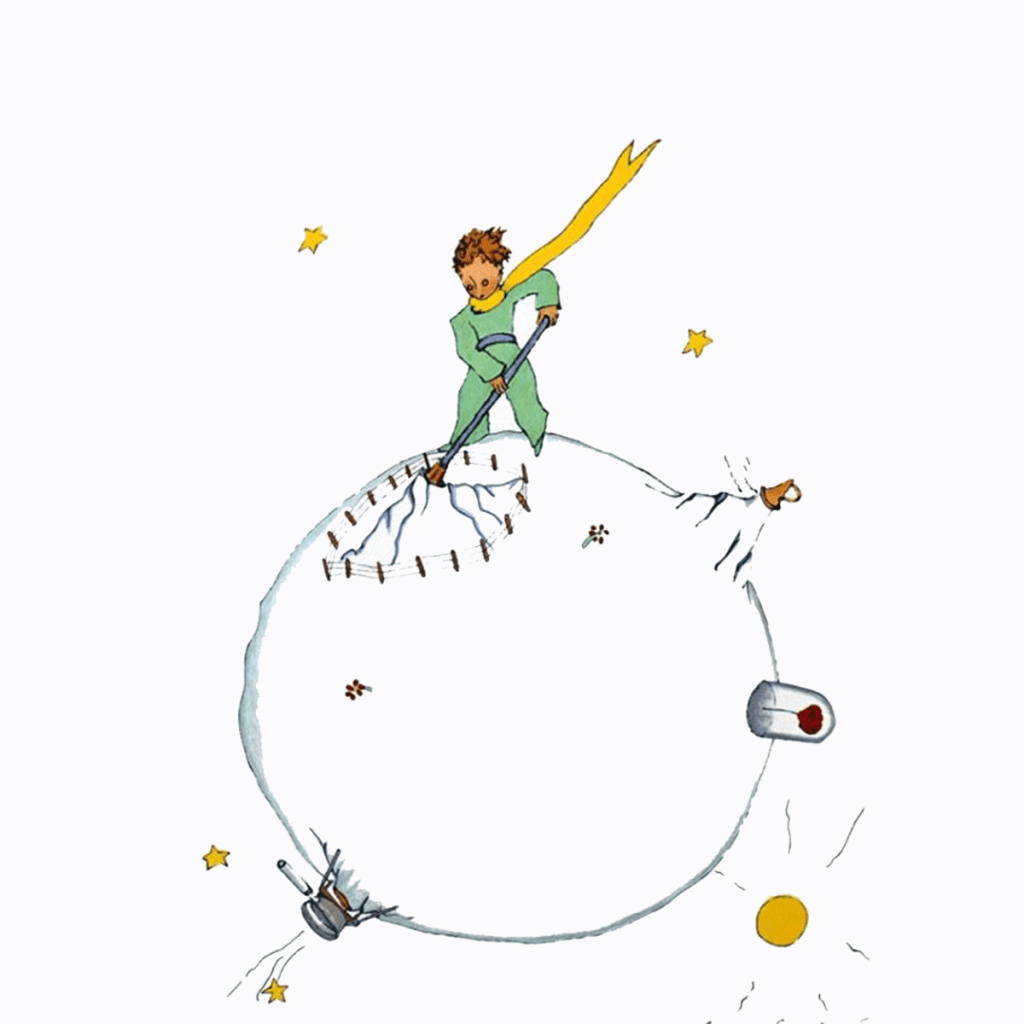
an image relevant to the COVID era from Antoine de Saint-Exupéry’s The Little Prince
Just a quick post throwing together many great essays and discussions that explain why I’m not in to Hillbilly Elegy, movie and book, now that it’s getting even bigger. I know some people in my life have found it compelling, because I know it does show some things that some of us identify with, and that most people really want to see ourselves and the conditions of our lives represented in books and movies. But I think we can and should find better versions of this representation, and this is why:
“The problem with Hillbilly Elegy’s version of the Pygmalion story is that it never reckons with the fact that J.D.’s whiteness—bought and paid for, in part, by Scots-Irish ancestors through bloody colonial warfare—is not just incidental but integral to his triumph. Hillbilly Elegy is a Bildungsroman about becoming middle-class white that never asks why that gold standard is problematic.” The book and the author’s politics are absolutely about promoting biological notions of race and other forms of white supremacy, even more so because it is claiming not to be about race (again, look up Charles Murray!): http://bostonreview.net/arts-society/ellen-wayland-smith-mythic-whiteness-hillbilly
There are real questions of “poverty porn,” driven particularly by questions about who made the movie and who wrote the book (Vance doesn’t seem to be particularly tied to the community, or maybe what I mean is, allied with it – is he really writing about himself?). More to the point there is a long history of harmful representation and Appalachian stereotypes: https://www.americamagazine.org/arts-culture/2020/11/25/hillbilly-elegy-poverty-porn-239358
Once again, I put together a list of the fiction that I read over the past year that I loved and want to recommend. I found that in doing so, both this year and last, I was reminded of what I learned through reading literature. Indigenous author Rebecca Roanhorse suggests that fiction, and especially science fiction, is important because “the future you imagine is the future you get.” She goes on to say: “for me, it is important to imagine a future that centers Native people, that highlights our stories and our ideas and our languages, science, and art. Otherwise, the world suffers. Stuck in colonizing language and thought (Space conquest! Colonizing planets!) without considering that there might be another, better way.”
I was a little slow on this one, in part because I was worried it was going to be reactionary, but I found this book to be satisfying politically and quite funny in parts. I wish everyone could read the section skewering Vietnam War movies.
A quick-moving, adventurous read about monster killing. Also a thought provoking piece of literature that taught me in a new way (as I hoped it would) that representation really matters. Let’s hope there is a movie or TV option. I’m #50 on the waiting list for the next book.
Second book I have read and absolutely loved by this author of Black speculative fiction. my favorite part of this book might have been its insights into family dynamics although it is also leaving me thinking about the skills I should be building for the climate crisis.
I didn’t see the movie, so I don’t know how it compares. I really liked the book and felt like it was a good companion read to When They Call You a Terrorist; each covered certain things the other did not. I liked the emotional terrain and complexity of this book which used the power of fiction to tell another side of the story of police murder. If you want to know about the Black Lives Matter movement though, you should do further reading.
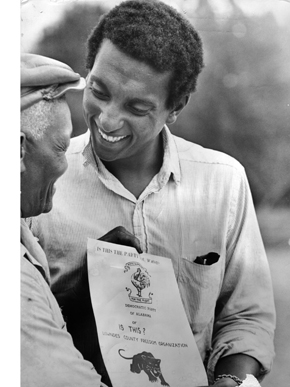
Although I understand the phrase institutional racism so well that I have actually taught its definition and usage regularly, this is the first time that I have ever heard its origin, and specifically that its origin is attributed to Stokely Carmichael. I am dumbfounded. Of course, there can be no question that I am to blame for this. But there is also a much larger question here about sociology. I use and teach “institutional racism” in the ways
Stokely Carmichael in Alabama in 1966
that sociologists around me use it, and the ways that I learned it. I have never before heard it attributed it to anyone specific, much less to Carmichael and Hamilton or the Black Power movement. We seem to have simply claimed it as something we do, as part of our larger systemic way of looking at the world. In fact it’s often used interchangeably with “systemic racism.” And that may well be a good and important thing. But it should not come at the cost of erasing the contribution of Black scholars, Black people, and Black movements to our theorizing and scholarship. While we can and do debate the ownership of any one person to a word, no one hesitates to cite Judith Butler when they use the phrase “gender trouble” though these words surely had other connotations and meanings before and after this scholar. We cite Marx when we simply refer to “capital” or the “means of production” and sometimes Foucault gets all of “power.”
This is a question of our citational practices and how they reify existing power structures. This is about how we continue to actively create a white academy. Sara Ahmed discusses this (and provides one alternative possibility) in her nourishing book Living a Feminist Life, which does not cite any white men:
Citations can be feminist bricks: they are the materials through which, from which, we create our dwellings. My citation policy has affected the kind of house I have built. I realized this is not simply through writing the book, through what I found about what came up, but also through giving presentations. As I have already noted, in previous work I have built a philosophical edifice by my engagement with the history of ideas. We cannot conflate the history of ideas with white men, though if doing one leads to the other then we are being taught where ideas are assumed to originate.
It is for this reason, among others, that the Cite Black Women campaign was created. As the Cite Black Women’s Collective says, “It’s simple. Cite Black Women.” But also: put in the work. Find the citations and place Black women in the center of your syllabus and your sociological research and even your informal political thinking. The collective has a praxis:
Read Black women’s work
Integrate Black women into the CORE of your syllabus (in life & in the classroom).
Acknowledge Black women’s intellectual production.
Look, this is not just about “you.” I certainly need to do better at this too. The fact is, unless a person has been making a conscious effort to do this for several years now, it’s likely that many of us need to be putting some work in to do better at this. The point is that we all need to do the work because it isn’t going to happen without it – no one is going to start getting the credit they deserve for their contributions to our discipline and to our thinking without all of us practicing the racial justice that we preach. Here is a short list of Black scholars who influenced sociology to get you started.
I came across this short passage suddenly the other day in Jeanette Winterson’s Written on the Body. In this radically shifted perspective I found myself able to move toward more radical acceptance of death and constant change. Maybe you will find something else.
Six bearers in long coats and white scarves carried the body to the grave. To call it a grave at this stage would be to dignify it. In a garden it might be a trench for a new asparagus bed. Fill it with manure and plant it out. An optimistic hole. (p 176)



 Dr. October Krausch