Amid Growing Health Threats, Nurses Are Still Fighting for Basic Protections

Five years since the start of the COVID-19 pandemic caught our health care system unawares, nurses and other health care workers say we are no more prepared for the next threat.

“It’s scary,” says Tatiana Mukhtar, a nurse in New Orleans. The exposure during the initial phase of the COVID-19 pandemic “was horrific, for patients and for health care workers” she says, “and having been there and having experienced that, I feel like we have learned nothing because [health care systems] are still not doing what we need to do.”

Although the emergency feeling of spring 2020 may have faded, the need for public health measures to combat the spread of disease remains urgent. COVID is still circulating widely, and studies show that at least 35 million adults have experienced Long COVID, and that COVID increases the risk of heart disease in both children and adults. This has also been the most dangerous flu season in 15 years, with up to 92,000 people dying of the flu between October 1, 2024 and mid-February this year.

The U.S. also faces a resurgence of both tuberculosis (TB) and measles, the latter of which is one of the most contagious viruses on Earth. Meanwhile, with the threat of a bird flu outbreak among humans also looming on the horizon, the Trump administration is eliminating what Mary Bowman, a nursing assistant professor, refers to as our “already meager public health infrastructure.”

“In truth, what was laid bare by the beginning of COVID was how disinterested capitalism is in people caring for themselves when they’re sick, when they could be sick, when they could get other people sick, when their families are sick, when someone dies,” Bowman told Truthout. “There’s just no space for humanity in it.”


My latest at Truthout is up now. This piece is about the lessons that were learned from COVID that have been forgotten or rolled back, but it’s also about how those lessons — like high quality masking in the hospital — were only ever implemented in the first place because of the hard organizing work of nurses and others. In other words, we have to keep organizing!

Writing about the “pandemic of abandonment”

My latest piece, for The Sick Times, is one that was borne out of my own experiences, and especially my frustrations. The five years of the COVID pandemic have been difficult, but it was really 2022 and 2023 that were the most difficult for me. This was the period when so many people I know and love, the same people who were helping me process and keep going throughout the very dark periods of 2020, gave in to the push to “move on.” I have been watching in shock and horror as people close to me have returned to most or even all of their 2019 behaviors, discarding anything we might have learned about protecting each other from infectious disease and making the world a safer place for chronically ill and disabled folks (not to mention preventing more chronic illness and death). These years were also hard because as fewer and fewer people took basic precautions like spacing out risky events or waiting at home when they felt sick to determine if they had a cold or something much more deadly, the world outside got that much riskier. This increased riskiness coincided with my own health getting worse, making me feel that one serious infection could tip me right into disability. In 2020 or 2021 we were working with a shared understanding, but by 2022 all of the burden even in small social settings was shifted on to me if I wanted to be careful, limiting my social world. Suddenly someone not wearing a mask might say “oh yeah, I’m feeling sick, I’m not sure what’s up with me,” as if that didn’t have any bearing on the people around them. I had to start assuming that someone with an active case of COVID was in almost every social setting, drastically reducing my own range of action.

I think regularly about what I did not know, or more precisely, what I did not accept and commit to, prior to the pandemic. I had certainly heard that the flu kills some people every year, but it honestly never occurred to me that the corollary was that I should do everything in my power not spread the flu. This was wrong, and honestly, I’m pretty sure it was rooted in some eugenic thinking that is the status quo. People that might die from the flu, I thought, are people that are vulnerable to all kinds of stuff and something will get them anyway. I’m not proud of this, and I’m not advocating this line of thinking, but I also do not think this is uncommon. I didn’t specifically have this thought consciously, but I felt entitled to a certain range of motion in the world and it didn’t make sense to me to limit that for a small minority. My view on this is changed, dramatically. It is possible to do so much more for each other and to create a world where the flu and COVID and other infections kill so many fewer people each year. Huge institutional change is needed to make this a reality – like paid sick leave and supports for child care beyond the nuclear family – but that’s no different from a range of other social justice issues where I believe fervently that it’s important to fight for institutional change AND to act and live within my values as much as possible. (I want to add, too, that this growth is part of living an examined life. In the future I will probably look back on something I do now and regret the harm I caused, maybe even something comrades are already doing around me.)

Feeling this dissonance with friends and comrades over COVID practices has generated a lot of grief, as it has for thousands of others. This article, which draws on a survey that was responded to by more than 2,500 people, helped me work through that grief. It is helpful (and hopeful) to know that I am not alone, that none of us are alone. That it matters to keep pushing in the direction my values compel me. And it helps to try to make sense of why these deep gulfs have arisen between me and so many people I know rather than remain stuck in the frustration, anger, and grief.

I know the article has been useful to a lot of people who are in a similar situation as me: the COVID-avoidant who are feeling discarded. But I also hope folks who have had their differences with me over COVID practices will find some understanding of how our relationships have changed and why.


The “pandemic of abandonment”: Navigating friendships five years into COVID-19

Over the last five years of the ongoing COVID-19 pandemic, many people have experienced significant changes and ruptures to their personal relationships. People with Long COVID and people taking COVID-19 precautions have lost many friends as they are not able or willing to return to “pre-pandemic” behaviors.

This significant grief has received very little public attention, but the extraordinary response to a The Sick Times survey indicates a strong urge for people to talk about this experience. 

Of 2,586 people who responded to the survey, 81% reported having lost friends.

One woman told The Sick Times, “I don’t see friends often because I hate feeling like the bad guy or like a burden, telling them they have to mask to hang out with me.” Another respondent called this “the pandemic of abandonment.” 

Read the rest here: https://thesicktimes.org/2025/01/30/the-pandemic-of-abandonment-navigating-friendships-five-years-into-covid-19/

(Don’t get) COVID for the holidays

As we’re facing the next COVID surge (brought on by holiday travel), I thought I might try a different kind of COVID post. You can skip to here for some easy to do tips and tricks you might have missed, or you can read down for my discussion of why this is important.

I have recently been writing and thinking a lot about why so many of my friends and family’s actions on COVID are so different from mine. Namely why so many people I know no longer seem very interested in either preventing themselves from being sick or, importantly, not spreading sickness to anyone else.

In my own case, the experience of staying home to stop the spread in 2020 forced me to strongly reconsider my behavior up to that point. Why had I ever thought it was OK to go to work or ride the subway with the flu, unmasked and taking no precautions, knowing that the flu certainly hospitalizes and kills people each year? Even if the flu was no big deal for my body, my behavior had limited other people—particularly disabled people—from comfortably being in public during flu season. I had knowingly spread around an illness. I radically reconsidered a lot of my behavior, and in particular, 2020 pushed me to focus more specifically on disability justice in my activism. A disability justice framework pushes us beyond thinking about individual access to consider how ableism limits us all from liberation.

Getting back to why this reconsideration didn’t happen on a mass level, understanding disability justice also means understanding that ableism is the current social order. And if it’s the order of the day, like other oppressive ideologies, that means we are all drenched in it and it is impossible to avoid ever doing something ableist. Furthermore, most people are going to act in ableist ways, most of the time. None of this are exempt from this, but not even trying is definitely worse!

I am also well aware that good COVID information is hard to come by, especially if you are not on the regular lookout for it. And if you do go looking for it, it can quickly get overwhelming. So I’d like to offer here a very short, distilled list of things people might have missed since 2020. (I’ve not taken the time to track down citations for all of these things; you’ll have to trust me that I got them from trustworthy sources or you can verify on your own. I’m happy to give more info on any of these too.)

Some of these things are easy enough to do. I’m offering this list because from a “stop the spread” mindset, each specific thing you do is helpful. This list is not meant to be comprehensive, and it’s hopefully not overwhelming. You don’t have to be perfect or avoid COVID 100% of the time or make this part of your identity, but I’d like to ask everyone reading this to take one step up in your mitigations for the holiday season, since this is reliably a time with huge increases in virus transmission. With around a thousand people still dying every week from COVID in the US, you don’t know whose life you may save by being a little more careful.

Masking

This is the biggest bang for your buck, precaution-wise. If it’s hard for you to mask all the time in public, consider masking in places that disabled people really can’t avoid, like the pharmacy, the grocery store, and on public transportation.

I’d also suggest that if masks are uncomfortable, try different kinds of masks! The Aura is my favorite mask – it’s tight to my face so my glasses don’t fog and head straps don’t hurt my ears like ear straps do. Wellbefore sells masks in different sizes and colors, and Armbrust has sampler packs. Just try a bunch and see what works for you!

Finally, know that if at all possible, you should wear an N95 or KN95 mask. This is a change since spring 2020 because the current variants of COVID are more contagious.

Mouthwash

Washing your mouth out with a mouthwash containing CPC (cetylpyridinium chloride) before or after seeing people, or just regularly, will kill some of the virus in your mouth and keep you below the threshold to get sick and/or shed the virus to others. This is a really easy one; CVS brand mouthwash has CPC.

Sip mask

These valves will allow you to drink without breaking the seal of your mask. This is great for airplane travel, crowded conferences, or other risky spaces that you need to be in for an extended amount of time.

Airplane

The most dangerous time on an airplane from a virus transmission standpoint is the time sitting on the runway (because of the way they circulate and filter the air onboard). Even if you don’t mask up during the flight, this is the best time to mask. (And if you do mask, this is the worst time to have a snack or drink – try to keep your mask on for all of this period.)

Space out risky or crowded events

Don’t go to a wedding and a concert in the same weekend! Illness takes 3-5 days to develop after exposure, so give yourself time to know if you got sick from the last thing before potentially spreading that to the next thing.

Air purifiers work!

This is a great one for places that you can’t avoid, like school, work, or daycare. You can make your own Corsi-Rosenthal box, but there’s also a variety of high quality air purifiers you can get for $70-100. You want to make sure it has a HEPA or Merv13+ filter on it, and check how quickly it changes out the air in a room. Since COVID is airborne, there can be COVID in a space even after the person has left it. Setting up air purifiers and/or opening windows until enough air has circulated before you remove your mask is a great way to make a space COVID safer

Test before going to events, even if you don’t feel sick

Rapid tests (the kind you’re used to getting from the government and at the drug store)

False negatives from these are rampant but a positive test reliably means you have COVID. The accuracy of these tests also increases a LOT if you take two of them 48 hours apart.

Better home tests are now available

Metrix and Pluslife are both testers you can buy that offer a similar level of accuracy to a PCR test (that is, very accurate!). These devices are expensive, but so is another COVID infection: think of the missed work, cost of Paxlovid, and potential for Long COVID to keep you down even longer.

It’s a good idea to get an updated vaccine 2x a year too; like the flu shot, these vaccines are updated to try to fend off the particular variants that are circling. Be mindful though that vaccination will not necessarily stop transmission, especially of asymptomatic cases. Handwashing is also good for general prevention, but it doesn’t really stop COVID transmission. In the early days of COVID, researchers guessed that it was spread by physical droplets. That’s why we were instructed to wash our hands and groceries. But now we know that COVID is airborne; it spreads more like cigarette smoke than spit!

Of course, no single thing works perfectly. The best model is still the Swiss cheese model, but that also means each thing you do helps. If you’re reading this, please consider doing *one more thing* to take care of yourselves and others. I love you.

A photograph of a sidewalk display in NYC. Approximately 20 mannequin heads wear a variety of colors of KN95 masks, amidst ball caps and other items for sale. Handwritten signs adorn the table saying things like "On sale KN 95. 1 for $3, 2 for $5."
Photo by Sam Stone. Manhattan, New York, on 6th Avenue somewhere between 20th and 17th Street, 2020. https://hdl.loc.gov/loc.pnp/ppbd.01588

the politics of COVID information

The pandemic isn’t over. Why is it so hard to find accurate information about it?

This week, Nassau County, New York, passed a mask ban. Those wearing face masks will now face the possibility of up to a year in jail or a $1,000 fine. Angry at the power of anti-genocide protests, lawmakers banned one of the most basic forms of disease protection just as the world is experiencing a record surge in COVID cases. While officials insist that the law will not be used against those masking for medical reasons, disabled activists protesting the move say they were intentionally coughed on during the city council meeting where the bill was passed.

In a world of airborne contagious diseases, everyone has a medical reason for masking. So why doesn’t our public health policy recognize that?

In 2020, at the height of the first wave of the COVID-19 pandemic, then-President Donald Trump was excoriated for saying that “when you test, you create more cases.” This statement was met with outcry by journalists and public health professionals and pundits from all major outlets.


Read my most recent article here. In it you will also find a list of places you can stay more informed about COVID, critical during this record-breaking surge.

The response to this article has been tremendous. I was especially honored to be a guest on one of my favorite podcasts, Death Panel, to talk about the piece. If you’re not a paid subscriber, you can check out a preview of the first 20 minutes of the episode here.

Finally, I want to officially announce my name change to October! This has been a long process for me since letting go of the past is not always easy, but I am excited to have a name that better reflects who I am in this part of my life. If you have known me a long time, please feel free to continue calling me Meg, but I will gradually be removing Meg and Meghan from my byline and business information, and may change my email address eventually too.

really facing the climate crisis

Recently I heard Dean Spade on the podcast Death Panel talking about an article he wrote for In These Times. The article was about two recent pieces of “cli fi” (climate fiction), and in part inspired by his essay, I went looking for more literature representing more realistic views of the climate crisis we are facing (and already experiencing). (I’m also looking for helpful representations of pandemics or specifically the coronavirus pandemic in literature, so if anyone has recommendations, please do point me to them.)

Spade argues, in part, that even among the left we retain some liberal fantasies when it comes to climate, believing that climate is somehow too big for our actions to impact and that ultimately only state intervention will be meaningful, or worse, that we hope that state intervention or actions of some kind will save us. Spade writes, “avoidance and denial perpetuate and stem from people’s hope for state-based solutions and the belief that states or corporations are the only actors that can ultimately implement solutions to these problems. The (often suppressed) awareness that the very entities that got us into this mess are not going to get us out of it — much less contribute to building a society where people have what we need — can, of course, cause our overwhelm and immobilization if we believe they are the only answer.” Spade continues, writing about Peter Gelderloos’ book The Solutions Are Already Here, “It is so helpful to remember that no matter what fictions are used to justify domination, we did not design or consent to these arrangements of extraction, and people lived for tens of thousands of years without them. To resist and survive the current crisis to whatever limited extent is still possible, we have to work against states, not inside them.”

What I ended up finding in my own search for fiction to help me think about this was The Light Pirate, written by Lily Brooks-Dalton, a book I liked a surprising amount given that it is a book about the climate that is also part of Oprah’s book club. In fact, I really liked the book and found that it really helped me tackle some of the things that Spade mentioned in his interview and article, specifically my own denial and avoidance.

[mild spoiler alert] In the Light Pirate, people in Florida are abandoned by the state. This happens in sudden, but realistic feeling ways. Our already frustrating, impersonal, uncaring local, state, and federal government systems – one where elected representatives never even bother to answer their phone lines – are tipped over the edge by the collapse of their tax base as people flee.

I liked too, Brooks-Dalton’s portrayal of how everyday people react, and especially her portrayal of the failure to notice the crisis until it is already too late to do much, perhaps even too late to survive. People in the book engage in acts of trying not to recognize what some part of them knows in a way that makes it easier to understand the total avoidance that most people in the U.S. engage in when it comes to climate crisis.

Listening to Spade talk about our difficulty facing the grief, anguish, and hopelessness we feel, and how that relates to our inability to really face the reality of the situation, really made me reflect on the silences in my own thinking. Up to now, I thought that I was facing this in a pretty clear-eyed way. I talk about climate crisis and the future I expect from it much more than the average person and more than almost anyone else I know, and preparing myself for this crisis is a specific part of the way I think about arranging my life. A lot of my thinking about COVID, and the ways that I have made permanent shifts in my life in response to COVID, are driven by the knowledge that COVID is very likely only the first such illness and pandemic I will face as the Earth warms. I do not expect to find a house or a career or a life that I can stay put in for decades because I do not expect that to be a real possibility for me among the varying levels of collapse. Even so, as I listened to Spade, I realized that there are a lot of aspects of the climate crisis that I have not thought about in specific detail.

By taking a hyperlocal perspective rather than a global one, The Light Pirate encouraged me to think in specific concrete terms about what the next few decades are likely to bring exactly where I live. For me, this is obviously not to disregard what will happen elsewhere; it is critical to expand our nets of solidarity as wide as we can so that more people can survive. But if I’m honest with myself, I have allowed myself to consider this a global phenomenon and thus more abstract or harder to conceive of, and to leave the concrete realities of what will likely happen to me, right where I live, out of my thinking. It’s as if a wall goes up when I try to think more about that and my mind just switches topics. Reading this book helped me see how essential developing that understanding (and facing it) is to any kind of preparation, whether mutual or individual. There are knowable things that I can learn, like understanding the ecosystem that I’m in and how it is most likely to change, that will increase my chances of adapting and, crucially, of supporting others.

One of the Light Pirate’s main messages is one of adaptation, an evolutionary message of adapt or die. The book also really helped me understand why this kind of adaptation is so difficult for us. Through the character’s eyes, I have a better sense of why so many refuse to see what is happening to our environment and our living conditions right in front us. I found the portrayal of a world where people in Chicago are still taking vacations to Europe and attending graduate school while people in Florida are literally being swept away by hurricanes and a rising water table to be realistic. After all, we are already in that world where we go about our daily lives in ways that reflect that the problems suffered by people in other parts of the world do not have urgency and are not our own. Why would it be dramatically different as the zone of “not here” gets larger and the zone of “stability” gets ever smaller? Recently I had a really good conversation with an old friend about COVID. We were talking about the feeling and meaning of being “early adopters” when it comes to making permanent shifts to our lives as a result of COVID, and in preparation for the other pandemics that are likely coming. Being an early adopter is a lonely thing, and by definition it means doing something or conforming to an idea that is not widely held. Personally, it can be hard for me not to question my actions or understanding when it seems so contrary to everyone around me. I think the Light Pirate really helped me grapple a bit more with that. After reading it, I feel affirmed in my early adoption preparing for the next pandemic, and in refusing to go back to a normal that has now vanished and instead working as hard as I can to prepare for what’s to come.

A green sign carried a protest reads "Make Detroit the engine of a Green New Deal". The sign is laying on a plain floor.

Living through COVID has prepared us for the worst. We are now prepared to abandon each other.

I worry almost constantly about the ways that the pandemic – which was traumatic and disturbing for everyone – has set a precedent for our collective ability to avoid thinking about the well-being of others.

Prior to COVID, we were already living in a very dehumanizing, death-making, and callous society. I think all the time about the disappearance of 1.9 million people to imprisonment at any given moment in the United States. These people live in cages, yet many of us on the outside do not dwell on their existence. I think of the multitudes of people – the full count unknown but being in the hundreds of thousands or above — who were killed by the U.S. war in Iraq, a war that was started by a straight-up lie. Many of us knew it was a lie, but we learned to live with that reality (if unwillingly). And then there are the more than 650,000 people living on the streets. Most of us have learned to step over these neighbors, to look away from this reality, in order to go on with our own lives.

This society is one that forces us to draw a distinction between our own satisfaction and the lack that others experience, because no amount of personal sacrifice by a working person can fill the lack. It is by design that some of us have houses, food, and objects that give us pleasure while other people struggle for water, because that society allows a select few to have private jets and to establish or maintain dynasties for their families.

The result is that we are forced to accept the need, deprivation, and violence, that others experience and to figure out for ourselves how to negotiate that acceptance. This has been true for at least my lifetime. It’s true that throughout that time new levels of deprivation have come and gone that we have, in general, accepted. But the pandemic was another level. The number of people who died – vanished from this earth – in a period of months was previously unfathomable. We lived the Monty Python “bring out your dead” skit becoming reality as morgues across the United States and across the world were unable to keep up with the pace of death. And so it took us a while to understand – if we have understood it — that while so many were dying, even more were being disabled, having their lives changed forever in profound ways, in a society that discards disabled people.

The emergence of the COVID pandemic was a shock, a major hit to just about everyone’s psyche and worldview, even if it seems naïve to admit that now (it does). Confronting suffering on a new scale changed us.

It is absolutely wild to think that now, when I think of the early days of the pandemic or when I hear people talk about that spring of 2020, what we mostly talk about is the ways we were stuck in our homes or had trouble buying certain products. I don’t hear people talk about (and I don’t often talk about) the absolute stark and sudden fear that I felt wondering which of my friends, and how many, might be snatched away suddenly. The horror and dread that I felt waking up every day to a world in which tens of thousands were dying on top of the already harsh, violent, and dehumanizing world I lived in. The pain of trying to assimilate this new horror. The confusion and fear of constantly changing information and directives about how to protect ourselves and each other, and the utter anxiety of all of us being subject to a disease about which little was really known.

It is also worth recalling that the human desire to care for each other came to the forefront and seemed to bloom all over, as it often does in crisis.

We do not, though, talk much about how the pandemic is in many ways our first real step into the absolute chaos of climate crisis. Not only because the ability for an illness like this to spread is itself the result of changes in our climate, but because it showed us what it will be like when large-scale disasters impact our distribution systems. We don’t talk much about this, but it is there, looming.

We all experienced the organized abandonment and collapse in this crisis, and we are still experiencing it. All of us are watching in real-time as our loved ones become more and more likely to have a permanent disability through multiple infections. We are more or less aware of the more than one thousand people still dying every week, although we are less aware because the data simply isn’t available. Not only is it hard to find, it simply isn’t being collected. This is intentional and it is key: if we can’t accurately describe what’s going on, it’s not only hard for us to organize around it, but the fact itself becomes up for debate. It becomes optional to accept this.

And all of this – the deepening push to abandon, the increased normalization of preventable disasters — has led to the situation now, where we are witnessing a genocide in real-time. Thousands of people are being killed in a month again, this time in a tiny strip of land and in a direct, targeted, and above all, completely preventable way. More than 32,000 people have been killed by Israel since October 7, as of today In this case, it is Palestinians who are being killed (we are not all potentially susceptible), but then again, this massacre is preventable – including by the United States government. And we all know that it is happening, whether we choose to entertain that awareness or not.

We are now prepared to accept a genocide. This thing, this awful awful thing, will not be the last or the worst thing, at least not unless we refuse to abandon each other. As Kelly Hayes and Mariame Kaba emphasize in Let This Radicalize You, the future is not written, and it does not have to be this way. We do not know what will happen, and that is a powerful, hopeful thing. But if we do not want a future even worse than this one – one with even more catastrophic loss of life and health — we must absolutely refuse the many ways we are conditioned to abandon each other and look away.

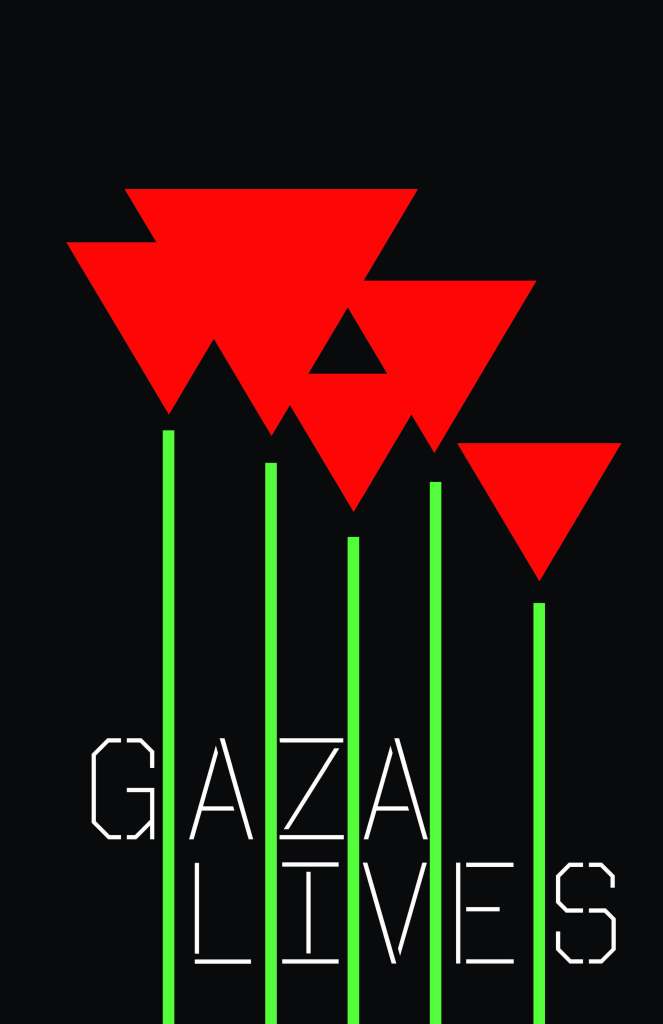
The image is red, green, and black, with abstract images of flowers. It says "Gaza Lives."
Image by Josh MacPhee at Justseeds

Sars-CoV-2 Remains a Social Justice Issue (+ some good recent resources)

For a lot of people, the world is now post-pandemic. The more than 2,400 people who died in the US from covid last week apparently did not get that memo. Data worldwide is much harder to measure but a low estimate of total deaths so far is 6.8 million people. Those are the numbers when we speak of death. But Sars-CoV-2, it has become abundantly clear, is also a mass disabling event.

I try really hard not to be a bitter person. In my interactions with other people and in my writing, I do my utmost to move from a place of love and solidarity. But there is also always rage, too. I am deeply angry at the situation we are in, that has been unfolding for the last three years, particularly within the US: the “let it rip” approach from institutions and elites. There is no attempt to keep the greatest number of people healthy and alive. Instead, it seems, we are being subjected to an attempt to desensitize the greatest number of people to the conditions of others. We are being actively socialized away—more viciously than before–from caring about our mutual and collective well-being.

And, if I am honest, on most days, I struggle seriously with the extent to which this socialization has been effective on many people I know.

Let me be clear: the Biden administration policies, the CDC policies, are not “guided by the science.” Many, many of the decisions that have been made in the last two years since Biden took office were not as a result of any changed or new scientific finding and this is clear from the statements made. An example: the reasoning for limiting and changing quarantine and isolation policies did not occur because of a new finding or understanding of the disease; it was driven by market-based reasoning not to keep people home when they were actively sick and making others sick because too many industries were short-staffed (another way to approach this problem could have been rethinking our systems so that we can function without literally pressing people into service, but you know, to each their own I guess!). In turn, the changing of these policies and the messaging around them has made it nearly impossible for anyone to do the right thing, because employers and schools everywhere are always “following CDC guidelines.”

It is a fact that it is better for everyone when there is less virus in the air. This is especially true when the virus is one that can kill and permanently disable. Covid, and doing what we can to prevent its spread, is an issue of disability justice, of racial justice, and of solidarity with the working class.

I have more to say about all of this than I think I could possibly write or that anyone might sit down and read. The main thing I want to say is that even though we are all being actively failed and sacrificed by these institutions, that does not mean it is time to give up and go along. There are always ways to do more or less harm, and there are always ways to win things back once they have been lost. It is worth trying to keep the truth straight even when we are being gaslit, because things get worse when you give totally in to the gaslighting. I know that it is hard. I know that it is exhausting, and I know that the world is not making this easy. But: don’t give up. Everything you do to fight this death-making machine matters.

Below I am sharing some resources on how to work with people to create covid protocols, what kinds of covid protocols you might want or need, processing your feelings or the larger impact to our interactions, and just learning more about covid. I want to add that if you are organizing an event of any kind, it is extremely helpful to state upfront what mitigations you do or do not expect. I realized recently that despite vaccination and booster shots, I go to fewer things than I did in 2020 because now it is so much rarer for people to be clear on the flyer/social media post about whether or not they are requiring masks, have a good ventilation system, or are even thinking about covid.

A pink and blue stencil-type graphic that says, in block letters, "Test! Test! Test! Ppe! Keep the Workers Virus Free." There are drawings of a mask, a glove, test tubes, a vest, a stethoscope, a cart, a broom, and a covid virus with a line through it.
Poster by Propagate Collective, and found at Justseeds.

ICYMI – new article out on collective care in the era of COVID

Last week I published an article in Truthout about the lack of institutional guidelines and support for keeping ourselves and each other safe during the ongoing COVID pandemic. The main thrust of the article is about how good boundaries and better practices of consent can be used as helpful tools to negotiate safer situations and help people take care of each other given the larger failures in which we find ourselves. Dr. Connie Wun, the co-founder of AAPI Women Lead, who I had the pleasure of interviewing for this piece, helped me realize that this is a focus on “collective wellness.” In the process of writing the piece, I was particularly inspired by many of the ideas I heard from the people I interviewed about how possible it is to, as the People’s CDC says, have safer in-person gatherings. I hope you all will find something helpful and useful there too.

There is also an update in the Wendy Howard case that I wrote about in July. Victoria Law published a piece just yesterday at Truthout outlining the details; Wendy’s trial ended on Oct. 21 and she was acquitted on all charges but one. The jury deadlocked on the last charge, of “voluntary manslaughter.” The details are here. Wendy Howard’s Defense Committee is continuing to call on DA Zimmer to drop all the charges and to fundraise for Wendy’s defense.

A purple and green image with a picture of a woman in the center. Text reads: Call: Kern County DA Cynthia Zimmer at 661-868-2340. SAY: My name is [xxx]. [If you are part of an organization, mention it.] I am calling to demand that you drop the charges against Wendy Howard. Survivors of domestic violence must be able to defend themselves when in danger, and they deserve more than being forced to choose between their lives and their freedom! As DA, you've pledged to protect survivors and we ask you to uphold that pledge and end the abuse-to-prison pipeline today. Drop the charges against Wendy!

equinox update

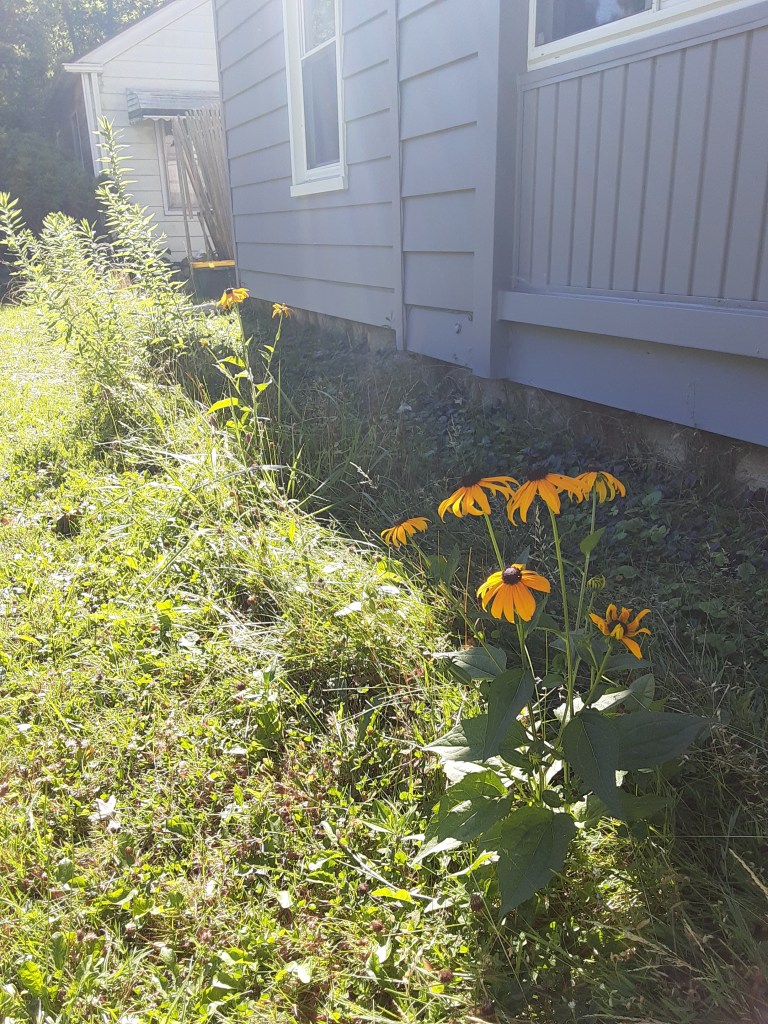
Happy end of summer, happy fall, and happy equinox! I hope folks have been finding peace in the ways you can, as well as the strength to keep resisting everything and everyone that wants to eliminate any of us or who we are. I have been working on my small vegetable garden, and have been planting a few species native to Detroit in the yard. Below is a coneflower I planted last fall that has grown into this beauty, which gave me some peace and joy all throughout August and into September.

So far this year, I’ve published several articles. In case you missed them when they came out, this story on letterwriting as abolitionist practice was published in Truthout, as well as this story on grassroots defense campaigns that support criminalized survivors of domestic violence. I also published this long-form interview about the shifting ways to use music as a form of building political solidarity in the time of covid.

I’ve also been quite busy, with several editorial and other public sociology projects. As always, I feel lucky to support such talented authors in making their work more accessible to readers and honored to speak in classes or at events (mainly virtually). This fall, I plan to offer a new interactive workshop on conscious language and gender pronouns. The purpose of this workshop is to affirm the right of trans people to exist in public. Please reach out directly if this is something that you are excited to learn more about!

Although elites may be more insistent than ever that things are “back to normal,” many of us know that these are critical times of disconnection (and that the claim that the pandemic is over is itself an act that tears us apart from one another). Hold fast to one another because we deserve a better world.

grieving what was never good

Right now, I am swimming in a sea of grief more days than not.

The other day my driving route took me through a small, vibrant downtown. I found myself kind of interested in the shops, scoping out the coffeeshops, and wondering if the multiple new Asian fusion restaurants were good or trying too hard and awful. I found myself laughing a little at what it would be like to go to the out-of-date gym, and wondering who goes there now. But looking at the businesses and the people, I mostly felt like I was visiting the past. I struggled to believe that I was in the moment.

I have been lucky, and I have experienced the privilege of class and race over the last two years, and so my grief is more for places, things, and ways of living forever gone to me than people lost. In the astonishing number of souls lost directly and indirectly to covid-19 in the last two years, I have lost surprisingly few people close to me. I have experienced this enormous loss more as a diminishing collective light, as a resounding lack of elders to guide us through these troubling times, as the pain I see and feel around me in the grieving of others, and as the first echo of what is coming when we talk about the end of the Anthropocene.

Sometimes it is hard to make a proper place for the grief of the loss of things and concepts when so many that I know and love are grieving the loss of dear ones. And yet another part of me knows that grief is grief. It will have its due whether I make space for it or not.

I know I am also grieving the life I believed I would have, the one that I was, finally, very excited for. It included arranging my work schedule permanently so that I could travel regularly both for pleasure and work, and do international work that was important to me. In fact, I believe I have grieved this and for the most part let it go, but I have not found something to replace it. And I have not found a way to do international work and I am scared that I will not see my friends and comrades outside the US again, some of whom were once some of my closest people. That part really scares me and it makes me really sad.

Though it’s hard to admit, even to myself, I am grieving the life I had, the one where I ate at a restaurant every week and went to the movies. Or where I traveled for pleasure, or did a thousand dumb things more easily than now. I am an anti-capitalist and it’s not true to say that I want to rebuild that lifestyle for myself or anyone else. There are many ways that I am glad to have ripped the band-aid off and to have reduced my dependency on the underpaid labor of others in a lot of ways in my life (I am interested in finding more pleasurable and constructive ways to do similar things together without that!). But the brilliant adrienne maree brown has recently reminded us both that grief is complex in that we can grieve people and things we had complicated feelings about to start with, and that capitalism is quite tricky in how it feeds us empty calories to make us think we are enjoying it even when it is not really satisfying us.

I have hesitated – for two entire years! – to write much about this because this grief feels selfish. There are clearly more urgent issues to address, and because it is not that I want most of the things I miss to come back. But this grief is also lonely. Deeply, hollowly, empty lonely. And finally, I thought perhaps I am not alone with this feeling.

Disenfranchised grief” is grief not recognized socially. It can be harder to move through. Perhaps, I hope, there will be a reason to talk to each other in this grief and to connect over it as humans. Perhaps that is the way through, because the capitalist trap is to continue to hide or even subvert our feelings, and to try to do things by ourselves—although doing things “ourselves” almost always means relying on the paid or coerced labor of others.

I know better than to think that just because others have lost more, that my grief is not real. Although it can be really hard, we need to make space for everyone to feel and express their grief, large and small. We do not need to equate those losses, but we can create appropriate spaces for each other to acknowledge that they happened. So many of us are grieving, still forced to move through the world of the past, unsure (and afraid) of what the future will actually be.