What Terror Looks Like

More than one year after the post electoral crisis, the terror created by the murders of protestors is still palpable here. Many readers of this blog will be familiar with these killings because you participated last year in an open letter to the families of the victims.

A few days ago Karen Spring wrote this excellent essay on the continued impunity for the killings.

As I mentioned in a previous post, the events of December 2017 & January 2018 are hardly in the past for many Hondurans. These killings were mentioned to me without prompting at some of our site visits, and my general impression both from these weeks on the ground and following social media is of a people where terror has genuinely taken root. I keep thinking of the many histories I’ve read or watched about societies existing under terroristic regimes, and realizing that in this moment I’m visiting one of those societies. And knowing that my friends and others live in it every day.

Nor are these impressions and facts far removed from the United States. Impunity for murdering protestors and the terror it spreads is creating an exodus of people arriving everyday at our border. To say nothing of the direct and indirect support for this terror provided by the US government itself. One example: the US provides funding, training, and “vetting” for various police and military forces implicated in human rights abuses including murder. We are funding terror.

accompaniment at the graveside

Over the last several days I have been in Honduras with Witness for Peace Solidarity Collective, meeting with the Movimiento Amplio por Dignidad y Justicia (MADJ, Broad Movement for Dignity and Justice) in several different sites and contexts.

It is not an exaggeration to say that many or maybe even all the folks we have met with have been through hell. We visited the Dignified Encampment for Water and for Life at Pajuiles, where participants became choked up telling us about how they were attacked brutally in August 2017 by members of the community further up the hill, who believe they will benefit from the dam project and who have been paid by the company . These water protectors, members of MADJ, also pointed to the nearby home of Geovanny Diaz Carcamo, who was brutally assassinated in front of his mother in the street in the post electoral conflict, January 2018.

From there we met with Magdalena, the widow of Ramón Fiallos, and other members of the Dignified Encampment in Defense of the Jilamito River. Ramón Fiallos was killed when he was shot with live ammunition at a protest and left without medical treatment. Magdalena told us how three days before his death, Ramón told her “If we have to die, I will die for a better Honduras with pride.” She told us that his words inspire her, and that through his death she has learned to lose her fear.

In the Tolupán community of San Francisco de Locomapa, we stood in solidarity alongside a fresh grave. Just one month ago two members of MADJ were murdered defending their pine forest, to which they have territorial rights recognized internationally as an indigenous tribe. The mountainside was burning all around us, an act of aggression against those resisting deforestation and looting, as we stood together. Here in this heavy place we were told by survivors that the struggle is very hard, but no one is crying. Everyone participating understands the risks and is ready to pay it. Words are hard to find in describing this moment standing with a small tribal community that has had 7 of its loved ones murdered over a struggle for natural resources since 2013.

Through these places we have been guided often by Martín Fernández who, as the effective longtime General Coordinator of MADJ, lives his life under ever present death threats. Everytime I say goodbye to Martín, I worry it will be the last.

As a group we have accompanied and met with these communities, humbly trying to offer some comfort through listening attentively to their stories and sharing in their pain as human beings. We have committed to share these stories with an often indifferent public in the United States who knowingly or unknowingly benefit from this theft of resources and life. None of it has ever seemed like enough. But I have written before about the small powerful webs of solidarity and continue to hope that although it is not, and can never be, enough, solidarity with others is the most powerful tool we have.

*********************************

How to take action in solidarity with the Honduran people

Graveyards and Gardens

I came across this short passage suddenly the other day in Jeanette Winterson’s Written on the BodyIn this radically shifted perspective I found myself able to move toward more radical acceptance of death and constant change. Maybe you will find something else.

Six bearers in long coats and white scarves carried the body to the grave. To call it a grave at this stage would be to dignify it. In a garden it might be a trench for a new asparagus bed. Fill it with manure and plant it out. An optimistic hole. (p 176)

The Grave of Rowan Morrison

“The Grave of Rowan Morrison,” Cathy G Johnson. Image found separately and used with artist’s permission.

Do Not Bow to the King: I will not wish George HW Bush or any other powerful leader the peace in death they denied to others

Hopefully people have already seen some of the pushback on the sainting of George Herbert Walker Bush because of his legacy of human rights abuses in Panama, pardoning Iran-Contra conspirators, allowing people to die needlessly of AIDS, lying to the U.S. public about the invasion of Iraq, his involvement in Plan Condor, and his racist Willie Horton ad, to name some. But regardless of the specific person or their place in history, invariably it seems to go like this: some major political figure dies and the social media RIPs start rolling in. “I didn’t agree with you on everything but you were an honorable person and I respected you. Rest in Peace.” If we consider ourselves political at all, and if want to be capable of resisting injustice, then we need to stop automatically paying our respects to politicians when they die.

First of all, the fact that someone had grace, or carried themselves with honor or manners, is not a good reason on its own to show them respect. In fact it usually just means they are rich and powerful (or “patrician”).  Have y’all never seen Gone with the Wind? Those white people of old carried on in high fashion and extremely mannerly ways! Their white supremacy was extremely high fallutin’! I do not however respect it, or the people who perpetrated and participated in it, just because it demands respect. It was something extremely ugly dressing itself up in nice clothes and an elaborately coded system of manners and interactions. Do not fall for this.

Second of all, in the case of a deceased head of state or politician, when we say we disagree with their “policies,” we are actually talking about human lives, and often their deaths. I refuse to reduce human to policies. And while the politician may no longer be in power, the effects of their policies are usually still with us. In the case of George HW Bush, I saw several of the same people express sadness about his death who are also angry about Trump’s handling of the “migrant caravan” from Central America. The thing is that by and large it isn’t Trump’s policies that have created the migrant exodus (because he hasn’t had enough time to do that kind of structural damage), but those of previous administrations. The migrant exodus actually has a lot to do with George HW Bush. As president he escalated the devastating War on Drugs, which continues to devastate people throughout Latin America, in addition to the devastating “anti-communist” violence and coup d’etats he perpetrated as vice president and Director of the CIA. The legacy of this violence, in addition to actions by other leaders including Hilary Clinton and Barack Obama who facilitated the 2009 coup in Honduras, has created the structural instability leading to the mass exodus of refugees from Central America today. So, how can we say that we respect Bush but be in solidarity with the migrant exodus or people in Central America today? You can’t.

Finally, and perhaps most simply and importantly: if we aspire to resist the policies of our government when they are wrong and unjust, we have to stop our habit of automatically bowing to the King! We are not obligated to express sadness when a former head of state dies. We are not obligated to say they had good qualities or were a good person or look on the bright side. Ask yourself why you are doing this. Is it possible it’s because you’ve been conditioned to respect authority? Or to respect those who seem “patrician”? If it makes you uncomfortable to speak ill of the dead, then try practicing just not saying anything. After all, a public political figure is different from a neighbor down the street or another person that you know. They and their family will never know what you said. Their legacy is a matter of making the historical record, not simple politeness. But most importantly, if you practice bowing to the king over and over, even when you think it doesn’t mean anything, you will never be able to disobey his orders when given, no matter how unjust they are. And that is supremely dangerous.

On the Murder of Jemel Roberson

JemelRoberson

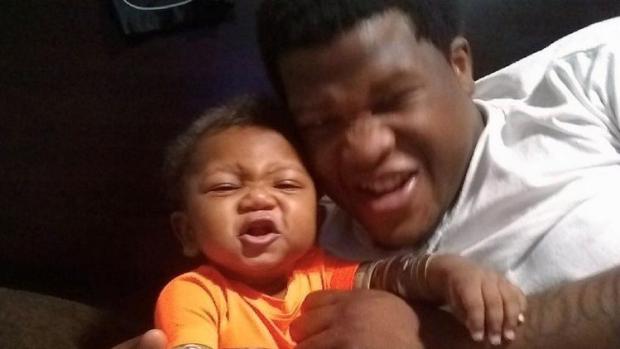
Jemel Roberson with his son Tristan.

This man was murdered by the police.

His name is Jemel Roberson.

He was clearly identified as security and had successfully just stopped a shooter from killing others, without killing that person. This, it must be said, is something most of us wish the actual police would do.

It is obvious that in this country a Black man can never be considered a “good guy,” no matter what he does.

It is obvious that Black Lives do not Matter.

It is obvious, or it should be, that this is not about bad apples, or individual police officers, but that it is about an institution of policing which at its very core targets Black people and Black communities.

It is time for a change.

It will take many of us to participate in this change. Paolo Freire famously said “Washing one’s hands of the conflict between the powerful and the powerless means to side with the powerful, not to be neutral.” Find ways to act (and there are many possibilities), even if these acts seems small. Black lives depend on it.

Lessons from the UW-Superior “Halloween Axe” One Year Later

Just over one year ago, everything changed for me and many others in the community of Superior, Wisconsin. Without faculty, student, or staff input, three administrators were able to eliminate and threaten a full one-third of the academic programming at the University of Wisconsin-Superior, including most of the liberal arts in which it offered majors and most of the critical disciplines on campus. A few months later, an eerily similar list of program eliminations was announced at UW-Stevens Point. A newer, more final version of these cuts was announced yesterday. The Stevens Point proposal will be the first direct implementation of UW administrators’ new power to fire tenured faculty without declaring financial exigency.

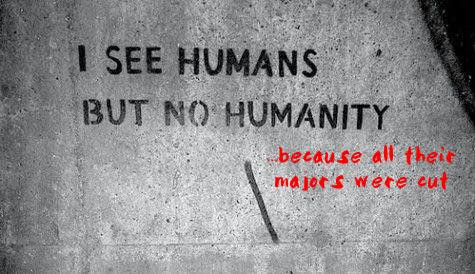
Perhaps at the end of one year of mourning UWS, it’s time to move on to the next i see human but no humanitytragedy. After all, we were not the first victims of austerity measures in higher ed, and unfortunately we won’t be the last. Plus it’s over. The drastic cuts at UWS, along with the clumsy and deeply damaging restructuring of the entire 2-year college system in Wisconsin, have already happened. And Wisconsin has even finally ousted Governor Scott Walker in favor Tony Evers who was the lone voice of opposition while on the UW Board of Regents. But on this one year anniversary, it also seems useful to ask what can learn? How do we pick up the pieces and survive, both as local communities and within the more decentralized community of academia? A few things are for certain: the devastation of higher ed is not confined to Wisconsin, and the election of Tony Evers won’t be enough to roll back the damage done to the once great system of public higher education in the land of milk and honey.

In personal terms, the last year has been one of massive upheaval on both a private and professional level. I was driven out of my tenure track job in my fourth year which in turn meant geographic relocation. I sold my first house shortly after buying it, and started over in a new city, yet again. I was not alone in this. As I began to speak out publicly against the unethical and unconscionable decisions and public statements made by the university’s top administrators, I did not anticipate the level of absurd and petty harassment that I faced throughout the year for which there was no formal remedy.

The more that I was harassed, along with a few others who were also singled out, the more that a climate of fear seemed to prevail around me. Much of what happened to me was risky to speak about in writing or online. Let this be lesson #1 for others: open the lines of communication often and early between departments and among faculty, staff, and students, so that it is harder to single people out. Make time and spaces for in person meetings. Check in with people regularly who are on the forefront. Be aware that distancing yourself from people makes it easier for them (or you) to become targets for administration. Pay for personal memberships to the AAUP and/or a labor union (regardless of the status of legal bargaining rights) because their experience and assistance is invaluable in this situation.

My situation culminated at the end of the year when I should have been able to focus on supporting anxious seniors with their thesis presentations and nervous first year students with finishing classes. I was actually accused of committing “fraud” against the university. For what? I don’t know. How was the case resolved? I don’t know. I can only assume I was cleared because I was never reprimanded in any way. I was summoned to a meeting (at a time I was unavailable), I was not allowed to bring a witness, I was told I could not be given any information about the accusation in advance, and then I was informed that I had failed to comply. When I requested a copy of the report I was told it did not exist because it was submitted online. With some anxiety, I packed up the most important things in my office and took them home in case the university continued to ignore any semblance of due process and made a decision to suddenly terminate my employment. I tried to thread the fine line of my legal obligations to a workplace that clearly did not feel the need to observe basic legal obligations to its employees. Lesson #2: the university will not do the right thing (but you will survive somehow anyway). 

This story probably sounds extreme as you read it, and you may be thinking “that could never happen at my university.” But people never seem to think it’s going to happen to them, against all the evidence. Let that be lesson #3 from the Halloween Axe: it can happen to you, and you should already be organized to stop it. A great example of this problem is UWS’ own Dean Yohnk, the Dean of Academic Affairs at UWS who sold himself to UWS as a liberal arts champion less than 2 years earlier and then participated in these cuts. Yohnk managed to somehow parachute out of UWS and into UW-River Falls still as an advocate of the liberal arts. This is major head in the sand thinking on both sides. According to Yohnk, he had no part in the cuts and wanted to get away from that environment. So you go to another school in the UW system, still headed by Ray Cross and the Board of Regents? Good luck with that. And what is the hiring committee at River Falls thinking to accept someone who just lit a match and ran from the next door neighbor’s house? Lesson #4: be informed about the news in higher ed so you know what campus environment someone is coming from and you are prepared to understand their role in it when they arrive on your campus. And lesson #5: wishful thinking is dangerous. Don’t do it. Dramatic neoliberal austerity measures can happen at your university and they will, unless you organize against them. Let’s throw in lesson #6 here: elites network across campuses so we should too.

Actually, another thing to learn from what happened at UWS is lesson #7: these cuts have probably already started at your university or in your state. They don’t just fall out of the sky. They are ideological and they are part of a much longer game plan that takes many years to come to fruition. Look at all the planks in the plan to kill the Wisconsin Idea that needed to be laid before the final blow could be dealt to UW-Superior:


  • Act 10 eliminating collective bargaining rights for public workers;
  • weakening and effectively eliminating tenure protections throughout the state so that faculty throughout the university can be fired regardless of tenure without formally declaring financial exigency (not to mention the chilling effect);
  • changes to the hiring of chancellors and hiring committees (these have the effect of chilling efforts to call for resignation of current chancellor(s) because faculty are afraid that whoever is hired next will be worse, as they are assured of having no voice in the process);
  • dramatic changes to Chapter 36 and essentially eliminating the role of faculty in governance of the university;
  • free speech rules implemented via the legislature severely limiting the possibility of student protest on campus;
  • implementation of faculty post tenure review.

The cuts at UWS were only possible after all of this had been implemented in addition to devastating system wide budget cuts over a period of six years. There are many lessons to be drawn from this fact, but one important one for me is lesson #8: we have to somehow fight every austerity measure, even if it’s a losing battle. Don’t hand over an inch, because we are really always fighting the next battle. If we accept one measure without comment or struggle (as we did with many of these, knowing the Regents, legislators, administrators and often public were aligned against us), the right wing ideologues hell-bent on eliminating higher education will know that we aren’t organized to fight the next austerity measure. During my time in Wisconsin, I watched the implementation of several of these rules go on without comment or struggle from faculty who little imagined how they would be impacted later. And the result was that when the Halloween Axe fell, most of the faculty didn’t really understand what had happened to their tenure in Wisconsin, or what had happened to shared governance, or how would it actually affect them and not just their least favorite colleague. They knew enough to be scared but not enough to know what their rights still were or on what grounds we could fight. There was just too much catching up to do. Learn from our mistakes and find out what the reality is on your campus before there is a crisis. And inform and organize your colleagues now.

There are so many more things I learned in the last year as an academic, as an organizer, and as a community member of Superior than I can share in a single essay. I’m still mourning UWS and I’m honestly pessimistic about the long-term future for the community of Superior and northern Wisconsin more generally because something beautiful has in fact been lost. But I also know that marginalized communities can and do find innovative ways to survive and even, within pockets, thrive. Long term stability and permanence are myths that should never be counted on, especially within the dual realities of capitalism and climate change. While I mourn UWS, and while I mourn the broader closure of access to the public university to so many, I also look toward free schools, community run schools, and other models of more liberatory education. The public university has never been the only model of education so I choose to finish here with lesson #9: our dreams should always be too big for their institutions.

Everything for Everyone!

Art by Ali Cat. Leeds at Entangled Roots Press licensed Under Creative Commons License “CC BY-NC-SA 4.0.”

sadness and struggle

I’ve been trying and failing to finish a lot of writing over the last few weeks. I have felt overwhelmed, with a lot to say, but at the same time not quite able to edit and polish and publish what I’ve got.

Today, after once again writing about 1,500 words without finishing a post, I finally picked up Cindy Milstein’s Rebellious Mourning and read the first essay, Benji Hart’s “Feeling Is Not Weakness.” In it, Hart talks about how sad and depressing it is to connect the dots on the systemic violent oppression of black and brown people. Hart says they feel guilty for being sad, because Hart knows one of the functions of the system is to create demoralization. Sadness makes it feel like this campaign of demoralization is working. In Hart’s words:

“I feel guilty for being demoralized. I should be angry. I should be fiery with unquenchable passion. I should be as relentless as the state. If I am sad, the state has won. If I am sad, the fight is over”(p. 20).

I too feel sad. And I had not realized until just at this moment that I have had writer’s block because I didn’t want to write anything out of my sadness. I didn’t want to let Husky, or city council, or Walker, or Trump, or whoever control my life and my successes and make me sad. I didn’t want the state or capital to win. But feeling sadness when confronted with tragic realities is what makes me human. It is what makes me strong. Hart puts it like this:

“Experiencing hurt around the realities my people and I face is more than understandable; it shows that I have not given in, not accepted the current, violent reality as inevitable, not forfeited belief in my own right to life.”(p. 21)

A compañera of mine put it another way:

“We’re in the heart of the Empire,” I said.
“You’re wrong,” she said, “the Empire has no heart.”

My sadness does not mean the battle is lost. It means I’ve refused to lose what’s at the core of struggle and what we struggle for: my dignity and humanity. My belief that better worlds are possible. My compassion for others. My willingness to see and face systemic injustice. My meaningful connections to people living precarious lives of all kinds. My hope that people can be better people, and that they can find the will and courage to stop enacting their power over others. It’s only when I become so cynical that I lose these things that the fight is over. Sadness is not the sign the battle is lost but the sign that it is still raging, and the sign that I am still willing to fight it.

a blue arm and a white arm hold hands across a paper background with foundation and charity names. the paper is torn to reveal the words "True Compassion is more than flinging a coin to a beggar; it comes to see that an edifice which produces beggars needs restructuring." - Martin Luther King, Jr

Art by Kevin Caplicki for the Poor People’s Campaign, available at Just Seeds Collective.

the first few days

On Thursday morning I was in my upstairs office, writing. My house shook around 10 am. I called downstairs to my partner, who ran upstairs. We both thought the other would know what had happened. Had I dropped something really big on the floor? Had a really giant truck passed by? Neither of these seemed to explain why our windows and doors would shake, but we didn’t hear any sirens and nothing else happened, so mildly unsettled, we went back about our business.

I keep thinking about the part of Wormwood where Eric Olson describes Seymour Hirsch walking into the family’s house and announcing, “You must be the most uncurious family in America.”

At 11:30 I received an email from campus with a link to a news story with the first description of the explosion that had taken place at 10 am. The first news reports listed 20 “casualties,” (later revised to 16 injuries), and I immediately noticed that no one on the hours of news coverage or during the press conferences, was using the word Enbridge or mentioning the pipelines which lead to the plant. In fact, like many other people in town, I thought right up until Thursday that Enbridge owned that refinery, based on my impression from driving on the road next to the site. Apparently, Enbridge owns the tanks right across the street which somehow did not appear in any of the coverage.

I got ready to head to campus for my afternoon classes, simultaneously watching TV and checking social media for updates. I was already seeing several people commenting on the good news that no one had died, which seemed far too early to me. There had not yet been a report that they had accounted for all the workers, people had been taken to the hospital with an unknown severity of injuries, and the fire was still going. Soon after there were more explosions, and it was clear the fire was not out.

I arrived to campus a little after 12:30 and the mood was surreal. Apparently on campus the buildings had not shook and most people I talked to had the sense that it was not that serious. At 11:43 AM, the campus alert system sent the following message: “Explosion at the Husky Refinery. Law enforcement has stated that the fire is out. Campus will resume under normal operations,” which must have contributed to this mood.

I found myself wondering how people in Chernobyl had behaved (and also worrying that I was overreacting). I wondered why we weren’t a little more prepared for what to do. I worried that people were so quick to move on and not at all cautious about the air quality. Walking to my 1 pm class I received a text from my partner indicating that talk of evacuations had begun.

When I got to class, I did my job as a professor of sociology and cautioned my students about some of the dangers of happy talk. We discussed the fact that the refinery disaster perhaps concerned us more than we thought. An athlete told us that they had been asked to go in from the soccer field earlier that morning. I tried to find the line between pretending everything was hunky dory, and creating panic. I trusted that if we were evacuated we would certainly know it. We had just been in that classroom during a tornado drill a few weeks earlier, after all, and every device in the room began making alerts, not to mention that human monitors went room to room to make sure everyone had left. I thought if the computer was on in the room it would show an alert, and we all turned our phones face up. I was sure an evacuation of this level would be announced over the loud speaker as well, and I assured my students of this fact.

I cannot now say whether or not I am ashamed of this rather minimal trust I had in the institution to inform us of what was happening. I feel like a fool who should have known better, but on the other hand, these situations for good reason cannot be left up to individual faculty members to decide. We do not have all the information and should not need to gather it. We were put in an awful position. I heard from several faculty who said they held class because they were worried that if they didn’t their students wouldn’t have anywhere else to go. That’s the problem when institutions do not provide the support we need in an appropriate time frame — they leave us all to make decisions on our own and none of them seem like the right one.

We went on with our class business until about 1:45. Someone noticed they had a lot of messages on their phone first, and then we all looked down and saw that we had a lot of messages from family members and from the university alert system. Our family members wanted us to evacuate or to know if we were OK. The university alert system messages we had received since our class began said:

1:10 PM Info UWS Office of Public Safety has received is that the UWS campus is NOT under an evacuation order. Continuing to monitor and update as needed.

1:41 PM SAFE ALERT: UW-Superior is NOT within the evacuation zone. There has been some misinformation in the media about the evacuation zone.

Authorities state the evacuation zone is 10 miles south of the refinery, 3 miles east and west of the refinery and 1 mile north of the refinery, which is 28th street. We are closely monitoring the situation. If you do choose to leave campus, please use caution and avoid the impacted area.

These strangely defensive alerts were our only source of information for what to do on campus. Several of my students live in a dorm which was .3 mi outside the evacuation zone at that time, and they wondered where they should go instead of home. No one knew. Another student confirmed that WITC, a campus located spatially within our campus, had closed for the day. Still another student who shares caregiving responsibilities for small children began to worry. She checked her phone, and found that the schools had indeed closed and evacuated, but the children’s mother wasn’t sure at that point exactly where the kids were because the school had not activated their alert system. This was the point where the class began to collectively panic and feel that we were not being told what we needed to know and where to go. A resourceful student made a few phone calls and determined that unofficially students who were unable to go home were gathering in the student union. Here’s what the view was like from campus at that point:

Husky refinery smoke in the distance

Picture taken from UW-Superior campus while classes were still taking place during the Husky Refinery disaster, April 26, 2018.

If the plan was not to cancel classes in order to stop a traffic jam and to complete a more orderly evacuation, why not send email with more guidance for faculty letting us know to bring people to the student union as things escalated? Why not give us a few resources to help us keep things calm? Leaving us with no plans and suggesting that we somehow hold class while students are not sure if they can return home and their children are being evacuated to unknown locations does not make any sense. This was at 1:45. The next set of classes on Thursdays begin at 2:30 and classes were not officially canceled until 3:10. By 4:13, UWS was declaring itself to be in the evacuation zone as well.

I had no idea what to do or where to tell anyone to go. I did not know how to help the students evacuate, although we practice tornado drills every year (tornadoes are exceedingly rare in our region). Our university is located under 3 miles from a refinery; this is a known quantity. There is no reason not to practice or disseminate information about what to do in the event of this kind of disaster other than perhaps the desire to make us feel safe about some things (like pipelines and oil production, who are large donors to the university) and direct our focus on worrying about other things.

After my class dissolved early, I canceled my next class. Then I went home, packed my things, and evacuated myself to Duluth. On the way out of town I received the notice that classes had finally been canceled. Once in Duluth, I went to some stores and tried to do something relaxing for a while. I took this picture from the malt shop, as a sad comparison to so many beautiful pictures I’ve taken of the most amazing lake in the world:
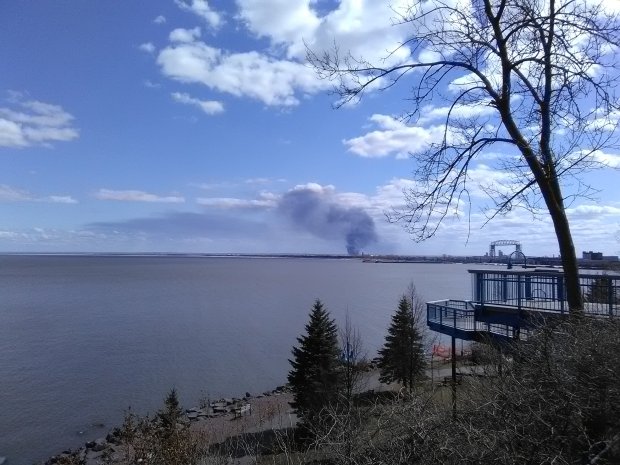
Refinery smoke over the water

Picture of the Husky Refinery disaster from the Duluth shore of Lake Superior on the afternoon of April 26, 2018.

I got to my friends’ house and ate dinner. We watched the news on and off, but tired of the coverage. The last we had heard, the fire might rage for days, even weeks. Around 7 pm, someone came home and said, “Didn’t you hear? The fire’s out.” We turned on the news, and sure enough, we saw that the fire had been declared out, and Superior residents were told we could come home as early as 9 pm. An information number was given out, which we wrote down. We turned off the coverage again, since we’d been watching it for hours at that point, and we spent time with our friends.

At about 11:30 pm Thursday night we headed out the door to come home to Superior. At the door our friend said, “Oh! we never thought to double check if it was OK to go back.” “It’s OK,” we said, “we’ll call or something in the car.” We listened for news in the car but couldn’t find any local coverage on the radio. On the bridge I called the information line that had been given out only 5 hours before. It rang a bunch of times, then someone picked it up and hung up on me.

I do not know if I was just tired, or if wishful thinking got the best of me. But we went ahead and continued on home to Superior, since the phone call was just a double check and the evacuation seemed like it had already been called off. Imagine my horror when I was already in my house, checked the internet, and realized that the evacuation had been more or less called back on. This is the real risk of rushing to give people good news. It puts people in danger. It put me in danger.

That night and the next day I found that for some reason between 6:30 pm and 11:30 pm, some of the most critical hours for sharing information during the evacuation, when people like me were away from our homes and our usual sources of information and routines, the city and county announced two numbers for residents to call and then quickly closed these numbers. Instead, they directed people to call a hotline run by the Husky Refinery itself. They also announced that “The fire is extinguished. Residents in the evacuation area are asked to remain away from homes for at least another 2 hours (21:00 CST)” then announced at 21:20 CST that the evacuation order was still in place. It’s true that it doesn’t exactly say you can go back at 9 pm. But common sense dictates that an update was needed before 9 pm, not after, so I imagine that was an oversight that encouraged others to return too quickly as well. A press conference and update was announced for 10 am Friday, then it was announced that everyone could return at 6 am. I couldn’t figure out where everyone was even getting this news from. It turned out I was out of the loop in part because I wasn’t following the correct Facebook account. I follow the City of Superior on Facebook, not “Jim Paine, Mayor of Superior.” I only wish I were joking.

I spent the next day feeling as if I was in a freefall. It makes you feel insane when everyone is telling you everything is fine but there are clearly chemical gases being spilled nearby. When you are supposed to hold class with a giant black cloud looming on the horizon and the hospital is being evacuated, it’s hard to know what’s real. When most of the talk you hear is about what a good job everyone did but your experience was terrible (and dangerous), it is literally maddening. I heard a terrible story about what happened to the patients at the VA in Superior. I know other people who came home on Thursday night only to find out belatedly they shouldn’t have. Other people’s homes shook so violently that pilot lights went out, and it took them a few days to notice the gas leak in their empty homes. The air of finality of the pronouncements from the mayor’s office and the lack of questions on all sides contribute to my fear that none of these problems will be dealt with in due course. The last updates were Friday at noon, stating that the “I am in Superior and returning to the refinery site now, breathing the air myself. We will continue monitoring the air but the source of the danger has passed,” indicating no future investigation toward any of the long term health and environmental problems we face.

We know now that the major risk was hydrofluoric acid. We did not know that in my classroom at 1 pm while that fire was raging in the distance. Perhaps it is wise public policy to keep people where they are since we cannot all get out of town on two bridges fast enough when a toxic gas explodes; most of us would have died in our cars in traffic no matter what. Does that mean though that we should have so little plan and so little training that most of us run to our windows when we hear an explosion? Does that mean we should call people back to town before the fire is really out? There were many risks to be managed on Thursday and Friday in addition to all of the health and environmental risks that remain to be managed. Some of those were handled well. The HF tank did not explode. No workers died. These are, in fact, very good things. But some things were handled poorly and they were in fact foreseeable things. There’s no reason the city of Superior can’t operate its own helpline, or at least have a voicemail message giving the most current update and directing people to the proper information and emergency numbers.  These things should not be handled by the company, who does not have our community best interest at heart.

There’s no reason we can’t speak critically about what did and didn’t go well and work to keep doing better. We need to know what happened in order to be better prepared for the future. Perhaps people would not panic in emergencies if we were not lulled into complacency in the first place. For me the first step is no more HF in my community. I don’t want to live in a “kill zone” any longer.



Saturday Rec: Pink Ribbons, Inc.

Pink Ribbons, Inc.

Pairs well with: organic foods, soil-testing kit, and solitary activities once you become unpopular for wanting to make space for the truth and criticizing “Pinktober”

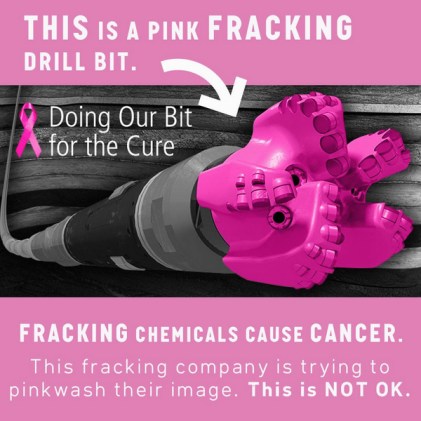
This is another documentary based on a book, an academic text by Samantha King who also appears in the documentary. The film covers the problems with reducing fighting breast cancer to buying stuff with pink ribbons on it and includes many of the problems people have with the Komen foundation. More interesting, however, the film is a powerful discussion of the ways that relentlessly positive thinking is really harmful to people. It shows persuasively that when we focus on positive thinking, we center quick and easy solutions and end up missing real solutions, which are harder and take more time. We do not think about what causes cancer (e.g., living near oil refineries), and how more people are getting it. Instead we focus on finding it early on as if it were an inevitable fact.

Most strikingly the film includes interviews with women dying of breast cancer who discuss how there is no room for them or their experiences in a “movement” which only wants to hear happy stories and see pink objects. Where can one process the experience of dying from a horrible disease if people only want to hear about happy things? How can this be a “good” way of dealing with a disease if there is no room for the people actually experiencing its effects in an authentic way?

A great film for understanding how focusing only on the positive can literally harm the people around you.

Eulogy for UWS

I did not plan to be a college professor when I entered my PhD program in sociology. I was interested in more directly community engaged work and writing. I fell in love with teaching during my fieldwork at a movement run high school for adults in Buenos Aires, where I co-taught social sciences in a classroom populated primarily by young women who lived in the neighboring shantytown. But even so, I was highly suspicious that this experience could be replicated inside of a bureaucratic institution of higher education in any meaningful way.

It was only toward the end of my tenure as a graduate student when I saw one particular job listing that I decided to look for jobs teaching at the university level. The job was at the University of Michigan-Flint, a regional comprehensive university where my mom had graduated when I was a kid.

Looking at the posting brought back a flood of memories of attending classes the few times she didn’t have childcare, and had to take me to classes with her. These days are burned into my memory, because the visual inspection, behavior talk, and overall prep was intense! I must have been in about second grade, and I can remember my mom talking me into wearing my best clothes by telling me this is what all the “college girls” would be wearing. I know I was much more dressed up than I usually got just to go to my own school. Now I can see that my mom was worried about being embarrassed by having me or us look too poor, since having to bring your kid to class is already a bad way to stick out at college. Once I can remember getting a new toy doll just in order to go to class to be sure that I wouldn’t become restless during the lecture. Although I was generally a pretty good kid, I still remember the very serious talk I got before going to those classes about how essential it was that I be absolutely good.

I have told this story to more than one student at UWS, because I wanted these students to feel welcome in my classes and on our campus. And I always tell them their kids are welcome in my classes, because I know they will behave. After all, I know exactly the serious talk they got before coming to the class. I have wanted to be part of expanding these students’ access to education, their access to big ideas, and part of expanding their world. My mom’s life circumstance forced her to leave high school but her child is a college professor, in no small part because of my exposure to the importance of College, capital C, through her and her persistence in completing it.

I didn’t get the job at U of M-Flint, but after I saw that listing I knew that I wanted to teach students like my mom. Not just students with kids, but nontraditional students; students who never thought they’d find themselves in a university for a variety of reasons including race and social class; students who are afraid that if something goes wrong, someone will figure this out, and they won’t be let back in. UW-Superior has provided a tremendous environment for doing this, because it is open enrollment, has small class sizes, has a public liberal arts college mission, and my department is very supportive of deeper methods of teaching and learning. All of this is unsustainable with the loss of any faculty voice in the running of the campus, the partnership with for-profit companies who will put pressure on the campus to develop easier curricula for faster degrees regardless of what is being learned (if they haven’t already started), and the elimination of nearly all the liberal arts disciplines on campus. There is no longer any institutional support for these experiences.

I have been able to be a part of amazing transformations in my few short years at UWS that are considered impossible in most educational environments, and I will be grateful for that experience. But I will mourn the tremendous loss for all of us in the region at the abandonment of that mission, and I will not participate in the charade that it has not been abandoned. This is no longer the UWS where I hoped to spend the next twenty five years teaching.

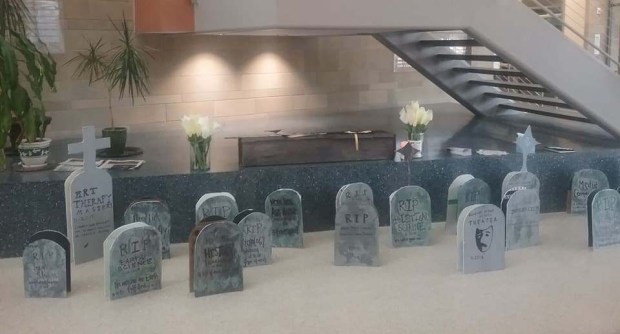
picture is of 25 handmade headstones with the names of academic programs set out in a univeristy building. in the background is a cardboard casket flanked by paper flowers.

Headstones for each cut major and minor program and a casket for the University of Wisconsin-Superior we knew and loved. The funeral was held Saturday, April 14, 2018. Photo Credit: Trudy Fredericks.