Optimism Is Hard

For the last several months I’ve been trying to put into words how I felt with the coming of the new year. It finally hit me that the problem I’m having is that I actually feel kind of optimistic at the start of this year. I feel pretty uncomfortable with this—so uncomfortable in fact that my discomfort with the optimism is causing me anxiety.

There are very few times in my life I can remember feeling this optimistic. The last time I could not see clouds on my personal horizon was about four years ago. I had just settled into my new job and had bought a house, something I had previously never imagined I would do. Almost immediately, my sense of optimism and stability was shaken to its core as a stalker showed up, followed by an austerity crisis the destroyed the university where I was working, and an environmental disaster in my town. This series of events shattered nearly every part of my life.

But obviously the fact those things happened once before when I was feeling happy and settled has nothing to do with whether something similar will happen again. However I suspect this is the problem with living through traumatic events. You drag it along with you and it has the potential to ruin even the good things that happen. Because the fact is things are pretty good right now, and if I’m just scared that it will all be snatched away again, waiting for the next bad thing to happen, then I’m ruining the good things that are happening.

In the foreword to her book, Hope in the Dark, Rebecca Solnit describes the the difference between hope and optimism this way

Hope locates itself in the premises that we don’t know what will happen and that in the spaciousness of uncertainty there is room to act. When you recognize uncertainty, you recognize that you may be able to influence the outcomes—you alone or you in concert with a few dozen or several million others. Hope is an embrace of the unknown and the unknowable, an alternative to the certainty of the both optimists and pessimists. Optimists think it will all be fine without our involvement; pessimists take the opposite position; both excuse themselves from acting (2016, xiv).

Solnit’s descriptions of hope throughout the book resonate deeply with my politics and activist praxis. I have no problem embracing the contradictions required of staring reality in the face and still hoping that somehow I and others can act to change the outcome. So why the difficulty feeling hopeful about my personal life?

I think what has been happening this year is that I am struggling to gain a sense of trust and control over my personal life. The struggle to accept that trust is particularly acute at a moment when I actually do feel optimistic because things are going well, but perhaps the issue is that I am growing. I am growing into the trust that I am the one has the control to act in my life. As a capable adult, I am the one who can protect myself, even when bad things do happen, as at some point, they inevitably will. But I think I am starting to accept that it will even be okay during the bad times in some way, because I can take care of myself.

Like most feminists I know, I am deeply committed to the idea that the personal is political. I am not sure if my struggle to feel comfortable with optimism in my personal life in contrast to my utopian politics is meaningful or helpful to others. I wrote this post to figure out why happiness was making me feel anxious, and I offer this reflection in the tradition of feminist personal essays in the hopes that it resonates with someone else too.
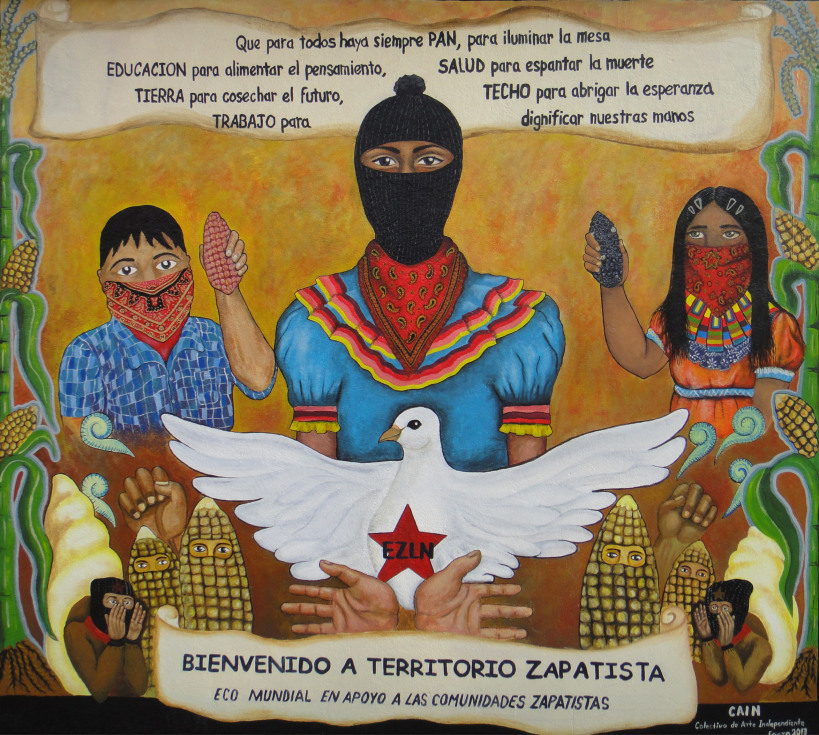
Colectivo de Arte Independiente CAIN, Puebla

spreading our fear of the dark

A few nights ago, I took a ride on my bike. Alone. In the dark. Through a wooded path.

In case this fact doesn’t upset or scare you, I will remind you: I am not a man.

 And guess what? Nothing happened.

Well, something happened.

Before that, every woman I work with offered me a ride home on my way out the door from work. They were all afraid for me to ride my bike home. I don’t mean to suggest that this was not nice (it definitely was), but primarily it was discouraging.

As I walked out and got on my bike, I did feel trepidation. Sometimes I think it is hard to make sure that modes of caring for each other do not to turn in to echo chambers that amplify our fears and hurts from the wider world. After everyone tells you to be scared, it is hard not to be scared.

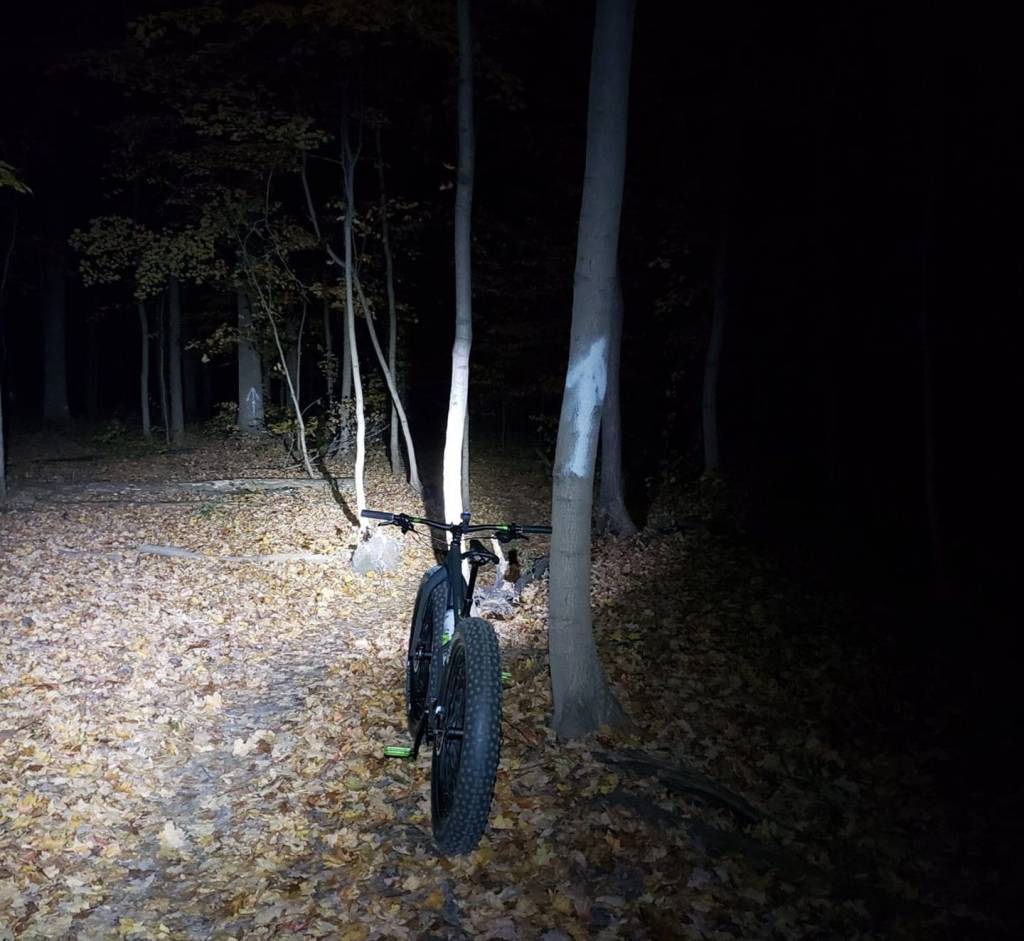
Picture of a bicycle with a light showing a wooded area, leaves on the ground, and darkness beyond.
Picture taken by my male friend Dan Winchester of his night biking. No one responded to his picture with any concerns.

Once on my bike, the path was empty, and after a certain distance, I entered a wooded area that was dark and it was hard to see. My light was not working and I had to practically stop. I started to breathe too hard. I started to feel afraid in the dark. I started to feel afraid of the dark itself. I worried about what was in the bushes. But then I started to control my fear and I knew that it was only small animals in the bushes being disturbed by my bike in the bushes. I knew that without a light my eyes would adjust to the dark place and I would see different things. Moving at a snail’s pace, I could smell the leaves and hear the trees, in addition to the nearby traffic. I could hear the river. I could focus on feeling my cold breath. If I could control my fear, I could have a wonderful bike ride on a wooded path, no more likely to be attacked by the “crazies” (or just men)–my coworkers’ fear–than anywhere else in this beautiful and terrible world. If I could control my fear, I would be free to enjoy the world as it is.

Because the reality is, I am vulnerable to harassment by men in daylight or in darkness, in the woods or in my workplace, whether strangers or men I know. I am not denying this reality, yet I do not want to overstate it either. And if I refuse to overstate and let it control me, I can be free to enjoy a quiet solo winter bike ride home in the evening. And wow, that freedom felt as good! and as complicated as any other.

Even as I began to really enjoy my ride, I knew that almost no one in my life would approve of this ride. They would want me to turn back, they would want me to make “safer” choices; they would want to come rescue me from the woods. But what do we sacrifice when we continually choose safety over wildness? What do we lose when we share our fear with each other but never our courage? How will we teach each other to be free?

Just Call Me They

The work of being trans is constant. It is tiring. It is exhausting. And it doesn’t really have to be that way. Is it too much to ask people to pay attention to me as a human being when they interact? To use my pronouns, use my name, and to do both correctly a majority of the time? It is not too much to ask, because how can I keep going in a world where that is too much to ask of the fellow human beings with whom I interact?

Taking people seriously as human beings starts with recognizing and learning how we are referred to in speech. This is not a preference. This is not a special request. This is a normal request for being treated with dignity like a human being and let me tell you, it is hurtful and embarrassing and offensive and infuriating and disempowering all rolled into one when it almost never happens. It is dehumanizing.

Let’s start with the name. I am a white person born in the US; unlike a great many people who must never even hear their names said correctly let alone spelled accurately, I belong to the dominant culture. Even so, my very white Irish German name, Meghan Krausch, is apparently not white bread enough and so I have spent my entire life checking every program, table of contents, and website in which it has ever appeared to see if they got it right. It has not gone well. For this and other reasons, I tried dropping the second half of my first name. But no, people cannot just call me Meg either. They want to try to call me Meghan anyway, usually failing.

Why am I going on about my name? Because I think this is related to people’s issues respecting each others’ pronouns. We insist in imposing our own cognitive schemas on other peoples’ selves. We do not take the time to copy down someone’s name as it is given to us, or to listen when they say it, or look at how they sign their own name. Instead, we are in a rush to fit people into a pre-existing box (in my example: ‘oh! I know that name: Megan’).

So as my name is violated in print, as others’ names are violated even more often and viciously, I am misgendered constantly. In situations where I might expect it, in situations where it was an honest mistake, and in situations where there is no excuse.

I get that there is a social transition. I get that this requires resocialization. And I do in fact understand how deep that socialization goes. I really, really do. In fact, I understand more than most people how early we are socialized to believe in the gender binary; I would argue that we are introduced to the binary before we even leave the womb. I am not sure I even believe that anyone can be perfect at using nonbinary pronouns in a society which is still cissexist.

But it is devastatingly apparent to me that most of y’all don’t even try.

In researching this post, I found this story about nonbinary or genderqueer K-12 teachers who use the honorific Mx. There was a lot that resonated, but thing I identified with most was the teacher who said this:

“I had moments where I thought: I’m too much work, I’m asking too much of my colleagues and students, and that as a teacher I’m there to serve, and part of serving others is not always putting yourself first.”

I fight this impulse every day. Of course “they/them/theirs” is a political choice, just like not eating meat or riding my bike instead of driving. But it also feels like home. It feels comfortable. It feels like not faking being a girl and being worried that I would be caught as a fake. And it’s no more of a political choice than using “he” or “she” or eating meat or driving a car, which are also all political choices.

The work of being trans is constant and exhausting only because other people make it that way. It doesn’t have to be anything other than just being.

Here are some resources for those who have questions about trans pronouns, being good accomplices, and what to do when you screw up:

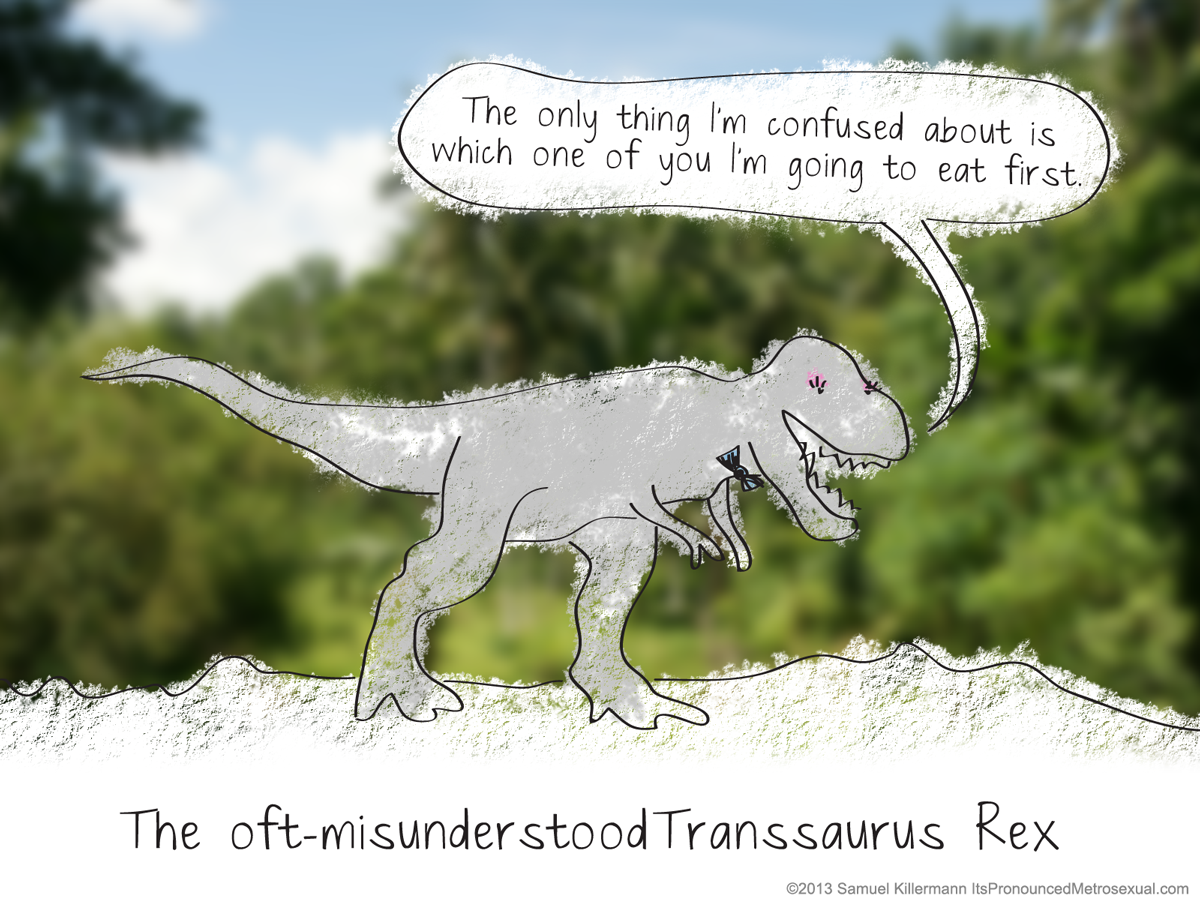
transsaurus-rex

Worrying about Others Is Nothing to Fear


Every day I think about my friends in Honduras and I worry about them. I wonder what they’re doing and if they’re OK, and I wonder if they’re worried about today or tomorrow. Then I worry and wonder about my friends in Argentina who I haven’t seen in a little longer. I feel bad that I owe them a visit and I am concerned that I have lost touch with some of them. But most of all I worry about how much they’re being affected by the deepening crash of the economy, increasing social repression, and overall sense of crisis reaching infamous 2001 levels. I also think about how I owe my good friend in prison a letter, and I wonder how he’s getting along too, and I hope that he knows that my longer than usual stretch without communication doesn’t mean that I’m not thinking of him often.

I feel connected to these folks, and my worries are personal rather than abstract. The problems they face—in the form, often, of risk to their lives—are elements of large social problems of the kind many of us read and hear about in the news. The visibility of these problems happening to people who are faraway makes both the people and the problems seem invisible. But they are not abstract social problems. They are everyday problems faced by real humans. They are the concrete problems faced by my living breathing friends, even if these concrete problems are overwhelming oppressive social structures.

It seems to me that I also know many people who have refused to face or even acknowledge these problems. Their reaction, it seems to me, is one of fear. They fear, perhaps, becoming sucked in to the sense of worry that I described above. They fear, perhaps, becoming overwhelmed by the extent of the world’s problems. They fear, perhaps, their sense of helplessness. It is true that “you can’t help everyone.”

But I wouldn’t trade my constant sense of worry and obligation for the disregard or the protective ignorance or the fear or whatever it is that stops people from engaging. Despite the fact that injustice will never be solved, I know that I am connected horizontally in relationships with others that are mutual, loving, and creating alternatives everyday to the systems which tear us down. I am engaged in nurturing myself and others. I know that I am not hiding from reality.

Every week I try to do what I can. It is overwhelming, and so I try to work first on the corner of the giant puzzle of injustice closest to me, while keeping the whole picture in front of me and making sure that my piece will still be able to connect. I work on always increasing my network of solidarity and especially its diversity. And I try to hand puzzle pieces to passersby, who happen to know me but no one else, and get them involved too, and I guess this for me is also part of how solidarity works.

Sometimes I fail, but every day I worry and I make all the room in my life I can to change the world. I reflect, I criticize, and I work at it. I know that I am obligated to others because my humanity is bound up in theirs. Without them, I am not fully human.

a spell for writing

Some days I have so much to say that I can’t find a way to say anything.

Other days I run so dry of words that I have to read a book.

Learning to tell the difference feels like magical self-awareness, but it is a simple spell.

  1. Breathe deeply and know that both will pass quickly.
  2. Spend a few minutes letting it all out on the page.
  3. If nothing comes out, spend a longer time letting the ideas flow in.

When They Come For You (Guest Post)

The Rebel Prof is honored to present a guest post written by anthropologist and professor Jelena Radović Fanta.

The words that were made by this country’s president on birthright citizenship was a punch in the gut. When I first heard it, it didn’t feel that way. I rolled my eyes, thought “here we go again,” took it with some humor, and then thought, well, many groups of people have been targeted by this government and his rhetoric and his executive orders over the last two years. Surely, I can’t compare this with what my fellow compañerxs have been going through. Because I have privilege and I’ve benefited from it. I’ve flown in and out of this country with my U.S. passport, I don’t need to worry about having a visa, or having a school pick-up or speeding ticket turn into a deportation. Who am I to complain.

But as I went through the day earlier this week, I had a pit feeling in my stomach. I brushed it off thinking is was due to little sleep, the list of things I need to tackle, the shorter days and darker mornings. Until a student asked me “and how are you doing?” And I realize that I had been punched in the stomach. I had a chill on my skin, my walk was slower, and my heart was heavy.

I know the (im)possibilities of this happening. And under the very improbably circumstances that this happens, I have other options. I am married to a U.S. citizen (you know, the more legit kind of citizen) and I am a citizen of another country I can go back to (a country also with birthright citizenship, DJT do your f*** research). If anything, there’s always the employment sponsored visa which I can hope to attain.

But the weeding out of everyone who does not look like or think like Trump continues. We were talking in my classes about the irreversible damage that is being done, where now 45-supporters will turn to people who seem gringo but might have that slight accent, look a little different, speak more than one language, travel back and forth, or simply have a different political viewpoint and say “You! Where are your parents from? Go back to where your parents came from!”

deport-trump

Art by Nicholas Lampert

I owe this country nothing. I am not going to list what I consider “accomplishments” that I’ve had in my life. I should not have to. But if we are going to talk about it, well than yes, I have given a lot to this country. And this country has given me a lot. There are many reasons why I am here. And if we are going to talk about immigration, let’s talk about it. If we’re going to talk about crime, let’s talk about crime and how immigrant crime rates are not higher than US born people. If we’re going to talk about social welfare, let’s do so and talk about how undocumented people are not eligible for federal public aid programs. You do not get to throw out half-ass “arguments” and logic that all they do is draw on emotion, on white fragility, on anxiety about the “browning” of this country, and other baseless bullshit “arguments.” All it does is reveal your xenophobia and fear of “other,” who, by the way has never, ever really been an other, but a “right here.” Right here next door neighbor, right here at the food truck, right here landscaping your yards, cleaning your bathrooms. Right here opening doors, driving taxis, caring for your children, educating students, doing your nails, creating art, and start up shops. There has never been an “over there.” The “over there” has only been there because you placed it there. And don’t get me started with the legality of how your grandparents came here. There was no legal way” back then. People arrived on ships and if they were healthy and part of a support system, in they came.

I had always heard that things don’t really hit you until they become personal. Attacks on Muslims, Undocumented Immigrants, African Americans, the Queer community, and Women are for me offensive, unacceptable, and must be fought. Always. Yet there’s this extra blow when I realized “Hey, he’s talking about me. And my family.” The sting is extra sharp. And it hurts a little more. And I hope that the bitterness and anger I feel will never stop pushing me to do something about it.

a spell to breathe through it collectively

I feel a familiar pit of anxiety rise up in my stomach. Nausea threatens to overwhelm me. I try to remember to breathe deeply. I remind myself that I can do this. I can do this, because I have already survived worse. I can do this, because so many have already survived so much worse than I can even imagine, and some of those people are my friends. If my friends can face threats of their own deaths and continue on every day, without losing their senses of humor, without giving up, then I can do this.

I let the feelings come, I let the fear in, but I try not to let it control me. I try instead to control it with my breath. And with my memories and thoughts of everyone I know who is braver than me. I’m afraid of the unknown, of the future, of what will hurt, but usually, it’s just about going through and then it will be over. I can do this. Breathe. I want to be able to do this, I can’t control it, but I can decide to do it. I can do this.

And with each repetition, it gets easier. And with each story we tell ourselves and each other, we get stronger. We get more resilient. We can do this. We don’t have to pretend not to be anxious, not to be scared. We just have to remember to breathe. And to do it anyway.

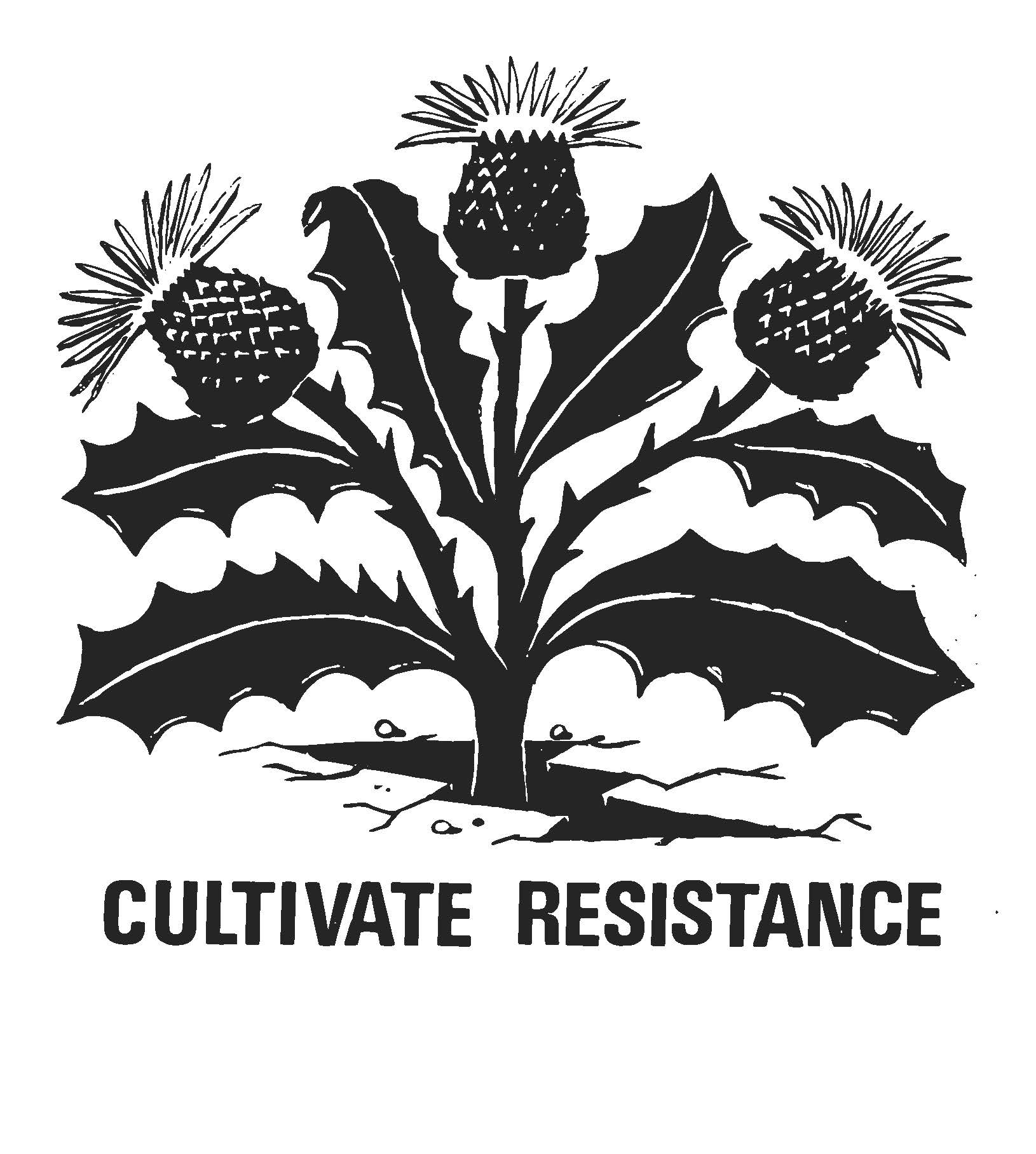
Dandelion growing out of concrete with words that say "Cultivate Resistance"

Graphic by Luke Thomas available at https://justseeds.org/graphic/cultivate-resistance/

sadness and struggle

I’ve been trying and failing to finish a lot of writing over the last few weeks. I have felt overwhelmed, with a lot to say, but at the same time not quite able to edit and polish and publish what I’ve got.

Today, after once again writing about 1,500 words without finishing a post, I finally picked up Cindy Milstein’s Rebellious Mourning and read the first essay, Benji Hart’s “Feeling Is Not Weakness.” In it, Hart talks about how sad and depressing it is to connect the dots on the systemic violent oppression of black and brown people. Hart says they feel guilty for being sad, because Hart knows one of the functions of the system is to create demoralization. Sadness makes it feel like this campaign of demoralization is working. In Hart’s words:

“I feel guilty for being demoralized. I should be angry. I should be fiery with unquenchable passion. I should be as relentless as the state. If I am sad, the state has won. If I am sad, the fight is over”(p. 20).

I too feel sad. And I had not realized until just at this moment that I have had writer’s block because I didn’t want to write anything out of my sadness. I didn’t want to let Husky, or city council, or Walker, or Trump, or whoever control my life and my successes and make me sad. I didn’t want the state or capital to win. But feeling sadness when confronted with tragic realities is what makes me human. It is what makes me strong. Hart puts it like this:

“Experiencing hurt around the realities my people and I face is more than understandable; it shows that I have not given in, not accepted the current, violent reality as inevitable, not forfeited belief in my own right to life.”(p. 21)

A compañera of mine put it another way:

“We’re in the heart of the Empire,” I said.
“You’re wrong,” she said, “the Empire has no heart.”

My sadness does not mean the battle is lost. It means I’ve refused to lose what’s at the core of struggle and what we struggle for: my dignity and humanity. My belief that better worlds are possible. My compassion for others. My willingness to see and face systemic injustice. My meaningful connections to people living precarious lives of all kinds. My hope that people can be better people, and that they can find the will and courage to stop enacting their power over others. It’s only when I become so cynical that I lose these things that the fight is over. Sadness is not the sign the battle is lost but the sign that it is still raging, and the sign that I am still willing to fight it.

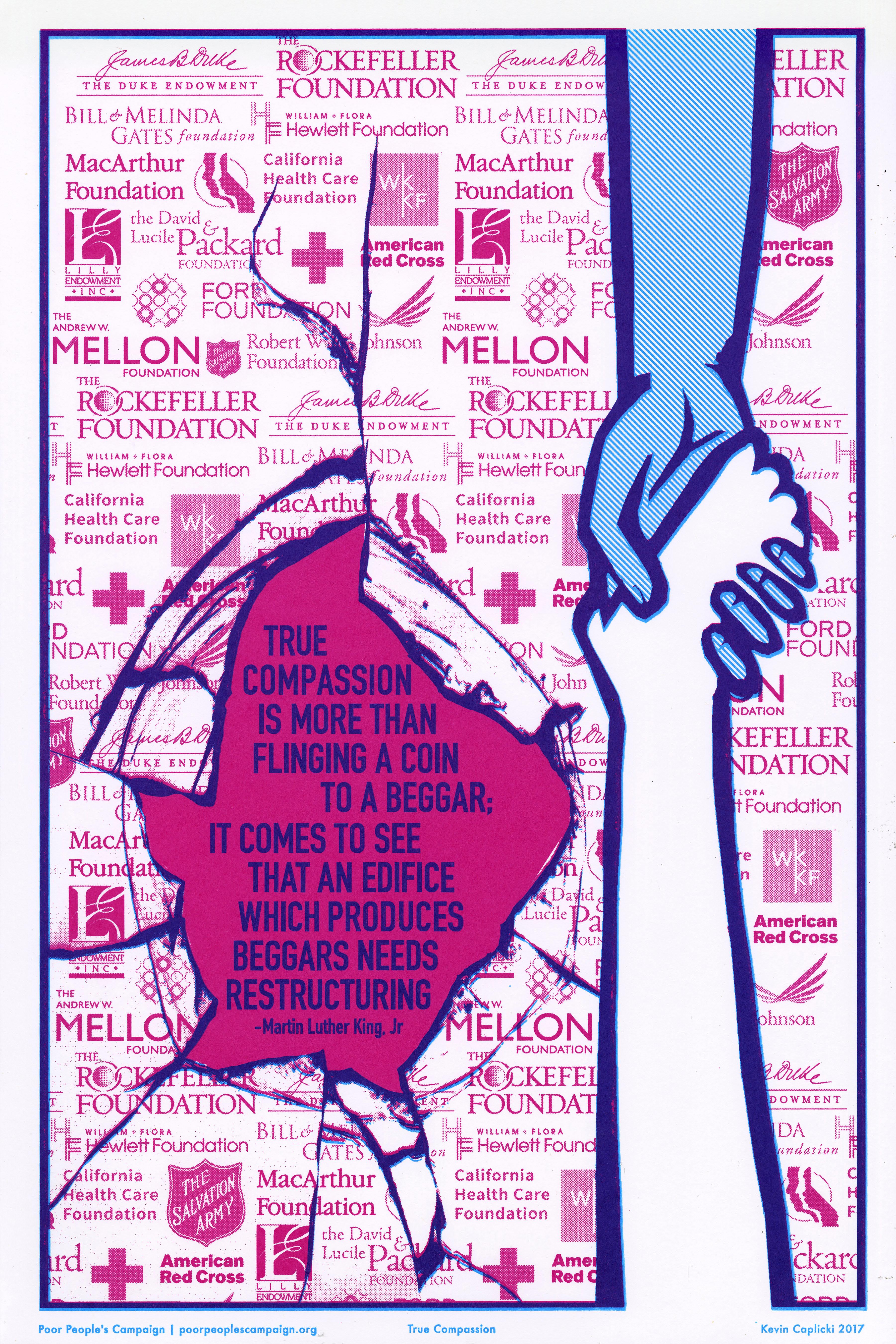
a blue arm and a white arm hold hands across a paper background with foundation and charity names. the paper is torn to reveal the words "True Compassion is more than flinging a coin to a beggar; it comes to see that an edifice which produces beggars needs restructuring." - Martin Luther King, Jr

Art by Kevin Caplicki for the Poor People’s Campaign, available at Just Seeds Collective.

between words

I started this blog in part because the air around me was too thick with gaslighting. Because I needed to tell the story of what was happening at UWS and in the UW system not just to the world outside, but to myself. Because I needed to write down and tell so many stories. Writing makes things clearer and makes them make sense. When I don’t have the time to write I start to feel the walls close in and everything feels too quiet here. Up starts to feel like down. I hope I can be back to writing the world into sense again soon.

drawing of an anatomical heart with the text "This Machine Kills Fascists"

Graphic by Jonathan Byxbe of Flight 64 Studio in Portland, OR, via Justseeds Collective

Saturday Rec: Pink Ribbons, Inc.

Pink Ribbons, Inc.

Pairs well with: organic foods, soil-testing kit, and solitary activities once you become unpopular for wanting to make space for the truth and criticizing “Pinktober”

This is another documentary based on a book, an academic text by Samantha King who also appears in the documentary. The film covers the problems with reducing fighting breast cancer to buying stuff with pink ribbons on it and includes many of the problems people have with the Komen foundation. More interesting, however, the film is a powerful discussion of the ways that relentlessly positive thinking is really harmful to people. It shows persuasively that when we focus on positive thinking, we center quick and easy solutions and end up missing real solutions, which are harder and take more time. We do not think about what causes cancer (e.g., living near oil refineries), and how more people are getting it. Instead we focus on finding it early on as if it were an inevitable fact.

Most strikingly the film includes interviews with women dying of breast cancer who discuss how there is no room for them or their experiences in a “movement” which only wants to hear happy stories and see pink objects. Where can one process the experience of dying from a horrible disease if people only want to hear about happy things? How can this be a “good” way of dealing with a disease if there is no room for the people actually experiencing its effects in an authentic way?

A great film for understanding how focusing only on the positive can literally harm the people around you.