safety planning and reacting to ICE kidnappings: some concrete steps

In the last two weeks there has been an escalation in the impunity with which state forces can and will kidnap people off the streets in the United States. Of course, arrests are always a kidnapping of someone from their community (a great example here is picking people up with open warrants they may not even know about), but it is also fair to say we are seeing significant escalation in who will be picked up and how little advance notice they have that they are being targeted as we watch noncitizens be snatched by masked cops. Spreading terror is clearly the point here, and it’s effective. Unfortunately, trying to comply is not any better of a strategy than hoping it won’t happen to you or your friends, so our only real choice is to face the fear and work together.

I put together a list of ideas based on my experiences and training related to copwatching, human rights accompaniment, jail support, and anti-stalking safety planning. Some of these make more sense for the people targeted by ICE, while others are more for bystanders who want to try to disrupt these nabbings and the terror they are sowing. None of these are guaranteed to work. The main idea here, taken from human rights accompaniment, is that in a bad situation we can try the slim odds to see if sometimes we can stop the worst from happening.

These are not exhaustive tips, and I’m sure there are things I haven’t thought of. Please feel free to reach out if there’s something you think should be added!

  • Make sure someone knows where you are supposed to be at all times. This is so that people can start making calls and publicizing quickly after you are grabbed.
  • Alter routes and routines as much as you can – this makes it harder for ICE or other state agents to predict where to find you
  • Try not to be alone, especially when in public spaces.
  • Make sure that someone trusted has your birthdate, your A-number, the list of stuff you need taken care of ASAP (childcare, pet care, medication), and your other emergency contacts (like lawyer). This person should be someone who is not likely to be arrested or detained with you, and you should memorize their phone number. (This is jail support protocol.)
  • We should probably ALL get busy making sure we have at least one phone number really memorized that we’d call if we are detained.
  • Make sure you have the phone number of a decent immigration lawyer, who can file a habeas corpus, and that your emergency contact has it. It is likely hard to get set up with a retainer for a lawyer right now, as most are swamped with similar requests, but you can at least get the name and number of a recommended person and give it to your emergency contact. Another idea could be for a group of people to pool resources and engage a lawyer together. A good place to start looking for trusted immigration lawyers is your local National Lawyer’s Guild chapter, or a local agency that does immigration defense (even if you can pay, they may have a referral list).
  • Be ready to call/yell/make a disturbance, especially if you are a bystander. The idea is to disrupt all secrecy.
  • Sometimes it works for targets or witnesses to appeal directly to the humanity of people who are doing the violence.
  • Think of the audience you’re appealing to as international at every point in this process. Public support can create more pressure on the state, but if you do not want your situation, still make sure that a significant number of people know what is going on with you so they are ready to step up.
  • Never talk to the cops! If you are bystanding, you can try talking directly to the person being detained, for example asking “do you consent to this search?”
  • In particular for bystanders, be mindful of not escalating a volatile situation, even as you may be trying to disrupt secrecy.
  • Bystanders may also want to make it clear that you are accompanying the victim, and not just gawking at their terrible moment. I do this by yelling some support or a question, and I also hold my phone visibly in my hand, whether or not I film.
  • It’s also helpful to be clearly marked as who you are, especially if that involves privilege: neighbor, professor, manager, etc.
  • Finally, rehearse these incidents mentally. Go over exactly what you might do, and where this would have to be happening for you to intervene. Rehearse what you will say if you are the one stopped on the street. We experience deep conditioning to go along with authority that kicks in when we’re shocked and confused, and all of us need more practice with disobedience.
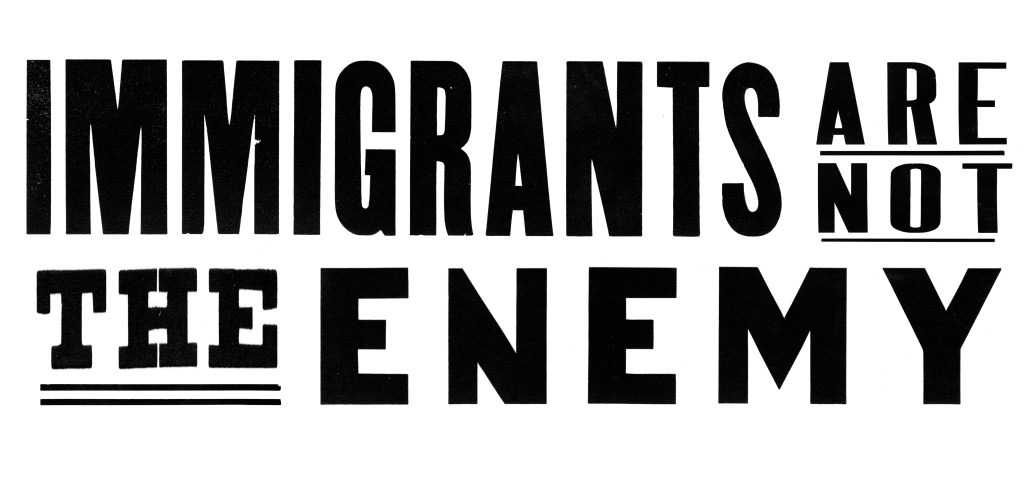
Tall, bold text in black is oriented horizontally: “IMMIGRANTS ARE NOT THE ENEMY," created by Kevin Caplicki.
Image by Kevin Caplicki.

Amid Right-Wing War on Higher Ed, Montana State Students Fear for Their Lives

On February 16, the Queer Straight Alliance (QSA) at Montana State University (MSU), a student club dedicated providing community to LGBTQ+ students and community members, received an email from an anonymous email account. The email said, “Sinners of the QSA you must repent and turn to … the white god of Christianity,” and threatened to kill everyone at an off-campus dance party that same evening.

The students flew into action when they received the email, despite their fear. They spread the word far and wide so it could reach anyone they thought might be attending the event, they contacted multiple campus and police agencies, began arranging alternative housing for students who were afraid to return to their homes, and even set up a clothing resource for students who thought they might be targeted due to an overt LGBTQIA+ presentation. Coming in the wake of the mass shooting at Club Q in Colorado Springs as well as other recent attacks at trans and queer events, they took the threat seriously and worked to protect each other and their community.

My most recent piece of writing, for Truthout. Read more: https://truthout.org/articles/amid-right-wing-war-on-higher-ed-montana-state-students-fear-for-their-lives/

spreading our fear of the dark

A few nights ago, I took a ride on my bike. Alone. In the dark. Through a wooded path.

In case this fact doesn’t upset or scare you, I will remind you: I am not a man.

 And guess what? Nothing happened.

Well, something happened.

Before that, every woman I work with offered me a ride home on my way out the door from work. They were all afraid for me to ride my bike home. I don’t mean to suggest that this was not nice (it definitely was), but primarily it was discouraging.

As I walked out and got on my bike, I did feel trepidation. Sometimes I think it is hard to make sure that modes of caring for each other do not to turn in to echo chambers that amplify our fears and hurts from the wider world. After everyone tells you to be scared, it is hard not to be scared.

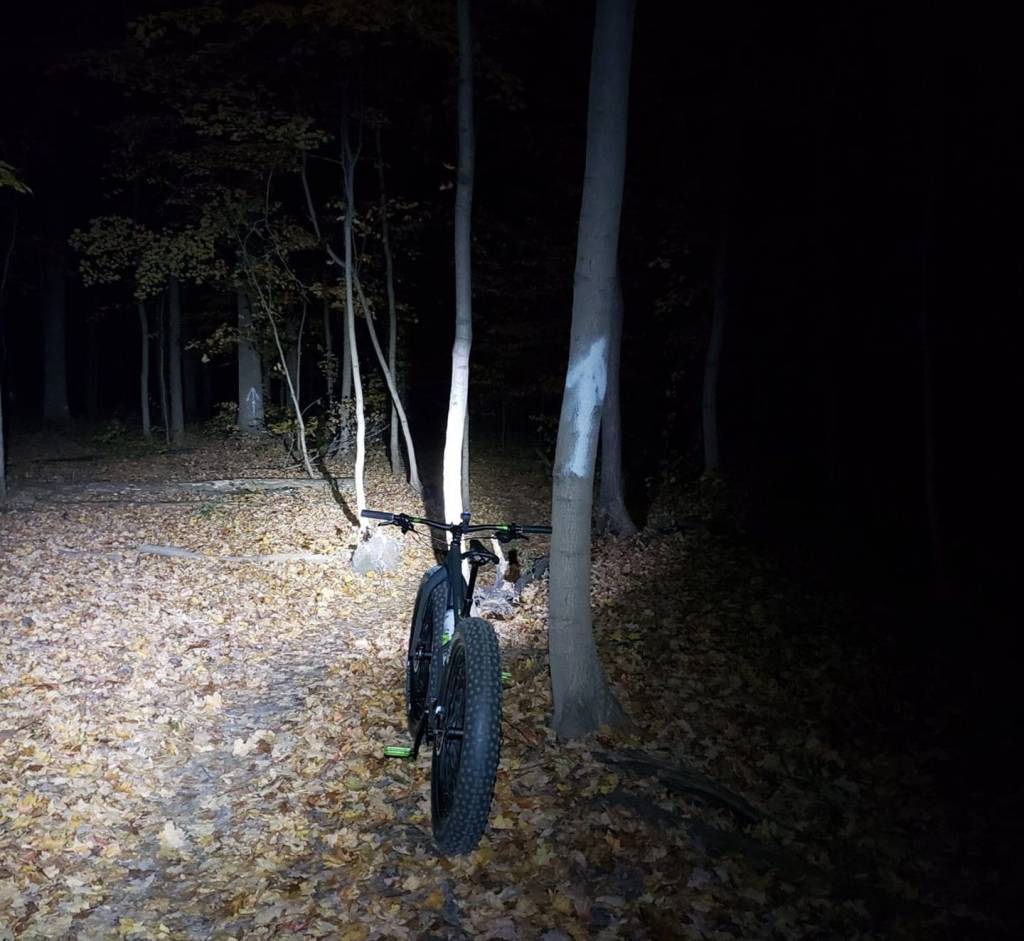
Picture of a bicycle with a light showing a wooded area, leaves on the ground, and darkness beyond.
Picture taken by my male friend Dan Winchester of his night biking. No one responded to his picture with any concerns.

Once on my bike, the path was empty, and after a certain distance, I entered a wooded area that was dark and it was hard to see. My light was not working and I had to practically stop. I started to breathe too hard. I started to feel afraid in the dark. I started to feel afraid of the dark itself. I worried about what was in the bushes. But then I started to control my fear and I knew that it was only small animals in the bushes being disturbed by my bike in the bushes. I knew that without a light my eyes would adjust to the dark place and I would see different things. Moving at a snail’s pace, I could smell the leaves and hear the trees, in addition to the nearby traffic. I could hear the river. I could focus on feeling my cold breath. If I could control my fear, I could have a wonderful bike ride on a wooded path, no more likely to be attacked by the “crazies” (or just men)–my coworkers’ fear–than anywhere else in this beautiful and terrible world. If I could control my fear, I would be free to enjoy the world as it is.

Because the reality is, I am vulnerable to harassment by men in daylight or in darkness, in the woods or in my workplace, whether strangers or men I know. I am not denying this reality, yet I do not want to overstate it either. And if I refuse to overstate and let it control me, I can be free to enjoy a quiet solo winter bike ride home in the evening. And wow, that freedom felt as good! and as complicated as any other.

Even as I began to really enjoy my ride, I knew that almost no one in my life would approve of this ride. They would want me to turn back, they would want me to make “safer” choices; they would want to come rescue me from the woods. But what do we sacrifice when we continually choose safety over wildness? What do we lose when we share our fear with each other but never our courage? How will we teach each other to be free?

story from the protest

The cop came over to express concern.

About me getting run over by a car

While handing out flyers to stop the concentration camps

From the sidewalk.

Then he walked me through moving traffic back to safety.

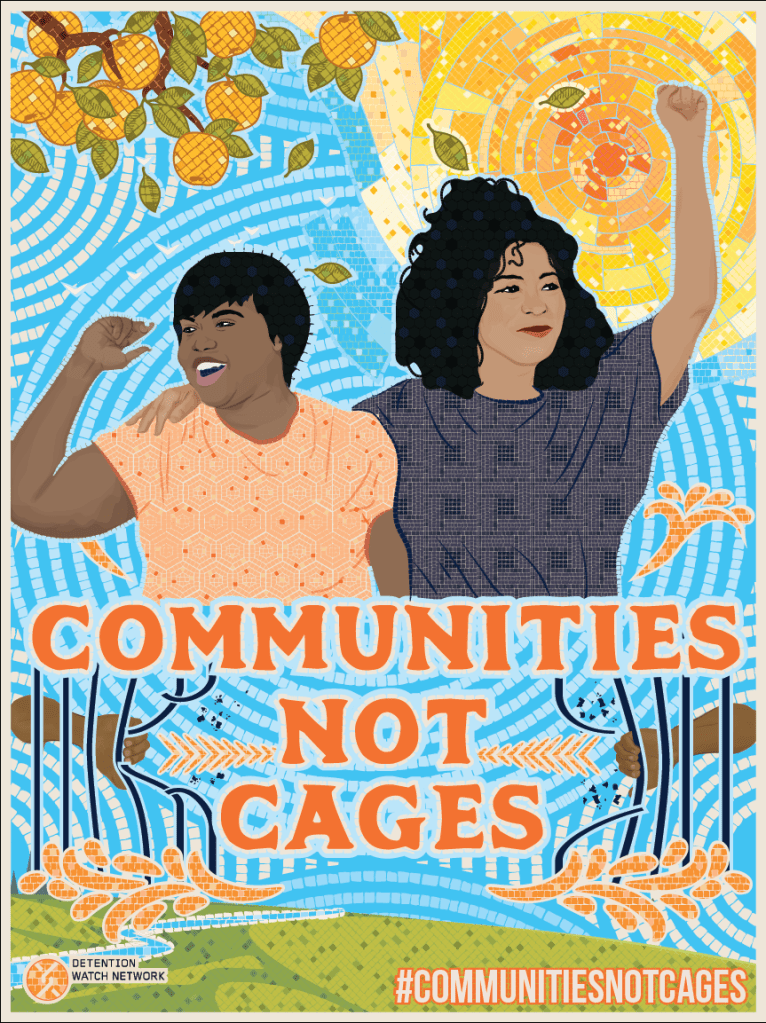
Two people standing together in front of the sun. Poster says "Communities not Cages"
Art by: Rommy Sobrado-Torrico

What Terror Looks Like

More than one year after the post electoral crisis, the terror created by the murders of protestors is still palpable here. Many readers of this blog will be familiar with these killings because you participated last year in an open letter to the families of the victims.

A few days ago Karen Spring wrote this excellent essay on the continued impunity for the killings.

As I mentioned in a previous post, the events of December 2017 & January 2018 are hardly in the past for many Hondurans. These killings were mentioned to me without prompting at some of our site visits, and my general impression both from these weeks on the ground and following social media is of a people where terror has genuinely taken root. I keep thinking of the many histories I’ve read or watched about societies existing under terroristic regimes, and realizing that in this moment I’m visiting one of those societies. And knowing that my friends and others live in it every day.

Nor are these impressions and facts far removed from the United States. Impunity for murdering protestors and the terror it spreads is creating an exodus of people arriving everyday at our border. To say nothing of the direct and indirect support for this terror provided by the US government itself. One example: the US provides funding, training, and “vetting” for various police and military forces implicated in human rights abuses including murder. We are funding terror.

Worrying about Others Is Nothing to Fear


Every day I think about my friends in Honduras and I worry about them. I wonder what they’re doing and if they’re OK, and I wonder if they’re worried about today or tomorrow. Then I worry and wonder about my friends in Argentina who I haven’t seen in a little longer. I feel bad that I owe them a visit and I am concerned that I have lost touch with some of them. But most of all I worry about how much they’re being affected by the deepening crash of the economy, increasing social repression, and overall sense of crisis reaching infamous 2001 levels. I also think about how I owe my good friend in prison a letter, and I wonder how he’s getting along too, and I hope that he knows that my longer than usual stretch without communication doesn’t mean that I’m not thinking of him often.

I feel connected to these folks, and my worries are personal rather than abstract. The problems they face—in the form, often, of risk to their lives—are elements of large social problems of the kind many of us read and hear about in the news. The visibility of these problems happening to people who are faraway makes both the people and the problems seem invisible. But they are not abstract social problems. They are everyday problems faced by real humans. They are the concrete problems faced by my living breathing friends, even if these concrete problems are overwhelming oppressive social structures.

It seems to me that I also know many people who have refused to face or even acknowledge these problems. Their reaction, it seems to me, is one of fear. They fear, perhaps, becoming sucked in to the sense of worry that I described above. They fear, perhaps, becoming overwhelmed by the extent of the world’s problems. They fear, perhaps, their sense of helplessness. It is true that “you can’t help everyone.”

But I wouldn’t trade my constant sense of worry and obligation for the disregard or the protective ignorance or the fear or whatever it is that stops people from engaging. Despite the fact that injustice will never be solved, I know that I am connected horizontally in relationships with others that are mutual, loving, and creating alternatives everyday to the systems which tear us down. I am engaged in nurturing myself and others. I know that I am not hiding from reality.

Every week I try to do what I can. It is overwhelming, and so I try to work first on the corner of the giant puzzle of injustice closest to me, while keeping the whole picture in front of me and making sure that my piece will still be able to connect. I work on always increasing my network of solidarity and especially its diversity. And I try to hand puzzle pieces to passersby, who happen to know me but no one else, and get them involved too, and I guess this for me is also part of how solidarity works.

Sometimes I fail, but every day I worry and I make all the room in my life I can to change the world. I reflect, I criticize, and I work at it. I know that I am obligated to others because my humanity is bound up in theirs. Without them, I am not fully human.