my interview with Harsha Walia at the Socialism Conference

The left in the United States faces a series of urgent questions: How do we stop a genocide in Palestine funded by our own tax dollars? How do we engage with or confront electoral politics? How can we get beyond the insularity of our own context to learn from each other?

Truthout caught up with Harsha Walia at this year’s Socialism Conference, a yearly convergence of over 2,000 people on the left hosted by Haymarket Books in Chicago, to discuss some of these questions. Walia is an organizer, anti-violence worker, and the award-winning author of Border and Rule and Undoing Border Imperialism. She lives in British Columbia, Canada, where she is involved in migrant justice as well as feminist, anti-capitalist, abolitionist and anti-imperialist movements.

In this exclusive interview, Walia discusses building supportive containers for new organizers in this moment of heightened mobilization for Palestine, celebrity culture and the U.S. presidential election, and what we can all learn from international struggles.

You, Kelly Hayes and Robyn Maynard designed a session for the Socialism Conference called “World Building Workshop: Abolition, Solidarity, and Decolonization.” At it, you invited participants to discuss the infrastructure our movements need, any recent wins or stumbles, how we can connect across struggles and how we can manage principled disagreements. Can you talk a little bit about why you decided to do that session?


Read the interview, “Harsha Walia: Democratic Party Laid Groundwork for Anti-Migrant Border Policy,” at Truthout here: https://truthout.org/articles/harsha-walia-democratic-party-laid-groundwork-for-anti-migrant-border-policy/

the politics of COVID information

The pandemic isn’t over. Why is it so hard to find accurate information about it?

This week, Nassau County, New York, passed a mask ban. Those wearing face masks will now face the possibility of up to a year in jail or a $1,000 fine. Angry at the power of anti-genocide protests, lawmakers banned one of the most basic forms of disease protection just as the world is experiencing a record surge in COVID cases. While officials insist that the law will not be used against those masking for medical reasons, disabled activists protesting the move say they were intentionally coughed on during the city council meeting where the bill was passed.

In a world of airborne contagious diseases, everyone has a medical reason for masking. So why doesn’t our public health policy recognize that?

In 2020, at the height of the first wave of the COVID-19 pandemic, then-President Donald Trump was excoriated for saying that “when you test, you create more cases.” This statement was met with outcry by journalists and public health professionals and pundits from all major outlets.


Read my most recent article here. In it you will also find a list of places you can stay more informed about COVID, critical during this record-breaking surge.

The response to this article has been tremendous. I was especially honored to be a guest on one of my favorite podcasts, Death Panel, to talk about the piece. If you’re not a paid subscriber, you can check out a preview of the first 20 minutes of the episode here.

Finally, I want to officially announce my name change to October! This has been a long process for me since letting go of the past is not always easy, but I am excited to have a name that better reflects who I am in this part of my life. If you have known me a long time, please feel free to continue calling me Meg, but I will gradually be removing Meg and Meghan from my byline and business information, and may change my email address eventually too.

Anti-LGBTQ Censorship Is Endangering Trans People Behind Bars

The rampant banning of texts about queer and transgender people has been in the news a lot recently, but nowhere is book banning more of an issue than in prison. Trans people, in particular, suffer from prisons’ arbitrary restrictions. Sophia Alexsandra Brett Laferriere, a trans woman living in a Washington state prison, told Truthout via the prison’s online messaging system, “Most of the information we ask for doesn’t get to us, or staff steal it or write over it. They block it from us.”

Although data is not easily available, there are clues that indicate the severity of these impacts. For example, Trans Bodies, Trans Selves, a textbook-like educational resource for trans people, is banned in Arizona, California, Connecticut, Missouri, North Carolina, Texas, Virginia and Wisconsin for “obscene material,” and being “sexually explicit,” among other related reasons. In Washington State, prisons keep a copy stocked in the library after legal intervention from the American Civil Liberties Union, but individuals are still not allowed to have a copy, says Dillon.


My latest piece of writing for Truthout is up. Read the rest: https://truthout.org/articles/anti-lgbtq-censorship-is-endangering-trans-people-behind-bars/

really facing the climate crisis

Recently I heard Dean Spade on the podcast Death Panel talking about an article he wrote for In These Times. The article was about two recent pieces of “cli fi” (climate fiction), and in part inspired by his essay, I went looking for more literature representing more realistic views of the climate crisis we are facing (and already experiencing). (I’m also looking for helpful representations of pandemics or specifically the coronavirus pandemic in literature, so if anyone has recommendations, please do point me to them.)

Spade argues, in part, that even among the left we retain some liberal fantasies when it comes to climate, believing that climate is somehow too big for our actions to impact and that ultimately only state intervention will be meaningful, or worse, that we hope that state intervention or actions of some kind will save us. Spade writes, “avoidance and denial perpetuate and stem from people’s hope for state-based solutions and the belief that states or corporations are the only actors that can ultimately implement solutions to these problems. The (often suppressed) awareness that the very entities that got us into this mess are not going to get us out of it — much less contribute to building a society where people have what we need — can, of course, cause our overwhelm and immobilization if we believe they are the only answer.” Spade continues, writing about Peter Gelderloos’ book The Solutions Are Already Here, “It is so helpful to remember that no matter what fictions are used to justify domination, we did not design or consent to these arrangements of extraction, and people lived for tens of thousands of years without them. To resist and survive the current crisis to whatever limited extent is still possible, we have to work against states, not inside them.”

What I ended up finding in my own search for fiction to help me think about this was The Light Pirate, written by Lily Brooks-Dalton, a book I liked a surprising amount given that it is a book about the climate that is also part of Oprah’s book club. In fact, I really liked the book and found that it really helped me tackle some of the things that Spade mentioned in his interview and article, specifically my own denial and avoidance.

[mild spoiler alert] In the Light Pirate, people in Florida are abandoned by the state. This happens in sudden, but realistic feeling ways. Our already frustrating, impersonal, uncaring local, state, and federal government systems – one where elected representatives never even bother to answer their phone lines – are tipped over the edge by the collapse of their tax base as people flee.

I liked too, Brooks-Dalton’s portrayal of how everyday people react, and especially her portrayal of the failure to notice the crisis until it is already too late to do much, perhaps even too late to survive. People in the book engage in acts of trying not to recognize what some part of them knows in a way that makes it easier to understand the total avoidance that most people in the U.S. engage in when it comes to climate crisis.

Listening to Spade talk about our difficulty facing the grief, anguish, and hopelessness we feel, and how that relates to our inability to really face the reality of the situation, really made me reflect on the silences in my own thinking. Up to now, I thought that I was facing this in a pretty clear-eyed way. I talk about climate crisis and the future I expect from it much more than the average person and more than almost anyone else I know, and preparing myself for this crisis is a specific part of the way I think about arranging my life. A lot of my thinking about COVID, and the ways that I have made permanent shifts in my life in response to COVID, are driven by the knowledge that COVID is very likely only the first such illness and pandemic I will face as the Earth warms. I do not expect to find a house or a career or a life that I can stay put in for decades because I do not expect that to be a real possibility for me among the varying levels of collapse. Even so, as I listened to Spade, I realized that there are a lot of aspects of the climate crisis that I have not thought about in specific detail.

By taking a hyperlocal perspective rather than a global one, The Light Pirate encouraged me to think in specific concrete terms about what the next few decades are likely to bring exactly where I live. For me, this is obviously not to disregard what will happen elsewhere; it is critical to expand our nets of solidarity as wide as we can so that more people can survive. But if I’m honest with myself, I have allowed myself to consider this a global phenomenon and thus more abstract or harder to conceive of, and to leave the concrete realities of what will likely happen to me, right where I live, out of my thinking. It’s as if a wall goes up when I try to think more about that and my mind just switches topics. Reading this book helped me see how essential developing that understanding (and facing it) is to any kind of preparation, whether mutual or individual. There are knowable things that I can learn, like understanding the ecosystem that I’m in and how it is most likely to change, that will increase my chances of adapting and, crucially, of supporting others.

One of the Light Pirate’s main messages is one of adaptation, an evolutionary message of adapt or die. The book also really helped me understand why this kind of adaptation is so difficult for us. Through the character’s eyes, I have a better sense of why so many refuse to see what is happening to our environment and our living conditions right in front us. I found the portrayal of a world where people in Chicago are still taking vacations to Europe and attending graduate school while people in Florida are literally being swept away by hurricanes and a rising water table to be realistic. After all, we are already in that world where we go about our daily lives in ways that reflect that the problems suffered by people in other parts of the world do not have urgency and are not our own. Why would it be dramatically different as the zone of “not here” gets larger and the zone of “stability” gets ever smaller? Recently I had a really good conversation with an old friend about COVID. We were talking about the feeling and meaning of being “early adopters” when it comes to making permanent shifts to our lives as a result of COVID, and in preparation for the other pandemics that are likely coming. Being an early adopter is a lonely thing, and by definition it means doing something or conforming to an idea that is not widely held. Personally, it can be hard for me not to question my actions or understanding when it seems so contrary to everyone around me. I think the Light Pirate really helped me grapple a bit more with that. After reading it, I feel affirmed in my early adoption preparing for the next pandemic, and in refusing to go back to a normal that has now vanished and instead working as hard as I can to prepare for what’s to come.

A green sign carried a protest reads "Make Detroit the engine of a Green New Deal". The sign is laying on a plain floor.

Living through COVID has prepared us for the worst. We are now prepared to abandon each other.

I worry almost constantly about the ways that the pandemic – which was traumatic and disturbing for everyone – has set a precedent for our collective ability to avoid thinking about the well-being of others.

Prior to COVID, we were already living in a very dehumanizing, death-making, and callous society. I think all the time about the disappearance of 1.9 million people to imprisonment at any given moment in the United States. These people live in cages, yet many of us on the outside do not dwell on their existence. I think of the multitudes of people – the full count unknown but being in the hundreds of thousands or above — who were killed by the U.S. war in Iraq, a war that was started by a straight-up lie. Many of us knew it was a lie, but we learned to live with that reality (if unwillingly). And then there are the more than 650,000 people living on the streets. Most of us have learned to step over these neighbors, to look away from this reality, in order to go on with our own lives.

This society is one that forces us to draw a distinction between our own satisfaction and the lack that others experience, because no amount of personal sacrifice by a working person can fill the lack. It is by design that some of us have houses, food, and objects that give us pleasure while other people struggle for water, because that society allows a select few to have private jets and to establish or maintain dynasties for their families.

The result is that we are forced to accept the need, deprivation, and violence, that others experience and to figure out for ourselves how to negotiate that acceptance. This has been true for at least my lifetime. It’s true that throughout that time new levels of deprivation have come and gone that we have, in general, accepted. But the pandemic was another level. The number of people who died – vanished from this earth – in a period of months was previously unfathomable. We lived the Monty Python “bring out your dead” skit becoming reality as morgues across the United States and across the world were unable to keep up with the pace of death. And so it took us a while to understand – if we have understood it — that while so many were dying, even more were being disabled, having their lives changed forever in profound ways, in a society that discards disabled people.

The emergence of the COVID pandemic was a shock, a major hit to just about everyone’s psyche and worldview, even if it seems naïve to admit that now (it does). Confronting suffering on a new scale changed us.

It is absolutely wild to think that now, when I think of the early days of the pandemic or when I hear people talk about that spring of 2020, what we mostly talk about is the ways we were stuck in our homes or had trouble buying certain products. I don’t hear people talk about (and I don’t often talk about) the absolute stark and sudden fear that I felt wondering which of my friends, and how many, might be snatched away suddenly. The horror and dread that I felt waking up every day to a world in which tens of thousands were dying on top of the already harsh, violent, and dehumanizing world I lived in. The pain of trying to assimilate this new horror. The confusion and fear of constantly changing information and directives about how to protect ourselves and each other, and the utter anxiety of all of us being subject to a disease about which little was really known.

It is also worth recalling that the human desire to care for each other came to the forefront and seemed to bloom all over, as it often does in crisis.

We do not, though, talk much about how the pandemic is in many ways our first real step into the absolute chaos of climate crisis. Not only because the ability for an illness like this to spread is itself the result of changes in our climate, but because it showed us what it will be like when large-scale disasters impact our distribution systems. We don’t talk much about this, but it is there, looming.

We all experienced the organized abandonment and collapse in this crisis, and we are still experiencing it. All of us are watching in real-time as our loved ones become more and more likely to have a permanent disability through multiple infections. We are more or less aware of the more than one thousand people still dying every week, although we are less aware because the data simply isn’t available. Not only is it hard to find, it simply isn’t being collected. This is intentional and it is key: if we can’t accurately describe what’s going on, it’s not only hard for us to organize around it, but the fact itself becomes up for debate. It becomes optional to accept this.

And all of this – the deepening push to abandon, the increased normalization of preventable disasters — has led to the situation now, where we are witnessing a genocide in real-time. Thousands of people are being killed in a month again, this time in a tiny strip of land and in a direct, targeted, and above all, completely preventable way. More than 32,000 people have been killed by Israel since October 7, as of today In this case, it is Palestinians who are being killed (we are not all potentially susceptible), but then again, this massacre is preventable – including by the United States government. And we all know that it is happening, whether we choose to entertain that awareness or not.

We are now prepared to accept a genocide. This thing, this awful awful thing, will not be the last or the worst thing, at least not unless we refuse to abandon each other. As Kelly Hayes and Mariame Kaba emphasize in Let This Radicalize You, the future is not written, and it does not have to be this way. We do not know what will happen, and that is a powerful, hopeful thing. But if we do not want a future even worse than this one – one with even more catastrophic loss of life and health — we must absolutely refuse the many ways we are conditioned to abandon each other and look away.

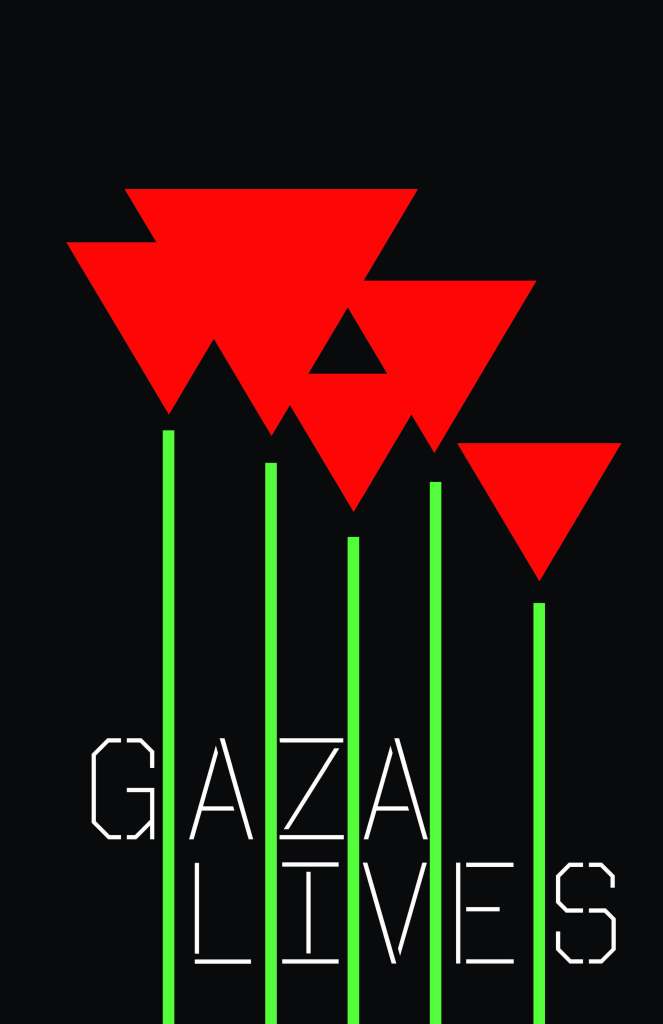
The image is red, green, and black, with abstract images of flowers. It says "Gaza Lives."
Image by Josh MacPhee at Justseeds

We Are Seeds: Why It’s Worth It to Fight for Change

Last fall, I made my first digital zine. I have made a few minizines before (the kind you make from folding a single piece of paper) and have found it a fantastic exercise (plus they’re cool). I like how the process of collage, of looking for images and fonts and other little bits, can unlock my mind. There’s a kind of relaxation in thinking about what you want to say without thinking so directly and insistently about what you’re going to say. And, it’s kind of like a blog in the sense that it can be a less polished version of writing. These intermediary steps of daring to get my ideas out and see what people think of them, before putting in the work to polish the writing, have been so critical for me in developing a much more regular writing practice.

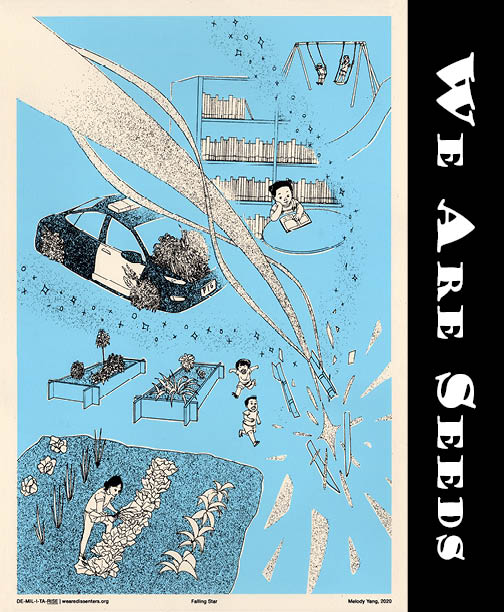
A front cover that says We Are Seeds along the side and contains artwork by Melody Yang. In the artwork, a garden is growing out of a cop car, a child is a reading a book, in the background kids are swinging and in the foreground kids are running around garden beds. A rocket crashes to earth and bursts in to stars which are sprinkled throughout the drawing.
click to open and read the zine

For this reason, a zine was the perfect medium for getting a project started that I’ve really been thinking about for several years now: a book on why social movements matter. But more specifically than that, a book on why it matters when we get together to fight for our collective liberation, even if we don’t win. My hope is that this is a book that can inspire people to take the risk and do something. I know so many people who are clear on the problems they see around them but for whatever reason, are not actively engaged to change the situation. My hunch is that many of us think that it is hopeless to fight against big structures like racism, or the prison industrial complex, or environmental devastation. This is a book about why it should never be hopeless.

The zine I’m sharing here is a first draft of the ideas for the book. The book itself – which I’m putting together now! – is an anthology. In the end, it didn’t make sense for me to write a book about collective struggle by myself. I wanted to include multiple viewpoints and more collective wisdom. So this book, tentatively titled The Struggle Is Always Worth It, includes the writing of a dozen badass organizers and folks engaged in thinking about why we on the left do what we do.

As always, I’d love to hear any reactions and I hope you’ll keep a look out for the forthcoming book.

a birthday request

I want to share here some of the organizing work I’ve been involved with this year. This year I have been enmeshed in two big abolitionist projects in and beyond Detroit. And, in honor of my birthday next week, I’m asking anyone who wants to celebrate with me to make a $43 donation to one of these projects (or whatever you can afford!).

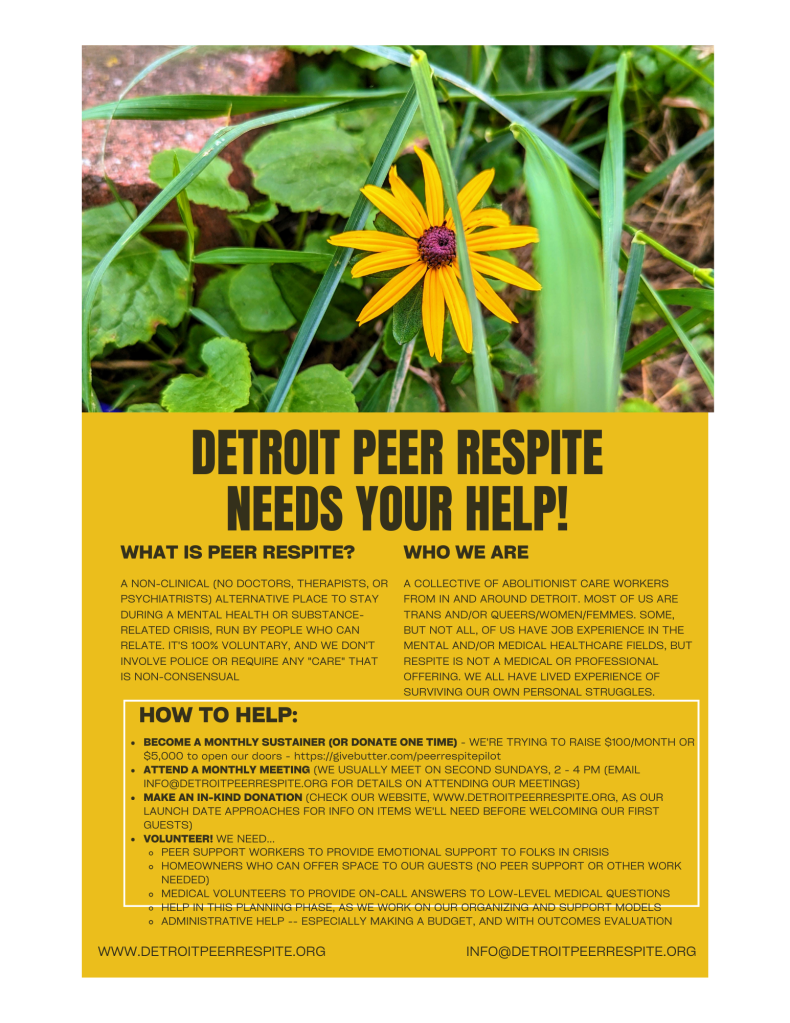
The first is the Detroit Peer Respite, an abolitionist alternative to mental health incarceration and coercive care for moments of acute crisis. We are working to pilot the ability to host a person in crisis in a local house for up to 10 days. In this non-medical and consent-based model, guests will be supported round the clock by another person who can listen, help find resources, work through problems, or whatever support is requested and helpful. The organizing and support comes from peers – people who are survivors of psychiatric incarceration or have other lived experiences with mental health struggles with ourselves and in our families. To make this happen, we need a lot of volunteers and a little bit of funding! I would love to talk to anyone local about how to get involved.

Donate to Detroit Peer Respite here: https://givebutter.com/peerrespitepilot#

The second project is the Abolitionist Book Club, a reading group that connects people inside and outside of prison for conversation and political education. This is a project started in collaboration with the Black Prisoners’ Caucus in WA as an act of material and emotional support with our imprisoned comrades. The club is currently reading Kaba and Richie’s No More Police. We’re fundraising to provide money for phone calls and messages to and from the prison (you can read more here about these exorbitant expenses).

Donate to Abolitionist Book Club here: https://chuffed.org/project/no-more-police-insideoutside

Big, big thanks in advance to anyone who can celebrate my birthday with me by supporting one of these projects. I would also love to chat with anyone who wants more info or is interested in getting involved, or doing something similar, or who’s already doing similar work, so as always, please reach out!

Abolition Everywhere

In Republican-controlled regions across the country, people are engaged in abolitionist organizing: Even though conditions vary, people are organizing for freedom virtually everywhere. This is nothing new. The South, for example, has been a site for abolitionist organizing for centuries, and it continues to be one, despite the attacks on long-settled civil rights being organized by Republican supermajorities in statehouses.

Ash-Lee Woodard Henderson is the first Black woman to codirect the Highlander Research and Education Center, a century-old nexus for abolitionist and labor organizing in Tennessee and beyond. She is also a cofounder of the Movement for Black Lives. Woodard Henderson says that if abolitionists really believe the most impacted and marginalized people are at the heart of the struggle, then red states and counties must be centered in organizing efforts instead of treated as lost causes. She notes that the South in particular is often ceded by national organizations—which, among other problems, makes it hard for organizations working in the region to secure funding from philanthropic foundations.

My latest piece of writing, co-published with Inquest and Truthout for the series “Abolition in Action.” Read on for more on the successes organizers are having in some surprising places and how they think about their organizing: https://truthout.org/articles/grassroots-organizing-in-red-states-is-at-the-heart-of-abolitionist-struggle/

Amid Right-Wing War on Higher Ed, Montana State Students Fear for Their Lives

On February 16, the Queer Straight Alliance (QSA) at Montana State University (MSU), a student club dedicated providing community to LGBTQ+ students and community members, received an email from an anonymous email account. The email said, “Sinners of the QSA you must repent and turn to … the white god of Christianity,” and threatened to kill everyone at an off-campus dance party that same evening.

The students flew into action when they received the email, despite their fear. They spread the word far and wide so it could reach anyone they thought might be attending the event, they contacted multiple campus and police agencies, began arranging alternative housing for students who were afraid to return to their homes, and even set up a clothing resource for students who thought they might be targeted due to an overt LGBTQIA+ presentation. Coming in the wake of the mass shooting at Club Q in Colorado Springs as well as other recent attacks at trans and queer events, they took the threat seriously and worked to protect each other and their community.

My most recent piece of writing, for Truthout. Read more: https://truthout.org/articles/amid-right-wing-war-on-higher-ed-montana-state-students-fear-for-their-lives/

exciting updates

There is a little bit of news around my office that I haven’t yet posted about here. This spring, I started offering my own workshops directly. These workshops have been a goal of mine for a long time, and I’m really excited to have been able to figure out and set up all of the infrastructure to make them finally happen!

Book online

The workshops have been up and running now for a few months. It’s exciting to be facilitating and teaching adults (again) so regularly. The first cohort of my 4-session course “Create an Action to Defend Trans Life” has wrapped up. In this course I work with folks to think about their existing skills, networks, and preferences to support the design of an action that will in some way affirm trans life and/or support the struggle for trans liberation. An “action” is intentionally broad; there are so many more options for supporting social transformation than attending or organizing a protest. Fundraising is a critical action, for example! Or getting involved in your local library to help defend against book banning attacks. People taking this course get support from me in identifying ideas that will work for them as individuals, and also in designing and getting started with their plans. Everyone also gets plenty of support from the other folks taking the class (that’s why it’s a “cohort model”).

Multiple projects from the first cohort are now ongoing in the world, and I am so excited about it. It’s truly meaningful to support people to enact social change in tangible ways. Participants said they really appreciate the breadth of options I offered for getting involved, “besides throwing all of my time, energy, and safety on the line,” and that they were encouraged “to think in practical, concrete ways.”

Not to brag, but another participant said “Meg conveys a cool confidence—smart, well informed, friendly, kind. The course discussions were my favorite part of the workshops, listening to the questions from participants and Meg’s answers. I enjoyed getting to know the other members of the group. Meg was great about helping us to find projects that fit within our abilities and interests.” I hope to embody this compliment as well as I can!

I’m planning to offer this course a few more times, hopefully even regularly. The next session of this class is open for a few more days. We’ll meet once a month, on the second Saturdays, and scholarships are available. Just ask. I really hope this class will be a way for me to continue to engage people in activism and empower folks to get off the benches, because right now we need all hands on deck.

I’m also offering shorter workshops where people can practice using different gender pronouns and ask any other questions about gender identity that extends beyond male and female. The next session of this workshop is designed specifically for folks involved in supervising or hiring. It is two sessions: the second session will be about negotiating backlash for trans affirmative policies and is open to anyone interested, whether or not you are in a supervisory position.

As many of you may know, these are disastrous and very scary times for trans folks. My hope with these workshops is to encourage everyone to do all that they can right now in solidarity, and to make sure that trans life can be lived out loud in public. Please do what you can, and please tell your friends and family the same.

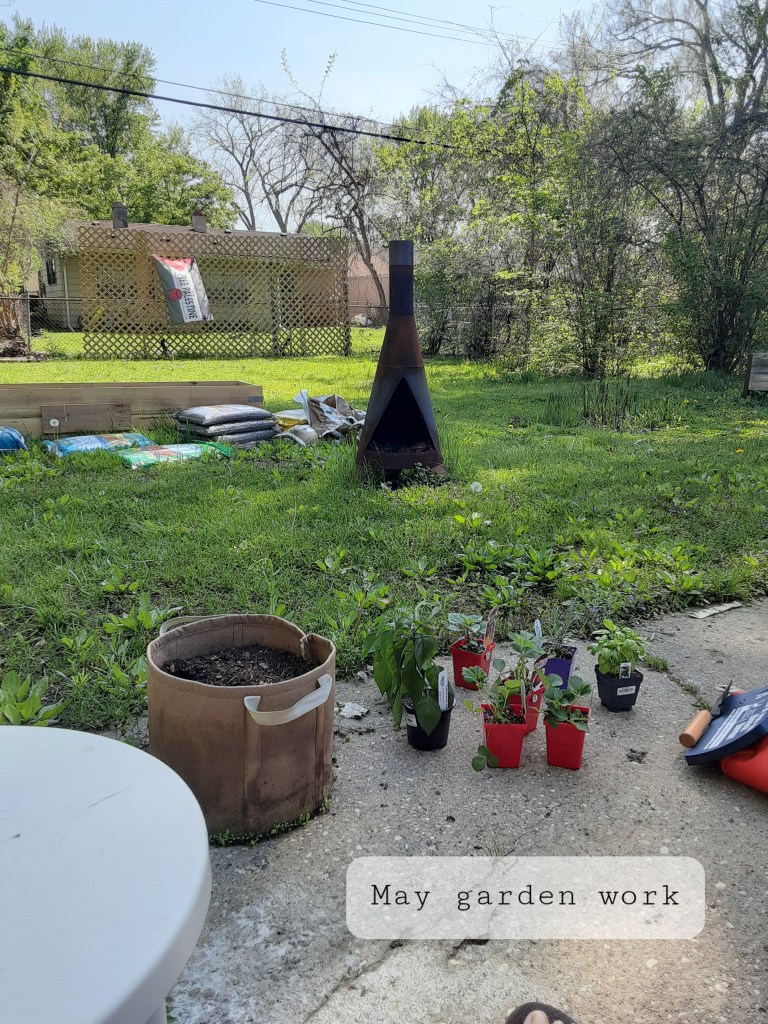
Picture of a messy yard in progress. In the foreground are a half dozen containers with basil, strawberry, and hot pepper plants. In the mid ground is a fire chimney and a raised bed with large bags of soil not yet opened nearby. In the background is a trellis with the Palestinian flag.
It is so healing to garden in late spring and turn my attention to the non-human world.