Graveyards and Gardens

I came across this short passage suddenly the other day in Jeanette Winterson’s Written on the BodyIn this radically shifted perspective I found myself able to move toward more radical acceptance of death and constant change. Maybe you will find something else.

Six bearers in long coats and white scarves carried the body to the grave. To call it a grave at this stage would be to dignify it. In a garden it might be a trench for a new asparagus bed. Fill it with manure and plant it out. An optimistic hole. (p 176)

The Grave of Rowan Morrison

“The Grave of Rowan Morrison,” Cathy G Johnson. Image found separately and used with artist’s permission.

Happy Holidays—would you please put your pain on hold so I can enjoy my perfect life?

The Rebel Prof is honored to present a guest post written by an anonymous academic of color.

“I have almost reached the regrettable conclusion that the Negro’s great stumbling block in his stride toward freedom is not the White Citizen’s Counciler or the Ku Klux Klanner, but the white moderate, who is more devoted to ‘order’ than to justice; who prefers a negative peace which is the absence of tension to a positive peace which is the presence of justice…”—Dr. Martin Luther King, Jr.

“Your silence will not protect you.” –Audre Lorde

Black and white text that reads We Want to Destroy White Power

Image by Roger Peet

The host of this blog, who kindly invited me to write a guest post and helped me edit the post, suggested a picture like the one on the left.  While the image definitely screams my deepest desire, it is not quite what I had in mind while writing this piece. Thus in an attempt to better articulate what I wanted to capture, I went on Google image search and typed in “happy holidays family” (not “white family” or “Merry Christmas,” just to be clear).  Tada~


"Happy Holidays" screen shot

I have noticed that the images we constantly get from Google (or anywhere) often invoke a mix of feelings in me—anger, pain, sense of absurdity, shame, to name a few. What these images share is their relentless salespersonship of white comfort.

I have been thinking about white people’s comfort for a while. You see, growing up, I didn’t get to read “Letter from a Birmingham Jail” or “The Uses of Anger” so I wasn’t taught about the danger of white comfort beyond white hatred. For so long, the nice white people around me have been pointing at the angry white dudes with torches marching down the streets of Charlottesville as the true enemy, the only enemy, as if their comfortable place in this oppressive reality were just an unfortunate coincidence , as if they had no control. I have seen nice white people giving up fights with the system because the system was “nice” to THEM. Then, I hear them requesting appreciation for THEIR suffering and silence, because their mere lack of enthusiastic participation in white supremacy makes them heroic and yet vulnerable, as if the torches in Charlottesville are burning down THEIR lives and those of THEIR children. I have felt the guilt planted in my heart for wanting to fight, for wanting them to fight with me, as if I were rude for having dared to disrupt THEIR comfort.

Then I think of those who are uncomfortably white but also do not want to make other whites uncomfortable. I think of how they would rather spend time apologizing for white silence than break it. I remember being told not to judge a person by their occasional participation in oppression and to embrace forgiveness, as if I were vicious for failing to heal wounds that are only “occasionally” cut open. I think of being constantly reminded of the perfect survivor, resilient, quiet, forbearing and extraordinarily successful against all odds, as if suffering is not worthy should the sufferer fall short of perfection, as if there were such a thing as perfection outside of what whiteness desires.

I write this piece, 55 years after MLK pled with the “white moderates” to acknowledge the urgency of Black suffering and 37 years after Audre Lorde invited white women to get over their fragility and guilt and embrace the anger of women of color. Yet here I find myself, struggling to prove my worth to white people by white standards and being told my frustration is due to my personal lacking. Unlike Lorde, my anger is not sharp and focused, it is confused and disorienting. So I write. This writing did not start with the intention to inspire but to clarify so I save the last part for myself.

Why can’t I tell the nice white people in their face that their silence is toxic and their excuses are utter bullshit? Is it my job to tell them so?  Should I like or even love those who have treated me with respect and love as an individual but remained unmoved by my shared destiny with other dispossessed and intimidated by our rage? Is it my survival instinct or cowardice that made me decide to publish these words anonymously? Have I made myself too comfortable?


Saturday Rec: Fiction I Read in 2018

To celebrate the end of the year I’m recommending a whole slew of things to read! This is a non-exhaustive list of the novels I read this past year that I loved and would love for you to read. Why read fiction, you ask? Please watch the fabulous (and dearly departed) Ursula K LeGuin at the National Book Awards in 2014 explain that it is in part because we “need writers who can remember freedom” (transcript here).

  • LaRose – Louise Erdrich
    • I’ve read several of Erdrich’s books and I plan on eventually reading all of her work – but slowly, so I don’t run out of it.
  • The Killing Moon and the Shadowed Sun (The Dreamblood Duology) – NK Jemisin
  • She Would Be King – Wayétu Moore
    • A magical realist tale of the founding of Liberia. I actually recommend not reading any more summary than that.
  • Troubling Love – Elena Ferrante
    • A painful but beautiful novel about the sudden disappearance and loss of the narrator’s mother in Ferrante’s signature style. I think I have now finished Ferrante’s catalog and I feel a bit lost.
  • Pachinko – Min Jin Lee
    • A book about four generations of a Korean family from before the two Koreas and their migration to Japan. A great transnational novel on race, identity, and migration.
  • Unsheltered – Barbara Kingsolver
    • I’ve read and loved all of Kingsolver’s work and this is her newest.
  • The Ministry of Utmost Happiness – Arundhati Roy
    • A very beautiful and surprising novel about nonbinary genders and the militant struggle in Kashmir.

If Ursula K Le Guin did not convince you, my favorite academic advice columnist has also recommended reading fiction among many other wonderful suggestions for those experiencing “outrage fatigue.” Here’s to imagining (and building) a different world in 2019.

leguinbookawards

Ursula K Le Guin at the National Book Awards in 2014.

List: Things that Outlasted My Prestigious “Job for Life” as a Professor in the State of Wisconsin

Things that outlasted my “job for life”:

  • Electronic drip coffee maker on sale at Sears purchased the night before beginning my exciting new dream job
  • Expensive brand name satchel selected to differentiate me from students and celebrate the completion of my PhD
  • $4 cactus purchased from Home Depot to beautify my office, variety “Peruvian Old Lady”
  • 300 unused business cards
  • Moist towlette left in the drawer from a first week take out meal, still moist!
  • Cheap ball-point university branded pen given to me during orientation, still full of ink!
  • Tide to-go instant stain remover stick, still functional and ready for use at whatever exciting new employment adventure awaits me! (Probably retail.)

Things that did not outlast my tenure track job:

coffee-maker-clipart-1

Do Not Bow to the King: I will not wish George HW Bush or any other powerful leader the peace in death they denied to others

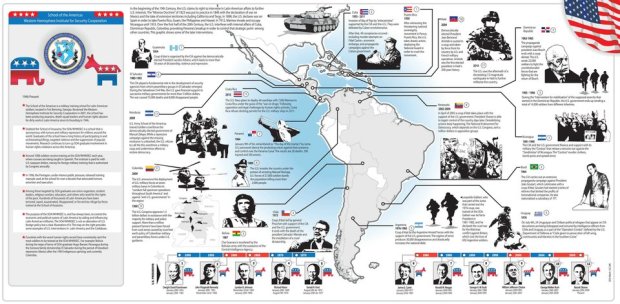
Hopefully people have already seen some of the pushback on the sainting of George Herbert Walker Bush because of his legacy of human rights abuses in Panama, pardoning Iran-Contra conspirators, allowing people to die needlessly of AIDS, lying to the U.S. public about the invasion of Iraq, his involvement in Plan Condor, and his racist Willie Horton ad, to name some. But regardless of the specific person or their place in history, invariably it seems to go like this: some major political figure dies and the social media RIPs start rolling in. “I didn’t agree with you on everything but you were an honorable person and I respected you. Rest in Peace.” If we consider ourselves political at all, and if want to be capable of resisting injustice, then we need to stop automatically paying our respects to politicians when they die.

First of all, the fact that someone had grace, or carried themselves with honor or manners, is not a good reason on its own to show them respect. In fact it usually just means they are rich and powerful (or “patrician”).  Have y’all never seen Gone with the Wind? Those white people of old carried on in high fashion and extremely mannerly ways! Their white supremacy was extremely high fallutin’! I do not however respect it, or the people who perpetrated and participated in it, just because it demands respect. It was something extremely ugly dressing itself up in nice clothes and an elaborately coded system of manners and interactions. Do not fall for this.

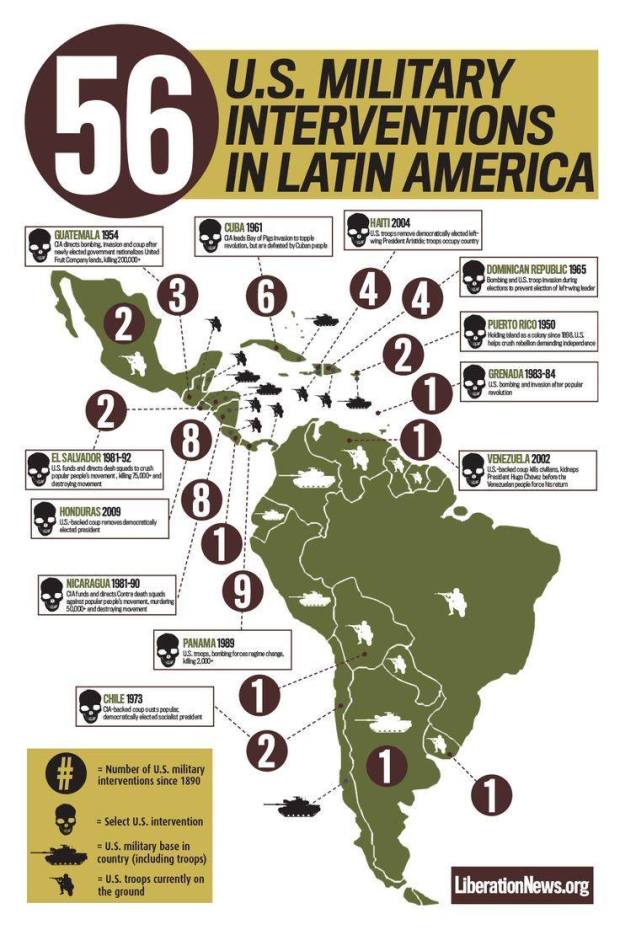
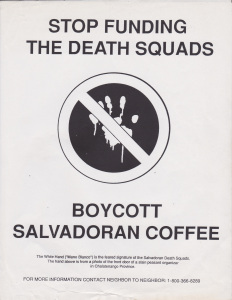
Second of all, in the case of a deceased head of state or politician, when we say we disagree with their “policies,” we are actually talking about human lives, and often their deaths. I refuse to reduce human to policies. And while the politician may no longer be in power, the effects of their policies are usually still with us. In the case of George HW Bush, I saw several of the same people express sadness about his death who are also angry about Trump’s handling of the “migrant caravan” from Central America. The thing is that by and large it isn’t Trump’s policies that have created the migrant exodus (because he hasn’t had enough time to do that kind of structural damage), but those of previous administrations. The migrant exodus actually has a lot to do with George HW Bush. As president he escalated the devastating War on Drugs, which continues to devastate people throughout Latin America, in addition to the devastating “anti-communist” violence and coup d’etats he perpetrated as vice president and Director of the CIA. The legacy of this violence, in addition to actions by other leaders including Hilary Clinton and Barack Obama who facilitated the 2009 coup in Honduras, has created the structural instability leading to the mass exodus of refugees from Central America today. So, how can we say that we respect Bush but be in solidarity with the migrant exodus or people in Central America today? You can’t.

Finally, and perhaps most simply and importantly: if we aspire to resist the policies of our government when they are wrong and unjust, we have to stop our habit of automatically bowing to the King! We are not obligated to express sadness when a former head of state dies. We are not obligated to say they had good qualities or were a good person or look on the bright side. Ask yourself why you are doing this. Is it possible it’s because you’ve been conditioned to respect authority? Or to respect those who seem “patrician”? If it makes you uncomfortable to speak ill of the dead, then try practicing just not saying anything. After all, a public political figure is different from a neighbor down the street or another person that you know. They and their family will never know what you said. Their legacy is a matter of making the historical record, not simple politeness. But most importantly, if you practice bowing to the king over and over, even when you think it doesn’t mean anything, you will never be able to disobey his orders when given, no matter how unjust they are. And that is supremely dangerous.

The Refusal to Die Quietly

Many of us in the US may have seen and been shocked by images or stories of the migrant caravan’s march to the border on Sunday and the repression they faced. It can be hard to understand what’s going on, particularly because historically we haven’t received good information here in the US about Latin America. For example, although the United States has a military base in Honduras, none of the major news outlets has a reporter based there. If we are very honest though, it is also true that part of not knowing what is going on with other people in places “like Honduras” is part of not wanting to know what is going on. Sometimes as human beings we don’t know the details about the rest of the world because we don’t connect the dots that we can see.

I want to share in full the quickly and powerfully written testimony of my friend Amelia Frank-Vitale who witnessed Sunday’s experience on the border between Mexico and the US. Amelia lives in San Pedro Sula, studying the effects of deportation there, and has accompanied the caravan on part of its journey. Amelia witnessed Sunday’s teargassing:

“today was heartbreaking. my country, the one with the most powerful military in the world, used that power to overwhelm a group of people in search of safety and a better future for themselves and their children. I know, I know. the US is in no way the promised land. But, people deeply believe that their lives would be a touch easier, they could breathe a bit calmer, if they could just make it to the other side of that damn ‘fence.’

there was no getting there today. first, mexican police blocked off street after street, dividing the group and confusing what had been planned as a straightforward, peaceful protest near the pedestrian crossing point. instead, after trying to dialogue with the police, people split off, using side streets, no one totally sure where they were headed, but all hoping to be able to get near (or through) the check point.

when one group neared the ‘fence,’ the US border patrol and armed police fired tear gas and rubber bullets. that group dispersed. on the other side of the canal, well into Mexican territory, the US once again fired tear gas and rubber bullets into the crowd. this time, they hit people. there are at least five people wounded from impacts from rubber bullets and spray-paint can-sized gas canisters. this includes a foreign journalist and [my friend].

when I saw my friend bleeding profusely from the back of his head, all I could think was – fuck. my country did this. i took him to the hospital, he got some stitches, and he will be fine. thankfully. but seriously, this is the response to a few thousand people in flip-flops, many of them pushing baby carriages, trying to get in to the US?

my eyes still burn and I have that rough cough that comes from inhaling tear gas. but mostly, i feel heart broken and angry. at one point we traipsed across the canal that is (was?) the Tijuana river. There’s a small stream of waste water and a good part of the canal bed is kind of sticky muddy with sewage sludge. after walking across Mexico, people literally walked through shit today for a peek into the United States. That they were met force and cruelty by my country makes me so very ashamed.

I’ve heard reports that the march, and the actions of the caravaneros, wasn’t peaceful. that’s bullshit. peaceful is not a synonym for submissive. peaceful doesn’t mean you have to put your head down, accept shit, and thank the people stepping on your neck. people changed routes, jumped over fences, climbed up hills, and scrambled onto a parked freight train. a few people threw a few stones. some of them tried, desperately, to climb the wall. the only group of people using real force today, the only people really threatening violence, were the border patrol and police.”

Throughout the months the caravan has been traveling, I have found myself increasingly anxious about what will happen to these refugees/caraveneros once they arrive here in the US and the potentially deadly violence they will face on the border. I suspect it’s easy for a lot of us, from our variously privileged vantage points within the US, to worry about the possibility that people will be killed in a large standoff like this one. We know that permission to shoot has been granted. Although we might admire their bravery, we might then be tempted to take our worry and to be concerned at the risks the folks in the caravan are taking by approaching the border en masse like they did on Sunday.  It’s certainly true that there are people who are blaming the migrants for the use of force, although none of them might be reading this blog.  But would we feel better if these folks died en masse quietly in a shelter in Tijuana? What about if they died back in San Pedro Sula, as Amelia has also written about? What about if they died silently, individually on the migrant trail?

As they have been asserting all along, the migrant caravan/exodus is once again banding together for safety and visibility. Hondurans, Guatemalans, and Salvadorans are dying regularly as a result of US policies whether we see them being attacked on the news over Thanksgiving weekend or not. What is powerful about the migrant caravan is that we are being forced to see it.


On the Murder of Jemel Roberson

JemelRoberson

Jemel Roberson with his son Tristan.

This man was murdered by the police.

His name is Jemel Roberson.

He was clearly identified as security and had successfully just stopped a shooter from killing others, without killing that person. This, it must be said, is something most of us wish the actual police would do.

It is obvious that in this country a Black man can never be considered a “good guy,” no matter what he does.

It is obvious that Black Lives do not Matter.

It is obvious, or it should be, that this is not about bad apples, or individual police officers, but that it is about an institution of policing which at its very core targets Black people and Black communities.

It is time for a change.

It will take many of us to participate in this change. Paolo Freire famously said “Washing one’s hands of the conflict between the powerful and the powerless means to side with the powerful, not to be neutral.” Find ways to act (and there are many possibilities), even if these acts seems small. Black lives depend on it.

a spell for writing

Some days I have so much to say that I can’t find a way to say anything.

Other days I run so dry of words that I have to read a book.

Learning to tell the difference feels like magical self-awareness, but it is a simple spell.

  1. Breathe deeply and know that both will pass quickly.
  2. Spend a few minutes letting it all out on the page.
  3. If nothing comes out, spend a longer time letting the ideas flow in.

Lessons from the UW-Superior “Halloween Axe” One Year Later

Just over one year ago, everything changed for me and many others in the community of Superior, Wisconsin. Without faculty, student, or staff input, three administrators were able to eliminate and threaten a full one-third of the academic programming at the University of Wisconsin-Superior, including most of the liberal arts in which it offered majors and most of the critical disciplines on campus. A few months later, an eerily similar list of program eliminations was announced at UW-Stevens Point. A newer, more final version of these cuts was announced yesterday. The Stevens Point proposal will be the first direct implementation of UW administrators’ new power to fire tenured faculty without declaring financial exigency.

Perhaps at the end of one year of mourning UWS, it’s time to move on to the next i see human but no humanitytragedy. After all, we were not the first victims of austerity measures in higher ed, and unfortunately we won’t be the last. Plus it’s over. The drastic cuts at UWS, along with the clumsy and deeply damaging restructuring of the entire 2-year college system in Wisconsin, have already happened. And Wisconsin has even finally ousted Governor Scott Walker in favor Tony Evers who was the lone voice of opposition while on the UW Board of Regents. But on this one year anniversary, it also seems useful to ask what can learn? How do we pick up the pieces and survive, both as local communities and within the more decentralized community of academia? A few things are for certain: the devastation of higher ed is not confined to Wisconsin, and the election of Tony Evers won’t be enough to roll back the damage done to the once great system of public higher education in the land of milk and honey.

In personal terms, the last year has been one of massive upheaval on both a private and professional level. I was driven out of my tenure track job in my fourth year which in turn meant geographic relocation. I sold my first house shortly after buying it, and started over in a new city, yet again. I was not alone in this. As I began to speak out publicly against the unethical and unconscionable decisions and public statements made by the university’s top administrators, I did not anticipate the level of absurd and petty harassment that I faced throughout the year for which there was no formal remedy.

The more that I was harassed, along with a few others who were also singled out, the more that a climate of fear seemed to prevail around me. Much of what happened to me was risky to speak about in writing or online. Let this be lesson #1 for others: open the lines of communication often and early between departments and among faculty, staff, and students, so that it is harder to single people out. Make time and spaces for in person meetings. Check in with people regularly who are on the forefront. Be aware that distancing yourself from people makes it easier for them (or you) to become targets for administration. Pay for personal memberships to the AAUP and/or a labor union (regardless of the status of legal bargaining rights) because their experience and assistance is invaluable in this situation.

My situation culminated at the end of the year when I should have been able to focus on supporting anxious seniors with their thesis presentations and nervous first year students with finishing classes. I was actually accused of committing “fraud” against the university. For what? I don’t know. How was the case resolved? I don’t know. I can only assume I was cleared because I was never reprimanded in any way. I was summoned to a meeting (at a time I was unavailable), I was not allowed to bring a witness, I was told I could not be given any information about the accusation in advance, and then I was informed that I had failed to comply. When I requested a copy of the report I was told it did not exist because it was submitted online. With some anxiety, I packed up the most important things in my office and took them home in case the university continued to ignore any semblance of due process and made a decision to suddenly terminate my employment. I tried to thread the fine line of my legal obligations to a workplace that clearly did not feel the need to observe basic legal obligations to its employees. Lesson #2: the university will not do the right thing (but you will survive somehow anyway). 

This story probably sounds extreme as you read it, and you may be thinking “that could never happen at my university.” But people never seem to think it’s going to happen to them, against all the evidence. Let that be lesson #3 from the Halloween Axe: it can happen to you, and you should already be organized to stop it. A great example of this problem is UWS’ own Dean Yohnk, the Dean of Academic Affairs at UWS who sold himself to UWS as a liberal arts champion less than 2 years earlier and then participated in these cuts. Yohnk managed to somehow parachute out of UWS and into UW-River Falls still as an advocate of the liberal arts. This is major head in the sand thinking on both sides. According to Yohnk, he had no part in the cuts and wanted to get away from that environment. So you go to another school in the UW system, still headed by Ray Cross and the Board of Regents? Good luck with that. And what is the hiring committee at River Falls thinking to accept someone who just lit a match and ran from the next door neighbor’s house? Lesson #4: be informed about the news in higher ed so you know what campus environment someone is coming from and you are prepared to understand their role in it when they arrive on your campus. And lesson #5: wishful thinking is dangerous. Don’t do it. Dramatic neoliberal austerity measures can happen at your university and they will, unless you organize against them. Let’s throw in lesson #6 here: elites network across campuses so we should too.

Actually, another thing to learn from what happened at UWS is lesson #7: these cuts have probably already started at your university or in your state. They don’t just fall out of the sky. They are ideological and they are part of a much longer game plan that takes many years to come to fruition. Look at all the planks in the plan to kill the Wisconsin Idea that needed to be laid before the final blow could be dealt to UW-Superior:


  • Act 10 eliminating collective bargaining rights for public workers;
  • weakening and effectively eliminating tenure protections throughout the state so that faculty throughout the university can be fired regardless of tenure without formally declaring financial exigency (not to mention the chilling effect);
  • changes to the hiring of chancellors and hiring committees (these have the effect of chilling efforts to call for resignation of current chancellor(s) because faculty are afraid that whoever is hired next will be worse, as they are assured of having no voice in the process);
  • dramatic changes to Chapter 36 and essentially eliminating the role of faculty in governance of the university;
  • free speech rules implemented via the legislature severely limiting the possibility of student protest on campus;
  • implementation of faculty post tenure review.

The cuts at UWS were only possible after all of this had been implemented in addition to devastating system wide budget cuts over a period of six years. There are many lessons to be drawn from this fact, but one important one for me is lesson #8: we have to somehow fight every austerity measure, even if it’s a losing battle. Don’t hand over an inch, because we are really always fighting the next battle. If we accept one measure without comment or struggle (as we did with many of these, knowing the Regents, legislators, administrators and often public were aligned against us), the right wing ideologues hell-bent on eliminating higher education will know that we aren’t organized to fight the next austerity measure. During my time in Wisconsin, I watched the implementation of several of these rules go on without comment or struggle from faculty who little imagined how they would be impacted later. And the result was that when the Halloween Axe fell, most of the faculty didn’t really understand what had happened to their tenure in Wisconsin, or what had happened to shared governance, or how would it actually affect them and not just their least favorite colleague. They knew enough to be scared but not enough to know what their rights still were or on what grounds we could fight. There was just too much catching up to do. Learn from our mistakes and find out what the reality is on your campus before there is a crisis. And inform and organize your colleagues now.

There are so many more things I learned in the last year as an academic, as an organizer, and as a community member of Superior than I can share in a single essay. I’m still mourning UWS and I’m honestly pessimistic about the long-term future for the community of Superior and northern Wisconsin more generally because something beautiful has in fact been lost. But I also know that marginalized communities can and do find innovative ways to survive and even, within pockets, thrive. Long term stability and permanence are myths that should never be counted on, especially within the dual realities of capitalism and climate change. While I mourn UWS, and while I mourn the broader closure of access to the public university to so many, I also look toward free schools, community run schools, and other models of more liberatory education. The public university has never been the only model of education so I choose to finish here with lesson #9: our dreams should always be too big for their institutions.

Everything for Everyone!

Art by Ali Cat. Leeds at Entangled Roots Press licensed Under Creative Commons License “CC BY-NC-SA 4.0.”