When They Come For You (Guest Post)

The Rebel Prof is honored to present a guest post written by anthropologist and professor Jelena Radović Fanta.

The words that were made by this country’s president on birthright citizenship was a punch in the gut. When I first heard it, it didn’t feel that way. I rolled my eyes, thought “here we go again,” took it with some humor, and then thought, well, many groups of people have been targeted by this government and his rhetoric and his executive orders over the last two years. Surely, I can’t compare this with what my fellow compañerxs have been going through. Because I have privilege and I’ve benefited from it. I’ve flown in and out of this country with my U.S. passport, I don’t need to worry about having a visa, or having a school pick-up or speeding ticket turn into a deportation. Who am I to complain.

But as I went through the day earlier this week, I had a pit feeling in my stomach. I brushed it off thinking is was due to little sleep, the list of things I need to tackle, the shorter days and darker mornings. Until a student asked me “and how are you doing?” And I realize that I had been punched in the stomach. I had a chill on my skin, my walk was slower, and my heart was heavy.

I know the (im)possibilities of this happening. And under the very improbably circumstances that this happens, I have other options. I am married to a U.S. citizen (you know, the more legit kind of citizen) and I am a citizen of another country I can go back to (a country also with birthright citizenship, DJT do your f*** research). If anything, there’s always the employment sponsored visa which I can hope to attain.

But the weeding out of everyone who does not look like or think like Trump continues. We were talking in my classes about the irreversible damage that is being done, where now 45-supporters will turn to people who seem gringo but might have that slight accent, look a little different, speak more than one language, travel back and forth, or simply have a different political viewpoint and say “You! Where are your parents from? Go back to where your parents came from!”

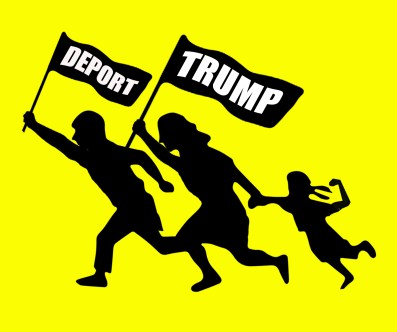
deport-trump

Art by Nicholas Lampert

I owe this country nothing. I am not going to list what I consider “accomplishments” that I’ve had in my life. I should not have to. But if we are going to talk about it, well than yes, I have given a lot to this country. And this country has given me a lot. There are many reasons why I am here. And if we are going to talk about immigration, let’s talk about it. If we’re going to talk about crime, let’s talk about crime and how immigrant crime rates are not higher than US born people. If we’re going to talk about social welfare, let’s do so and talk about how undocumented people are not eligible for federal public aid programs. You do not get to throw out half-ass “arguments” and logic that all they do is draw on emotion, on white fragility, on anxiety about the “browning” of this country, and other baseless bullshit “arguments.” All it does is reveal your xenophobia and fear of “other,” who, by the way has never, ever really been an other, but a “right here.” Right here next door neighbor, right here at the food truck, right here landscaping your yards, cleaning your bathrooms. Right here opening doors, driving taxis, caring for your children, educating students, doing your nails, creating art, and start up shops. There has never been an “over there.” The “over there” has only been there because you placed it there. And don’t get me started with the legality of how your grandparents came here. There was no legal way” back then. People arrived on ships and if they were healthy and part of a support system, in they came.

I had always heard that things don’t really hit you until they become personal. Attacks on Muslims, Undocumented Immigrants, African Americans, the Queer community, and Women are for me offensive, unacceptable, and must be fought. Always. Yet there’s this extra blow when I realized “Hey, he’s talking about me. And my family.” The sting is extra sharp. And it hurts a little more. And I hope that the bitterness and anger I feel will never stop pushing me to do something about it.

Happy Birthday to Me

This year I decided to step out of my comfort zone and ask everyone for a big gift. I will admit that I was inspired by Facebook’s prompt to start a fundraiser, but as an incorrigible nonconformist, I did not start a fundraiser. Instead, I asked all of my FB friends to engage in some form of social change action in my honor.

Here were the rules:

  1. Choose a form of social change/resistance to participate in before Oct 31.
  2. The idea is to “take one step up” from wherever your current level of political engagement is, so actions that count should be something that you would not otherwise do. (Ex.: Voting is a good action if you were not planning on voting and don’t usually vote, but not a very good gift if you were already gonna do that. The same goes for donating money.)
  3. Post what you did as a comment on this thread, or if you prefer send me an email about it.

It was a big ask, but I received some truly humbling birthday gifts:

  • I have joined Alliance at UWS to help advocate and learn more about my LGBTQ+ friends.
  • I will attend my first Witness for Peace Midwest board meeting in November and, if all goes well, lead my first delegation in March.
  • Sent out over 100 emails to “BFs” in Duluth and sent in a Letter to the Editor to the Duluth News Tribune to campaign for Keith Ellison
  • And another for Keith: just signed up to do GOTV for the Keith Ellison campaign
  • Last night, I spoke publicly at City Council about the economic degradation and impact thereof related to NW Jacksonville.
  • Raised funds and did a walk for the American Foundation for Suicide Prevention.
  • I’m speaking at a labor and disability rights event, I’ll step it up in your name! Just know I get in the most trouble when I ask, what would Meghan do? And I ask this question often!
  • Researched and donated to Trans Women of Color Collective.
  • I’m embarrassed this was outside my comfort zone, but I went to a showing of a film “Doctrine of Discovery: the domination code” by Steven Newcomb at a local community center and signed up to receive emails on how to help spread the message. It has to do with the federal governments (and European) policy of domination of indigenous peoples and the religious ideologies they rely upon to justify their actions. I truthfully would most likely not have gone if you hadn’t made your birthday request! It was important for me to see.
  • Recent traumatic events in my family and seeing rape culture play out on the national stage have been very triggering of my own trauma of when I was raped at 17. And for my daughter staring down similar demons, and for every other person who has survived sexual assault, abuse, or rape – I am going to stop running. I’m going turn around and tell my 17 yr old self everything I’ve been telling my daughter. And I’m going to take every bit of power back that the fear has held over me and use it to file a police report and name him. The statute of limitations expired years ago, I doubt he’ll ever know I reported as there’s not potential for charges so I don’t think they would even do an investigation. So that is how I’m taking your challenge of one step up. I’m going to name him and file a police report.
  • I’m going to teach Constitutional Law through Duluth Community Ed, for free, so that people with money are not the only people who understand the constitution, in addition to my work on criminal justice reform (for example Warrant Resolution Day to keep people out of jail)
  • I recently started helping a lawyer friend translate documents from Spanish for immigration cases she works on.
  • Engaged in deep discussion with someone pushing a political candidate I don’t care for.

My idea was that we live in an individualist society and political action is, well, hard. We could all use a little bit of a push and also some mutual support to engage more in our communities, to do something we’ve been meaning to do, and to know that what we’re doing really counts for something. I wanted to create another little web of solidarity and light in this world which can seem so dark. I hope that others will be inspired by these ideas and actions whether you are a seasoned community activist or just getting out there or something in between, because as one of my friends said, we could all use a little inspiration.

Fearless by Alina Tauseef

Art by Alina Tauseef

the fear of being out

I can remember that it all started when the ringleader boy looked at my legs and commented on their hairiness. The ringleader was a tall kid who was one of the first to pubescence, new to school and had a lesbian mother – none of this seems accidental in retrospect.

After that, he was able to engage almost every boy in the class with the exception of a few in giving me sexual nicknames, commenting on my body, checking my back for a bra strap, and, most damagingly, chasing me around and touching all over my body nonconsensually.  This lasted for most of the school year and was targeted at me individually.

When I was in sixth grade, I was the target of organized sexual harassment by a gang of boys in my public school.  At the first peak of awkward transition to adolescence almost every boy I knew touched my body in unwanted ways and made fun of me. I was not protected by anybody. I was effectively terrorized for being a girl, for not being enough of a girl, for not being the right kind of a girl.

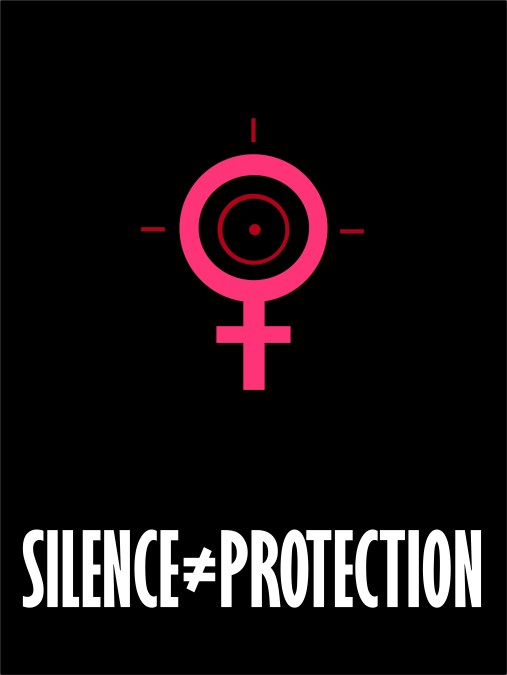
silenceisnotprotection

Silence ≠ Protection by Crista Facciolla, Print. Organize. Protest.

I would now call this experience sexual violence. And yes, as an adult I can see that these boys probably participated more out of their own fear of being singled out and having their masculinity questioned than for any other reason. None of that makes it ok, however, or frankly matters very much to me, because if we didn’t live in a rape culture shot through with toxic masculinity in the first place, this wouldn’t have happened. And it was traumatic.

I felt like I had to hide what the boys were doing to me. I was made complicit in their terrorism. I’m still not sure I’ve disentangled why I didn’t feel like I could tell anyone. The simplest reason is shame. It was just so fucking embarrassing. If I was going to tell someone – an adult – I would have had to also tell them the insults and the things that the boys said. This would have meant discussing sex with that adult and relaying the insults that were said about me. I was way too embarrassed to do either thing.

If I told an adult what the boys were saying about me, I would have had to repeat the insults that were flung at me. In retrospect, it takes an awful lot of self-confidence to repeat the heinous thing someone else has said about you. Repeating it seems to just make it actually real.

After several months of this experience, something happened right in front of my teacher. I hoped that finally this would put a stop to the torment I was experiencing without me having to tattle, but the teacher did nothing. (There can also be no way he hadn’t observed anything before that because there were several incidents every single day.) It has taken me 25 years to tell this story to anyone, perhaps because when my teacher who I loved and trusted failed so completely to intervene, I decided that there was something wrong with me or that there would be no point in talking.

Instead I tried to find ways to resolve the problem myself.  Apparently I tried to fit into the kind of femininity that was suggested. If my back was going to be checked for bra straps, then I was going to wear a bra every day. No matter that I didn’t need one, that they were uncomfortable, that my mother was confused and that I was too embarrassed to even be seen looking at them in the store. I was going to be wearing one each time some boy checked my back and maybe they’d move along and not yell about it.

I went home and shaved my legs. I didn’t ask for any help with that either. I didn’t want to start a conversation or argue with my mom about whether I was too young, so I opted for stealing supplies in the shower and cutting the shit out of my legs instead. At least the cuts indicated that I had taken the hint and shaved. I was complying.

But something happened when I watched the Hannah Gadsby special Nanette. I wanted to tell this story for the first time. In the special, Gadsby tells the story of being beaten up by a man who thought she was hitting on his girlfriend, and the thought struck me like lightning: have I continued being just on the right side of feminine out of fear of exactly this kind of male violence?

Like Gadsby, I too was a raised in a household where there seemed to be anxiety about my sexuality and sometimes openly expressed fear about how difficult life would be if I turned out to be gay. It was clear that it would supposedly be ok but it would also make everyone somehow sad. Much of this fear was just that, fear, and it was well-meaning, but it transmitted to me as a message that only certain ways of being were OK. Simultaneously, no adults were protecting me from the risks at school of male violence and I was under constant pressure at home to be more feminine.

I don’t think I can draw a straight (hah) line to explain how or why anything happened, but as I grew up I adopted a style that would hide my feminine body to deflect attention and yet I think I made modifications to remain “female.” At least just female enough. I didn’t want to (re)create the possibility of violence by being too masculine, nor did I want to attract attention with my body.  I’ve never felt as if I “belonged” in most highly feminine clothes, but looking back now I see what has held me back from going full-on butch despite the attraction it has always held. I was receiving so many messages about the possibility of queer-bashing at home, in the media at large, and from my own experiences that it was much easier (but more damaging) to just pretend to be straight  in a heteronormative world.

It’s not just that women, or those of us assigned female at birth or gender non-conforming in various ways are subject to overwhelming rates of sexual harassment and violence. It’s also that we, along with our sisters, girlfriends, friends, cousins, and classmates, experience so much sexual harassment and sexual violence that the threat of male violence regulates us so completely, so thoroughly, that it actually creates who we are.

Unsurprisingly my silence did not, as Audre Lorde says, protect me. Not my silence about the sexual violence I experienced in sixth grade, nor my silence about my queer sexual and gender identities. Instead they left me with a legacy of confusion, pain, and fear.  I was, sometimes consciously and sometimes unconsciously, afraid that I would do “woman” wrong and that I would be found out. Living a non-normative life is not easy, just as my family and Hannah Gadsby’s family predicted. But neither is living a life full of silence and shame. Silence is fragile, and carries so much less power than I thought when I was only a small person. Coming out of our silence is terrifying, and it is very hard, and it subjects us to real risks. But it also allows us to write our own stories, to try to create our own lives, and most importantly, to find each other.

Saturday Recommendation: When They Call You a Terrorist

When They Call You a Terrorist: A Black Lives Matter Memoir – Patrisse Khan-Cullors and asha bandele

I do not think I have ever met anyone who could not somehow benefit by reading this book. White people, middle class people, and anyone who experiences the privilege of not being Black in the US will find a lot illuminating in Khan-Cullors powerfully told story of growing up in a culture which simply does not value your life or those of your loved ones. The honesty and vulnerability with which this contemporary story is told means that there is a lot to be learned even for those who feel that they have done a lot of listening, learning, and studying; there are new nuances here that are important. This same emotional heft means that the book has value (at least, I imagine so) for those who do share her experiences because it is validating. Its intersectional dimensionality – careful attention is paid here not only to gender but to sexuality, trans visibility, and more, including how communities and movements have succeeded and failed in organizing at certain moments because it is always a struggle—mean that there are opportunities for everyone to learn. Organizers and activists will also find Khan-Cullors’ words inspiring , validating, and simply nourishing. Those who are not activists will find the book helpful for understanding why others, such as the three women who founded Black Lives Matter, do what they do.

Two short passages that occur near the end of the book:

 “…now it was late, maybe 1:00 in the morning, and I was heading back to my cottage where Mark Anthony was supposed to be sleeping but instead was standing outside our home, barefoot, in pajamas and with his hands cuffed behind his back. … They were able to gain entry to our home because in St. Elmo’s, before this, we never locked the doors. But on this night, the police entered through the back door. They said he fit the description of a guy who’d done some robberies in the area. They offered no further explanation. … Later when I hear others dismissing our voices, our protest for equity, by saying All Lives Matter or Blue Lives Matter, I will wonder how many white Americans are dragged out of their beds in the middle of the night because they might fit a vague description offered up by God knows who. How many skinny, short, blond men were rounded up when Dylann Roof massacred people in prayer? How many brown-haired white men were snatched out of bed when Bundy was killing women for sport? … Mark Anthony’s cuffs are finally removed, but the police do not leave my home for another two hours, taking down all kinds of information about him, running his license, hoping to find any reason to take him away, this man they yanked out of his own bed in the middle of the night in the house where he lives in a community where he is loved” (pp. 193-195).

And then, a discussion about the formation of the BLM:

“We agree that there is something that happens inside of a person, a people, a community when you think you will not live, that the people around you will not live. We talk about how you develop an attitude, one that dismisses hope, that discards dreams” (p 199).

This book is a record of life in Van Nuys. This book is a record of a movement. This book is a record of state terrorism. This book is a record of a dream.

Saturday Rec: Hari Kondabolu

Hari Kondabolu’s Netflix Comedy Special “Warn Your Relatives”

Pairs well with: a copy of Edward Said’s Orientalism, the long forbidden episode of the Simpsons where they go to the World Trade Center, and mangoes

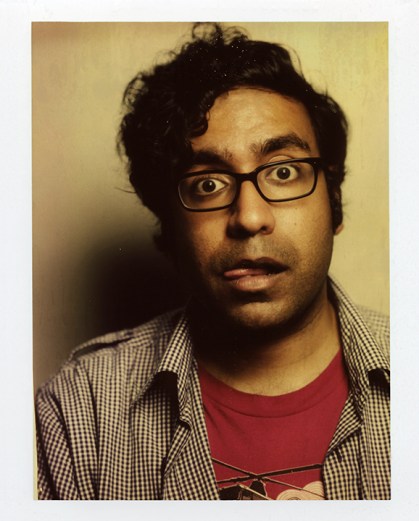
Picture of Hari Kondabolu head and shoulders with his tongue sticking out, eyes wide open to the camera

There are a lot of good, politically savvy stand-up specials on Netflix right now. This one was my favorite so far. In part because Kondabolu opens with a 9/11 joke, “in order to show the audience that he means business!” (The joke is hilarious even though I’ve just given away part of the punchline.)

You should watch this special if you really need comic relief right now. (If you don’t need comic relief right now, what kind of monster are you and why are you reading my blog?) You should try watching this special if you don’t think you will like it. Maybe you will. Or maybe you will at least learn something. A perspective like Kondabolu’s is rare on TV and in comedy, and it’s refreshing and eye opening. I felt like an ocean breeze was suddenly bursting through my windows and filling my lungs with air listening to Kondabolu’s direct and political jokes. I can only imagine what South Asian American friends felt like seeing themselves represented in any way on screen. At any rate, warn your relatives. Whiteness makes for a pretty funny joke.

stop apologizing for other people

Recently I’ve noticed a disturbing trend so I’m going to suggest a simple rule: stop apologizing for other people.

Stop making excuses for power, for whiteness, for masculinity, for heterosexism, for ableism, for colonialism. When you apologize for someone else you become part of the problem. You are working to maintain those systems instead of actively working to dismantle them as you should always be trying to figure out ways to do.

If people were sorry for their behavior, they would apologize for themselves. If you want to change a system, support those who are challenging power. Always. When you jump in to make excuses for someone else, a few things happen:

  1. The person perpetrating the micro aggression or oppressive behavior does not have to account for their own behavior.
  2. The person who has actually been harmed is silenced and shamed by seeing that you and others stand against them, regardless of what you actually say as you are making excuses. You may think that you are seeking a compromise, harmony or some kind of middle ground, but the effect of what you are doing is actually further alienating a person who has actually been harmed by sending the message that you (and others in the group) will stand with power and make excuses for it.
  3. You cut off the ability for anyone to learn and grow from their mistakes. Learning is a painful struggle. We could all work on not letting our own fears get in the way of others’ learning process.

Race, gender, sexuality, social class, ability, and nationality are all attributes that exist within systems of power. They are not individual characteristics that we possess in a vacuum and it’s impossible for any of us to be unaffected by the larger unjust systematic power imbalances around us. Working to decolonize ourselves, dismantle patriarchy, unlearn racism, and just not enact bullshit on each other in activist and other daily spaces is an ongoing process, and we are all going to make mistakes. But it is essential in that process to not only allow people to make mistakes but to point them out and even more so to support the person who is brave enough to point out the mistake since likely they are the one who has been harmed by it. It is not piling on to simply agree with or support a marginalized person pointing out a problem. All you have to remember is this: do not make excuses for power.

a brick wall with a graffito that says just "sorry about your wall"

a spell to breathe through it collectively

I feel a familiar pit of anxiety rise up in my stomach. Nausea threatens to overwhelm me. I try to remember to breathe deeply. I remind myself that I can do this. I can do this, because I have already survived worse. I can do this, because so many have already survived so much worse than I can even imagine, and some of those people are my friends. If my friends can face threats of their own deaths and continue on every day, without losing their senses of humor, without giving up, then I can do this.

I let the feelings come, I let the fear in, but I try not to let it control me. I try instead to control it with my breath. And with my memories and thoughts of everyone I know who is braver than me. I’m afraid of the unknown, of the future, of what will hurt, but usually, it’s just about going through and then it will be over. I can do this. Breathe. I want to be able to do this, I can’t control it, but I can decide to do it. I can do this.

And with each repetition, it gets easier. And with each story we tell ourselves and each other, we get stronger. We get more resilient. We can do this. We don’t have to pretend not to be anxious, not to be scared. We just have to remember to breathe. And to do it anyway.

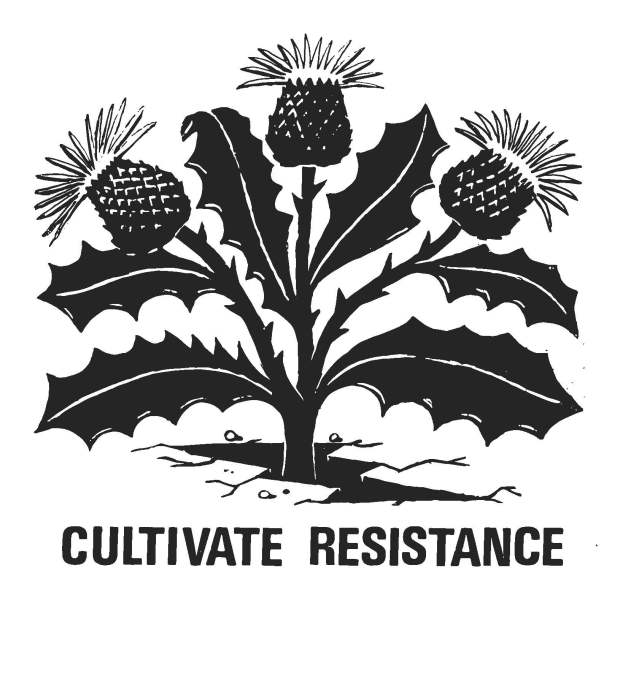
Dandelion growing out of concrete with words that say "Cultivate Resistance"

Graphic by Luke Thomas available at https://justseeds.org/graphic/cultivate-resistance/

sadness and struggle

I’ve been trying and failing to finish a lot of writing over the last few weeks. I have felt overwhelmed, with a lot to say, but at the same time not quite able to edit and polish and publish what I’ve got.

Today, after once again writing about 1,500 words without finishing a post, I finally picked up Cindy Milstein’s Rebellious Mourning and read the first essay, Benji Hart’s “Feeling Is Not Weakness.” In it, Hart talks about how sad and depressing it is to connect the dots on the systemic violent oppression of black and brown people. Hart says they feel guilty for being sad, because Hart knows one of the functions of the system is to create demoralization. Sadness makes it feel like this campaign of demoralization is working. In Hart’s words:

“I feel guilty for being demoralized. I should be angry. I should be fiery with unquenchable passion. I should be as relentless as the state. If I am sad, the state has won. If I am sad, the fight is over”(p. 20).

I too feel sad. And I had not realized until just at this moment that I have had writer’s block because I didn’t want to write anything out of my sadness. I didn’t want to let Husky, or city council, or Walker, or Trump, or whoever control my life and my successes and make me sad. I didn’t want the state or capital to win. But feeling sadness when confronted with tragic realities is what makes me human. It is what makes me strong. Hart puts it like this:

“Experiencing hurt around the realities my people and I face is more than understandable; it shows that I have not given in, not accepted the current, violent reality as inevitable, not forfeited belief in my own right to life.”(p. 21)

A compañera of mine put it another way:

“We’re in the heart of the Empire,” I said.
“You’re wrong,” she said, “the Empire has no heart.”

My sadness does not mean the battle is lost. It means I’ve refused to lose what’s at the core of struggle and what we struggle for: my dignity and humanity. My belief that better worlds are possible. My compassion for others. My willingness to see and face systemic injustice. My meaningful connections to people living precarious lives of all kinds. My hope that people can be better people, and that they can find the will and courage to stop enacting their power over others. It’s only when I become so cynical that I lose these things that the fight is over. Sadness is not the sign the battle is lost but the sign that it is still raging, and the sign that I am still willing to fight it.

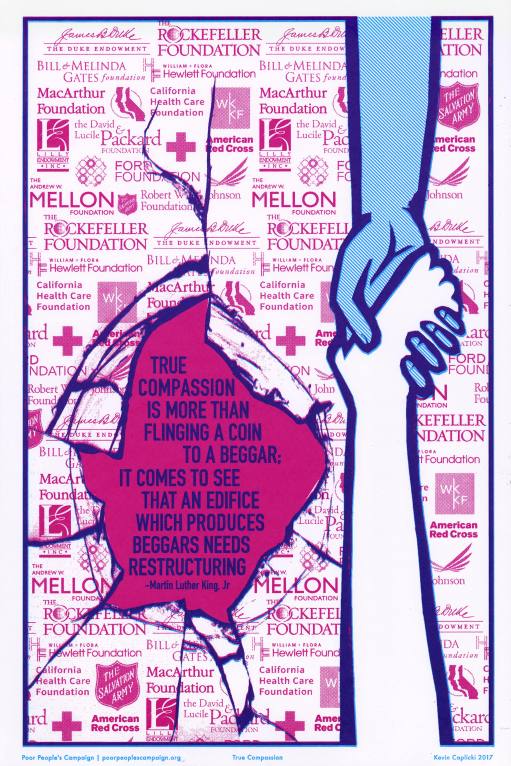
a blue arm and a white arm hold hands across a paper background with foundation and charity names. the paper is torn to reveal the words "True Compassion is more than flinging a coin to a beggar; it comes to see that an edifice which produces beggars needs restructuring." - Martin Luther King, Jr

Art by Kevin Caplicki for the Poor People’s Campaign, available at Just Seeds Collective.

Saturday Rec: Even the Rain

Even the Rain – También la Lluvia

Pairs well with: all the other movies starring Gael García Bernal, a copy of the Open Veins of Latin America, a willingness to reflect on your own positionality in the world

This is a movie about colonialism and a movie about the Cochabamba water war. In fact, it’s a movie about some people who purport to make a movie about colonialism and in doing so perpetuate some really colonialist behaviors, which is the movie about colonialism that those of us who grew up benefiting from colonialism really need to see. And, somehow, as if that wasn’t a clever enough trope (and trust me, it really is), it’s also the best movie out there about the water war.

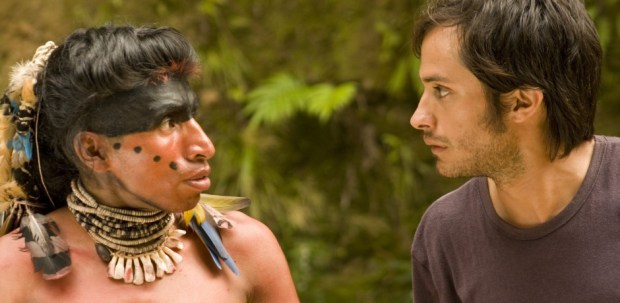
two men stare at each other. One man is in costume as an indigenous Taino man in the time of Columbus while the other wears a t-shirt.

Juan Carlos Aduviri and Gael Garcia Bernal in Even the Rain

And then, as if all of that wasn’t enough to make you go watch it now (but it should be), it’s also a movie starring Gael García Bernal!

Here are some other excellent movies starring Gael García Bernal:

  • No (and bring your cynical sense of humor – don’t be too North American while watching)
  • Neruda
  • Y Tu Mamá También
  • The Science of Sleep

communication through bars is revolutionary

Today I was reading about Mutulu Shakur, who has spent over 30 years in prison, when I came across the following piece of information: Dr. Shakur was denied parole in one hearing solely because he participated in a phone call on speakerphone with a professor and their students. In essence, the act of speaking to people in an educational context became the reason that he was seen as a danger to society.

photograph of Dr. Mutulu Shakur in the sun against a concrete wall

Dr. Mutulu Shakur, August 2016

Dr. Shakur is the stepfather of Tupac Shakur and has served 32 years in federal prison for his involvement in a bank robbery which resulted in the deaths of 3 people and involvement in the escape of Assata Shakur. Shakur was denied mandatory parole in 2016 (after serving 30 years as a peaceful prisoner) and has currently initiated a lawsuit against the federal government.

For the last 3 years I have met with other local people twice a month to write letters to people in prison. This work has many critical aspects, some of which are immediately obvious, and others which are less so. Perhaps another day I can write more about the importance of writing a letter in the spirit of solidarity to a person who is literally living in a cage, and about the important and meaningful friendships that have grown from those letters. What I’m thinking about this afternoon is the way this work keeps me connected to the many shocking injustices of the prison system, and how much I continue to learn from it.

It’s worth reading the whole list of horrifying reasons Dr. Shakur was denied parole put together by his support committee. Apparently a prisoner cannot refer to themselves as a victim of COINTELPRO, although it is indisputably factually correct, if they want to ever be considered for parole, because referring to their victimization by the FBI makes them likely to reoffend.

Regarding the public phone call, no one disagrees that Mutulu called a professor who placed the call on speaker phone so that other faculty and students could listen to his comments. The problem is that the prison and parole board have not ever cited a rule that was violated by such a phone call, nor was anyone ever informed of such a rule (and how heinous is the idea of such a rule?). From the support committee summary:

“The February 2013 brief phone call, fully monitored, was the sole basis for rejecting the Parole Commission’s Hearing Examiner’s recommendation that Dr. Shakur be paroled in early 2015. No one has ever explained why any rule was violated or shown that Dr. Shakur or any other inmate has been informed that allowing someone to place his or her phone on a speaker is a rule violation.”

In this case, the mere act of speaking to others outside the prison walls becomes reason enough for continued loss of civil rights. Even the apparent involvement of Danny Glover at the event was not enough public pressure to turn the tide (or perhaps that’s exactly what irritated the parole board enough to cause the retaliation). The message is that prisoners can and will be punished for communicating with people outside of prison in public ways. But even so, it’s shocking to see that the prison has so much control that it does not need to provide any justification for this, even in such a high profile case.

This case and details are not only a good lesson on how the prison works, but they touch close to the local work we do, too. I sent Mutulu a birthday card last year, and received a nice note back. I’ve participated in similar phone calls myself at public talks given on campus, as an audience member, and have considered organizing these kinds of events as well. And another reason for Dr. Shakur’s parole denial is one that we deal with regularly: how to close a letter.

“Mutulu often signs off his letters with the words ‘Stiff Resistance’ and this indicates he may once again engage in violent crimes if released.”

The Hearing Examiner stated:

“The Commission not only finds these statements incompatible with the goals and conditions of parole supervision, but also concludes they are evidence that you have not disavowed yourself from the same set of beliefs you had when you were convicted …”

What is noticeable here is that the Commission looked past literally volumes of public statements and writing made by someone that would clarify and provide clear context on what they are thinking, in this case an explicit disavowal of violence as a means toward social change, and instead focused on a two word salutation and decided to interpret it in a vacuum. They will, it seems from their own statement, accept nothing less than a disavowal of all the political beliefs Dr. Shakur had when he was convicted. In other words, they are not looking for him (or other prisoners) to disavow violence or certain actions, but rather to disavow political resistance entirely. They are looking for complete submission, even in letter salutations.

But prisoners also demonstrate their refusal to submit and their continued meaningful political resistance precisely through communicating with us. It’s a way of maintaining their selves, their dignity, and their humanity inside of an institution that is specifically designed to strip them of all of that. Mutulu uses “stiff resistance;” another friend of our group, Sean Swain uses “stay dangerous” and has mounted three campaigns for governor while on the inside. Communication beyond bars is a radical tool or it would not be punished so radically. And if this is the punishment that occurs in a high profile case like Mutulu Shakur’s, with a website, support committee, and some connection to Danny Glover, one should imagine much more arbitrary denials and worse repression that occurs among the rest of the prison population.

Prisoners take enormous risks in simply communicating with us. As people who walk freely on the outside, it’s essential not to forget, underestimate, or waste these risks, and to understand that they are precisely how we know our work is revolutionary and meaningful.

prison_birds_hearts